

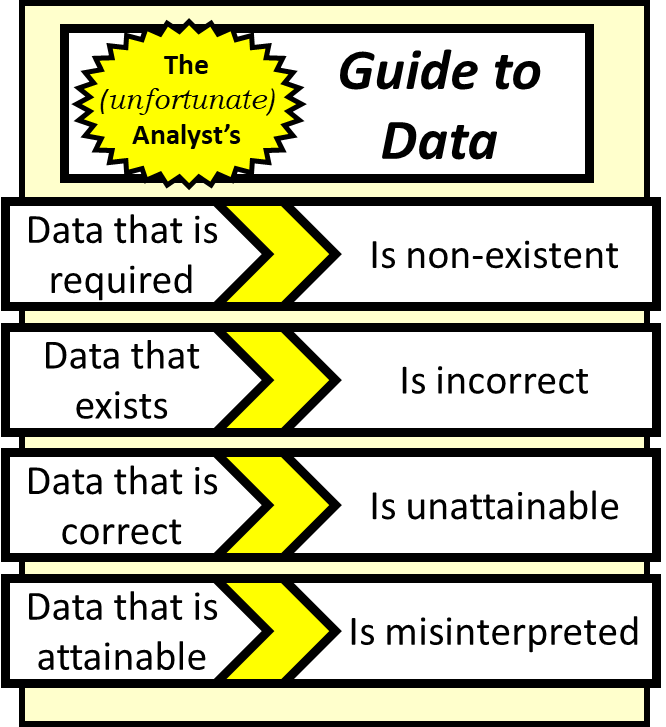
We (analysts) have all been there. We (analysts) understand the challenges with data. We (analysts) need a way forward!
Critical projects have been delayed, postponed, or even cancelled due to data related issues. That is why Advanata was designed to maximize information content from the customer (read more about harnessing Human Intelligence), reduce data requirements to the bare minimum, and provide viable alternatives in case suitable data isn’t available.
The Advanata architecture is structured in a manner requiring a minimum number of values that can frequently be assigned directly with no additional data processing. Often required values such as product prices, staffing costs, contract sales…etc. can all be entered directly.

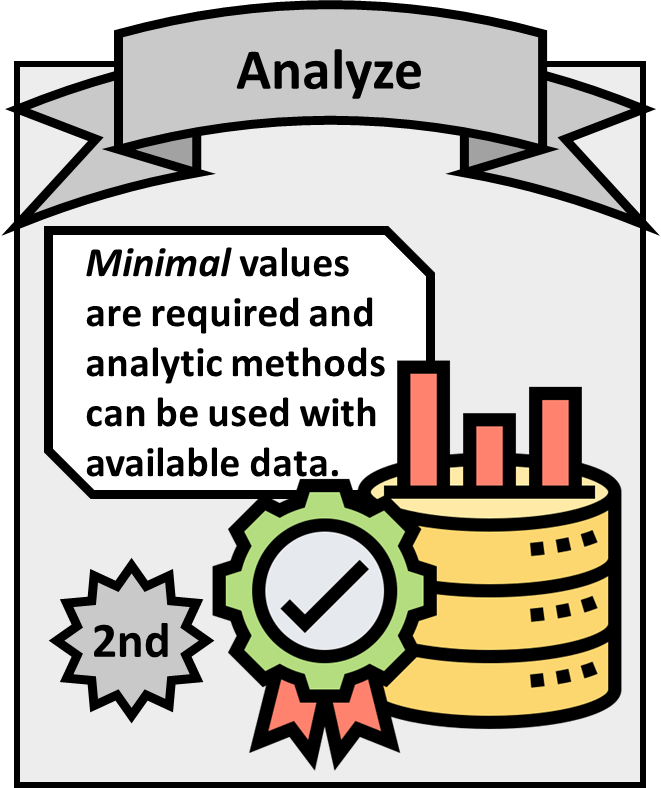
If data sets are available, then analytic methods can be used to arrive at the required values. Note that such analytics are only required to fine-tune quantitative values and not build the analytic framework thus greatly reducing the breadth of data required.
The customer should be able to estimate required values based on their expertise and familiarity with the problem to be solved. For example, a customer can estimate based on their experience that discounting their products by 10% will increase sales by 20%. Their expertise will also serve as a litmus test for values obtained from any other sources. If analysts arrive at a 200% increase in sales based on a data set this could be brought into question as it differs greatly from the customer estimate and both parties will have a clear platform for discussing the discrepancy.

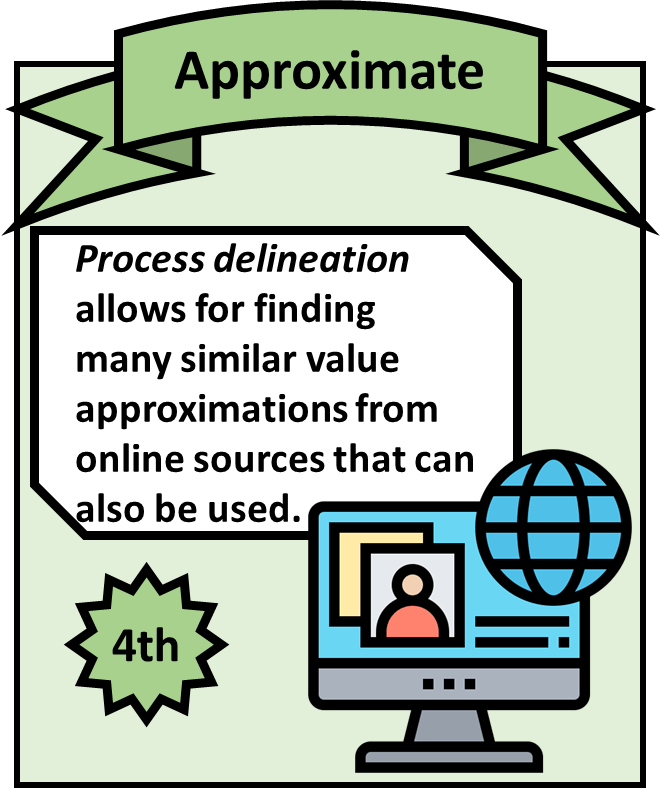
The minimal number of required values and their strict definitions within the framework allows for obtaining values from external sources that have similar (not necessarily identical) definitions. For instance, the performance of various digital marketing tools has been widely documented, and they can serve as good approximations in the absence of precise customer values.
The Advanata design philosophy of having the majority of the information describing the problem coming from the customer and then being fine-tuned by data greatly reduces the amount of data required. In addition, the use of small modular structural components within the framework allows for value estimates and approximations to be easily integrated while also allowing for the addition of higher precision values to continually refine the solution.
 Advanata
Leave a comment