

Correlation doesn’t always mean causation. Most data analysts (including the author) have, at some point, mistakenly linked the two. Strongly related data compounded by misplaced intuition and excessive extrapolation often leads to this fallacy, which reflects a deeper analytics issue that can result in unnecessary effort and incorrect outcomes.
Typical Problem Setup
A customer seeks help from an analyst to improve a specific aspect of their business. Each is an expert in their own domain, not the other’s. This difference should not be seen as an area of contention but as an opportunity for collaboration.

Deductive Approach Starts with Analyzing Data
The analyst examines the data, finds strong correlations, and assumes causation. The customer then confirms whether the causation is real, and if this step is skipped it will leave the incorrect assumption built into the analysis.
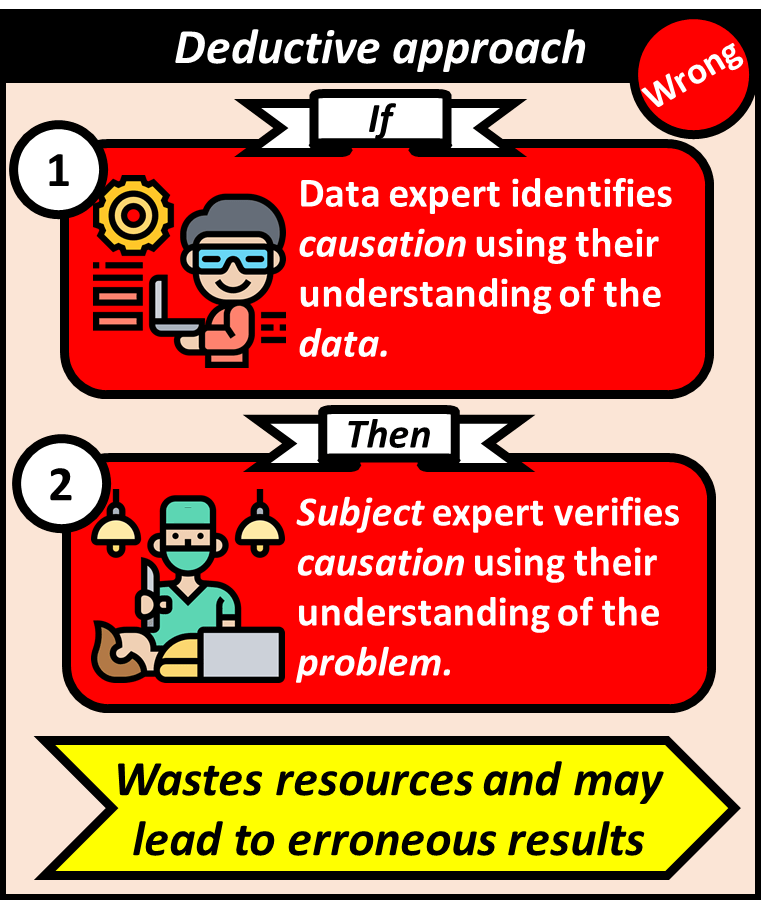
Wrong Approach for Identifying Causation
Using deduction may lead to excess work and in some cases can lead to disastrous results.
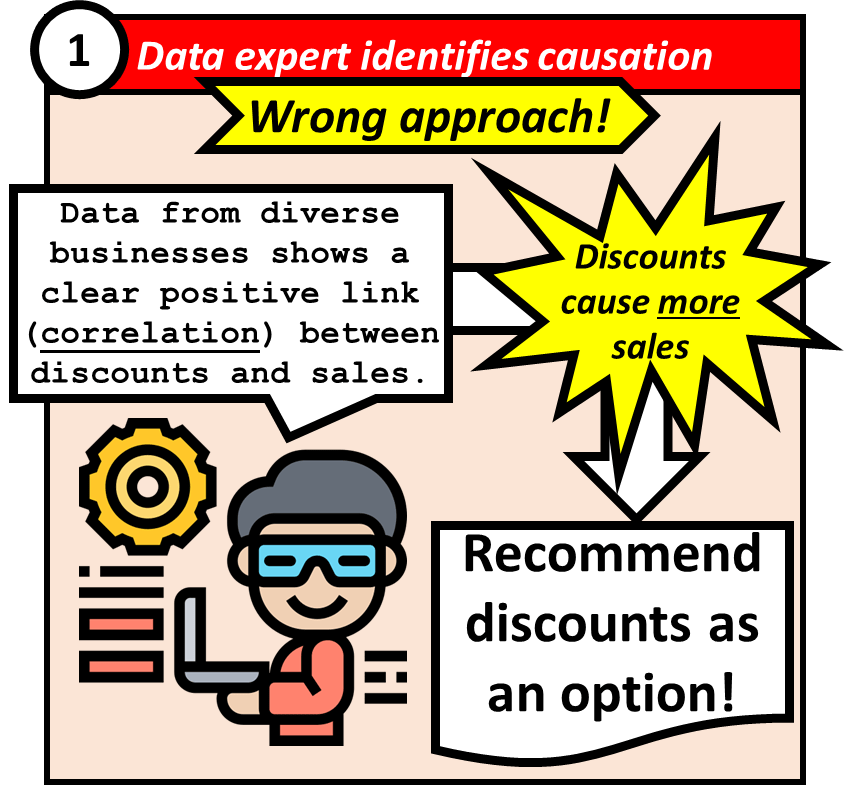
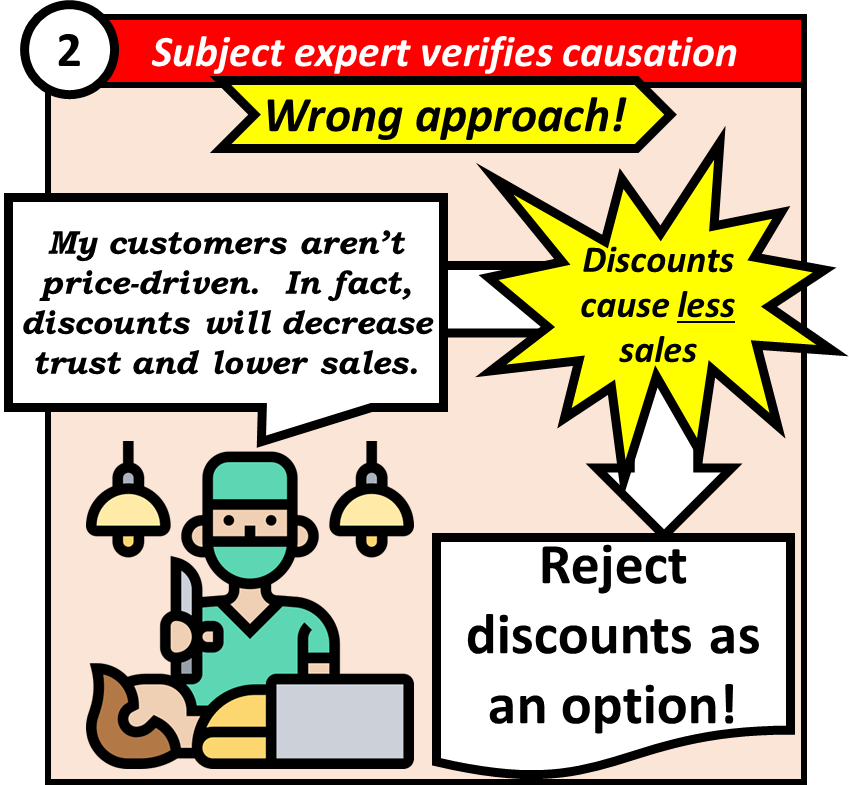
Leverage Diverse Expertise
Both the customer and analyst bring expertise in their own fields, making them essential to solving the problem when effectively engaged.
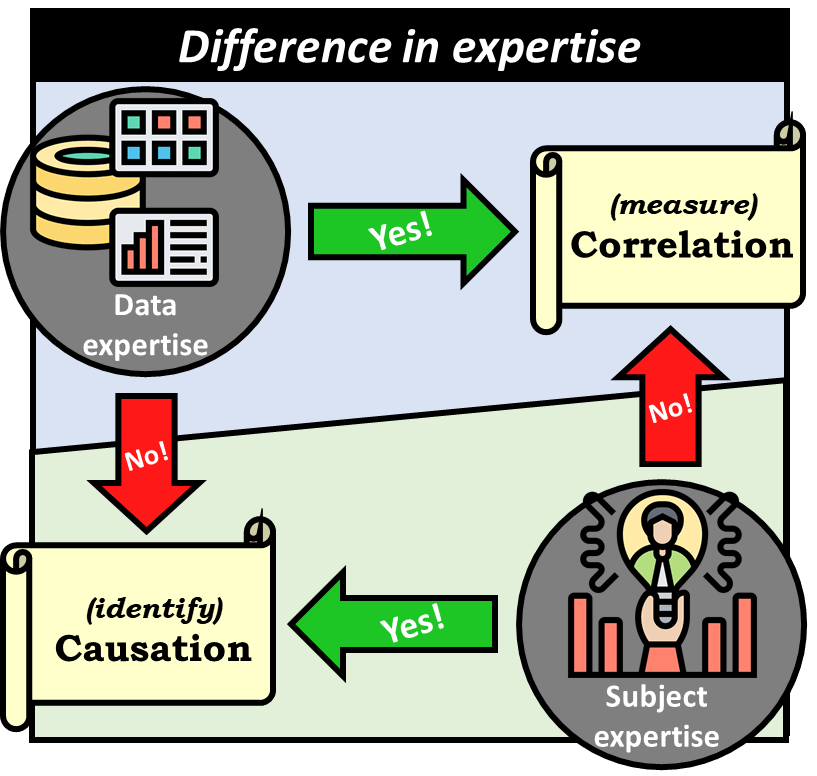
Inductive Approach Starts with Subject Expertise
Customers, as subject matter experts, are best positioned to identify actual causation. Analysts, with their data expertise, are best suited to measuring correlation. By working together, they can quickly arrive at an accurate and effective solution.
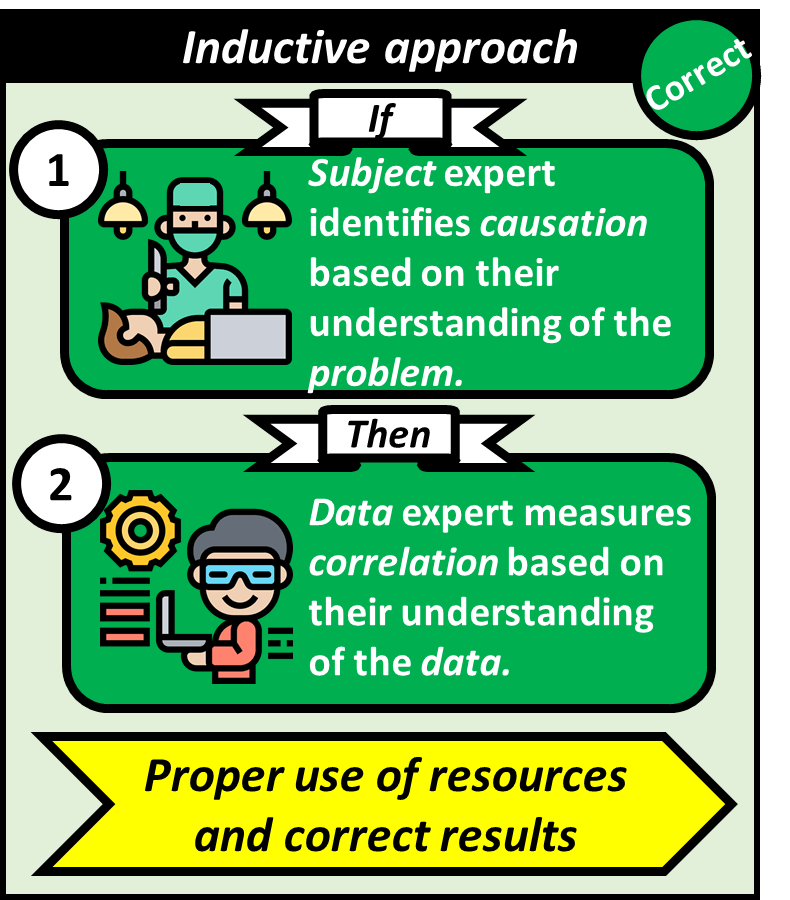
Correct Approach for Identifying Causation
Using induction will lead to reduced work and the best possible results.
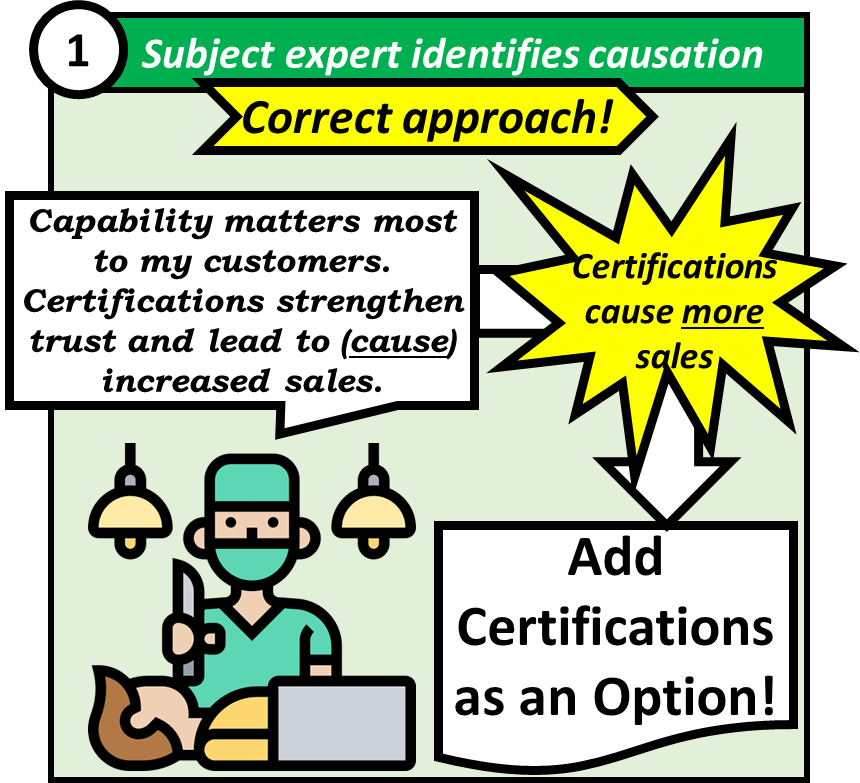
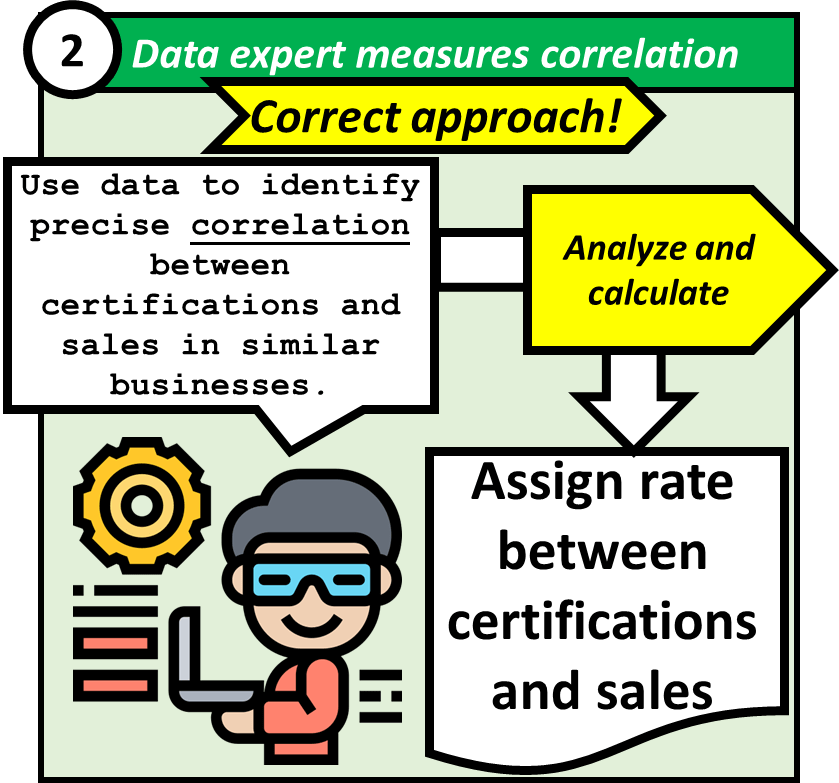
The Correct Approach is Vital
The underlying issue is that data alone rarely reveals true causation. This is why an inductive approach is essential, where human intelligence identifies causation based on actual subject expertise and then data intelligence measures correlation based on analytics expertise. Advanata strikes the right balance between human insight and data analysis, speeding up the analysis process and delivering the best possible results.
Sign up to get the latest articles and product updates.
Ready to see Advanata in action? Explore more resources, read related articles, and access the full application at advanata.com.
Want a personalized walkthrough? Contact info@advanata.com to get application access and schedule a demo.
 Advanata
Leave a comment