

It’s time to start talking about data! While data can be a starting point on our journey, it’s not the final destination, and should never become a barrier to solving our business challenges.

Content and Utility
Let’s start at the very beginning and look at the different types of content based on their origin and intended use.

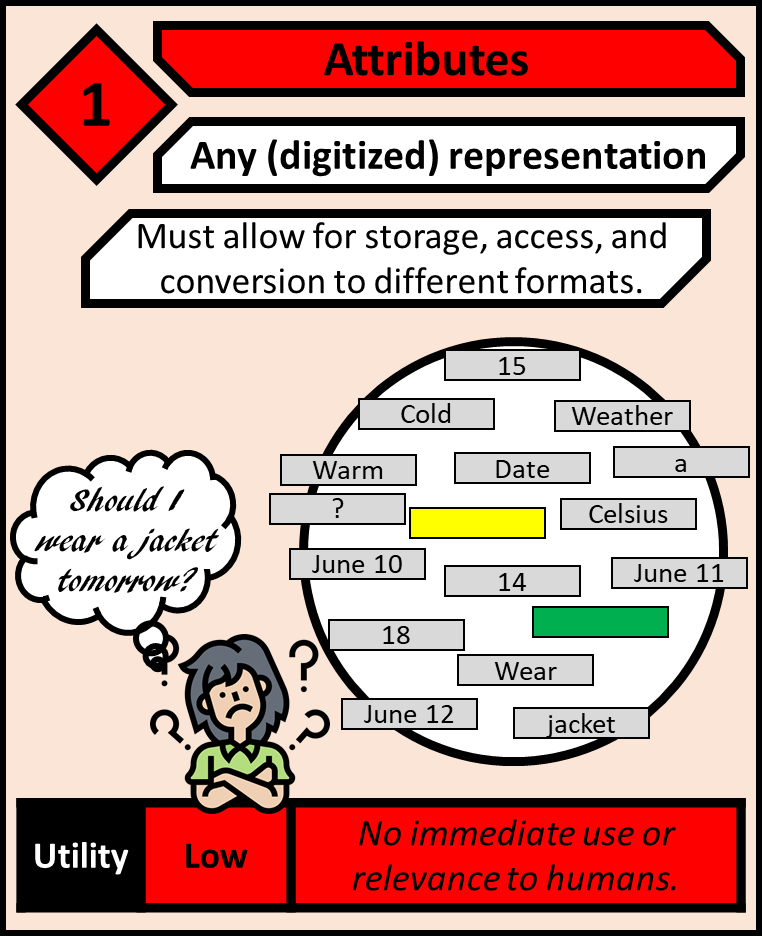
Unclassified digital representations are the foundation of content. Without context, a human cannot tell what they represent or what their purpose is.
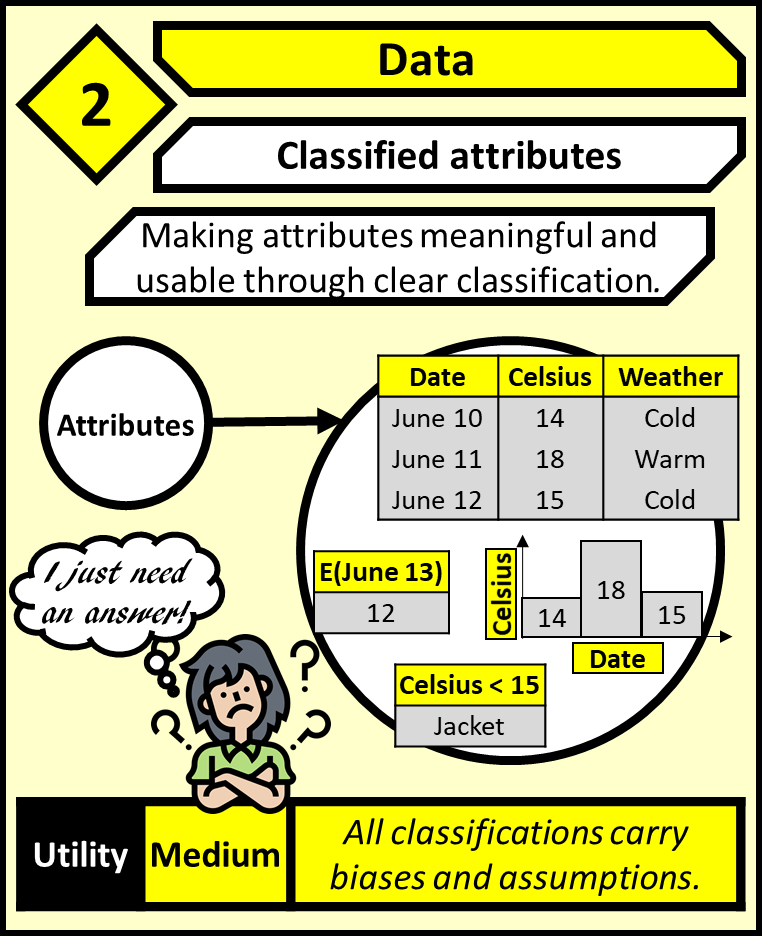
Classifying attributes produces data that can be understood by humans. Every classification will introduce biases and assumptions. Completely objective data does not exist, as all classification carries some level of undefined preconception.
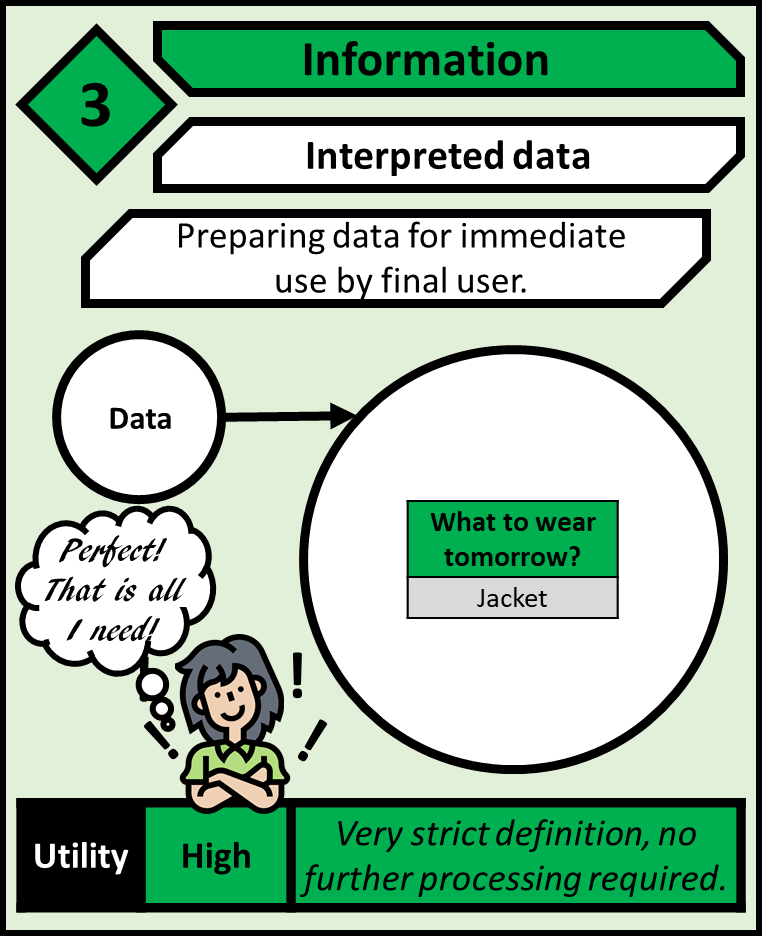
Data becomes information once it is fully interpreted and ready for the end user. If any further processing is required, it is still considered data. Keep in mind that desired information may not be obtainable from any data, and similarly, available data may not yield any desired information.
Analytics and Advanata
A precise definition of analytics shows it is more involved than just delivering data. Advanata’s unique approach uses information exclusively, enhancing both the efficiency and effectiveness of analytics.
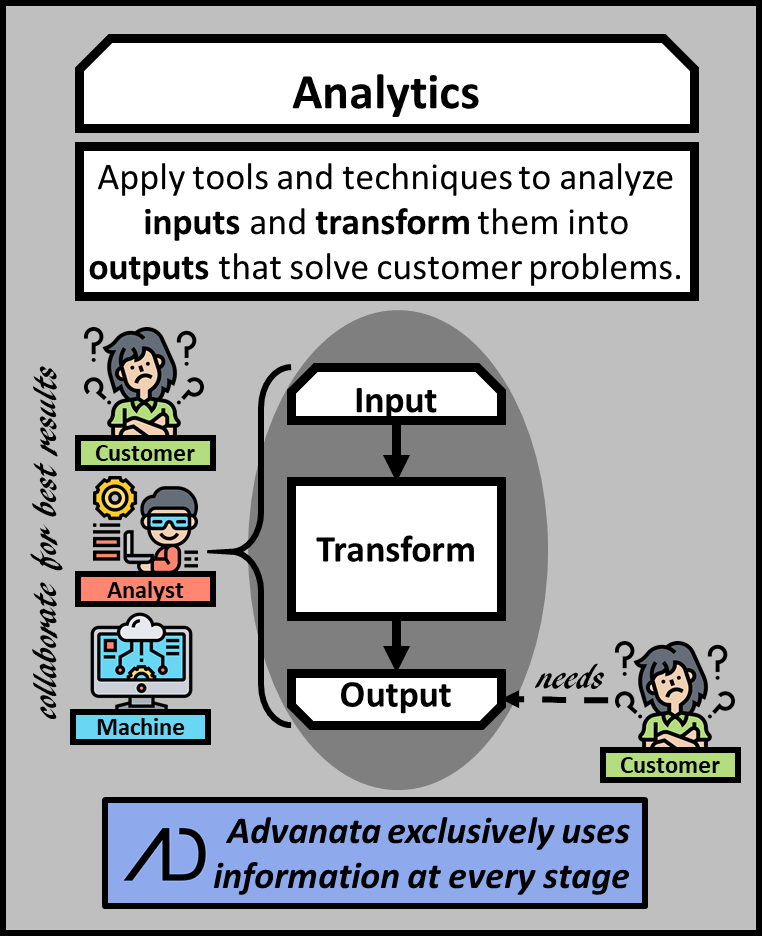
Through its problem decomposition process, Advanata uses information as input, uniquely enabling customers to actively participate in parameter estimation.
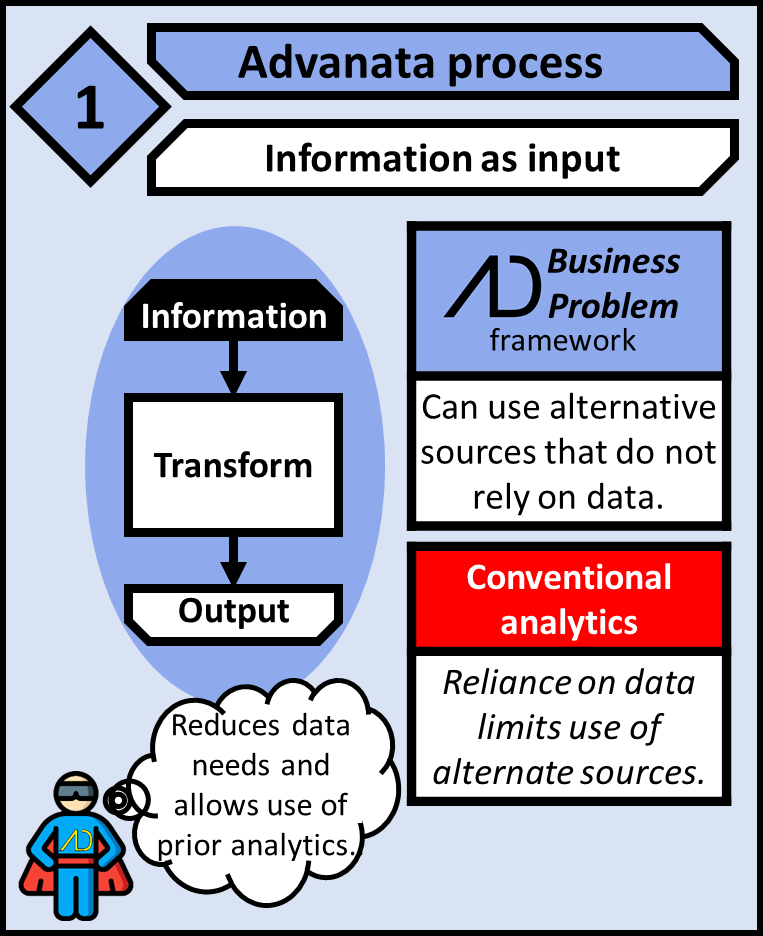
When outputs are solely information, no further processing is required which makes the analytics process complete and self-contained.

Importantly, information is used internally to clarify how inputs transform into outputs. This key advantage empowers customers to lead the analytics process.

Go Beyond Data
Data is only part of the solution and not the end product. By reconsidering why we need data, we realize that what we truly need is information. By using information exclusively at every stage, Advanata overcomes traditional analytics barriers and empowers customers to effectively solve their pressing business challenges.
Sign up to get the latest articles and product updates.
Ready to see Advanata in action? Explore more resources, read related articles, and access the full application at advanata.com.
Want a personalized walkthrough? Contact info@advanata.com to get application access and schedule a demo.
 Advanata
Leave a comment