

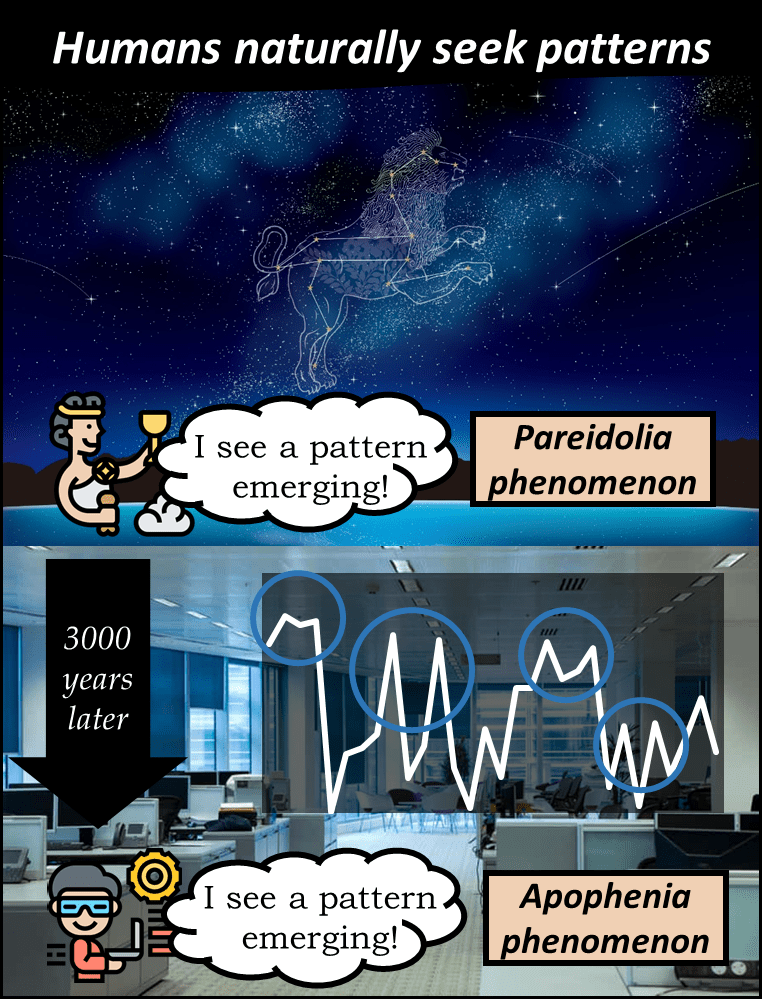
Pattern recognition is a powerful human capability, but it can be misleading. We routinely detect patterns that are not real, and when these are embedded in analytics, the consequences can be severe. Given enough data, patterns seem to appear everywhere, from sales projections to flu seasonality, but whether these patterns are real or illusory is often unclear.
Pattern Validation
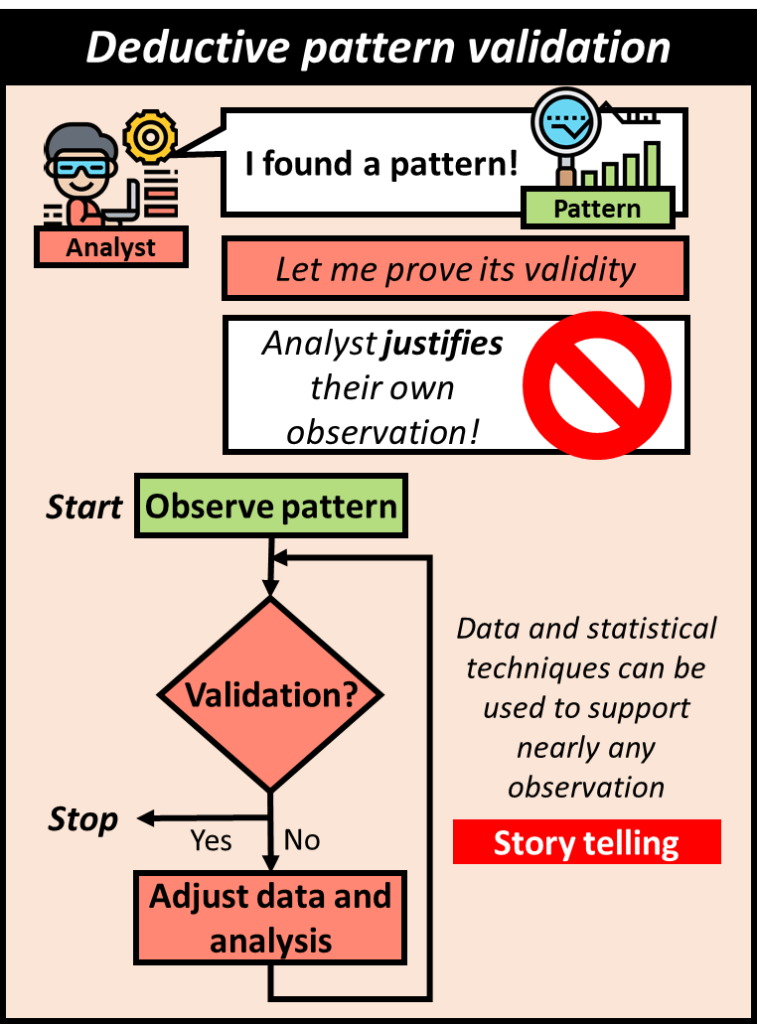
A purely data-driven approach to validating patterns lies at the heart of many analytics failures. Practices such as data mining and investigative data deduction often do little more than dress randomness in quantitative language.
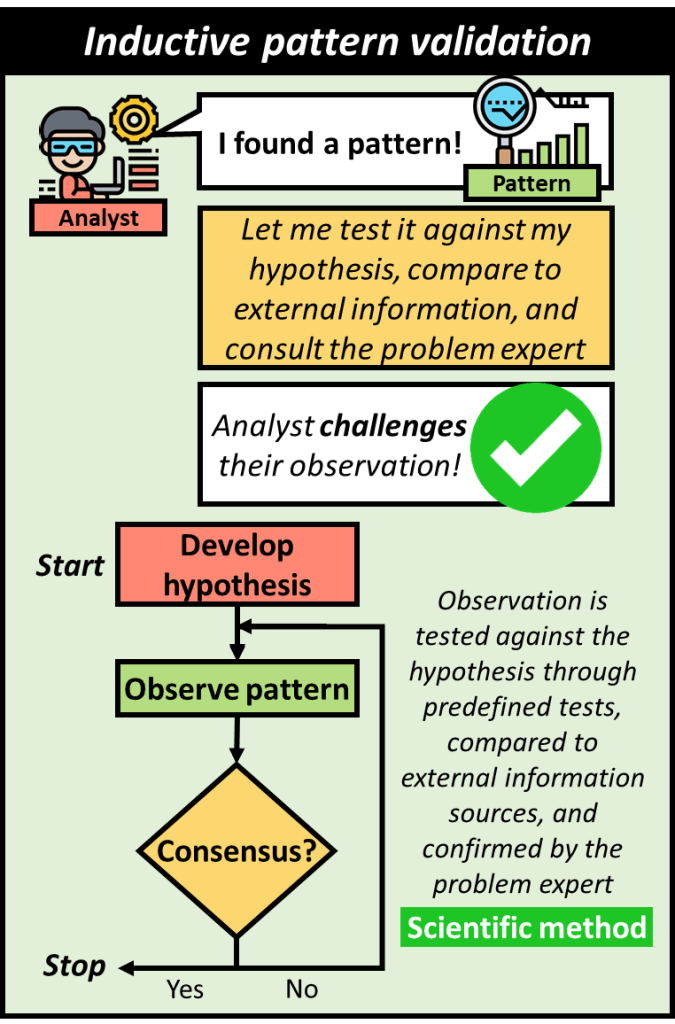
Patterns add value only when validation starts with a clear hypothesis, is tested using predefined methods, and is confirmed through external information and expert judgment. Analytics are important and this level of rigor is necessary for reliable results.
Problem Decomposition
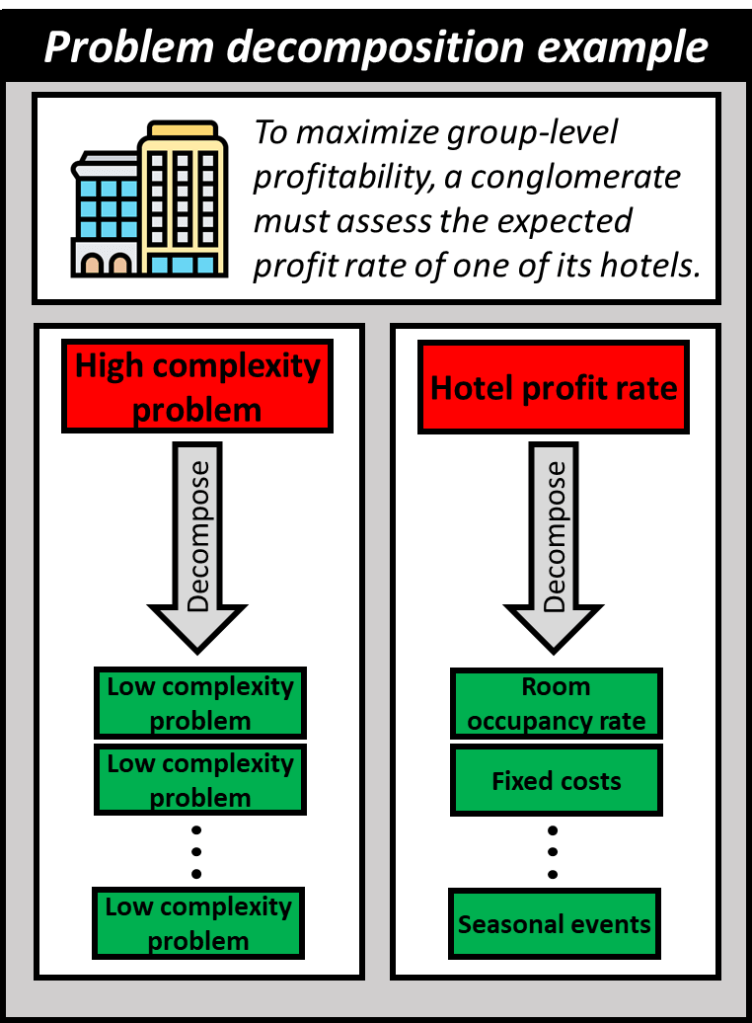
Proper pattern verification works best when complex problems are broken into simpler ones. Advanata is designed to make this decomposition fast and easy.
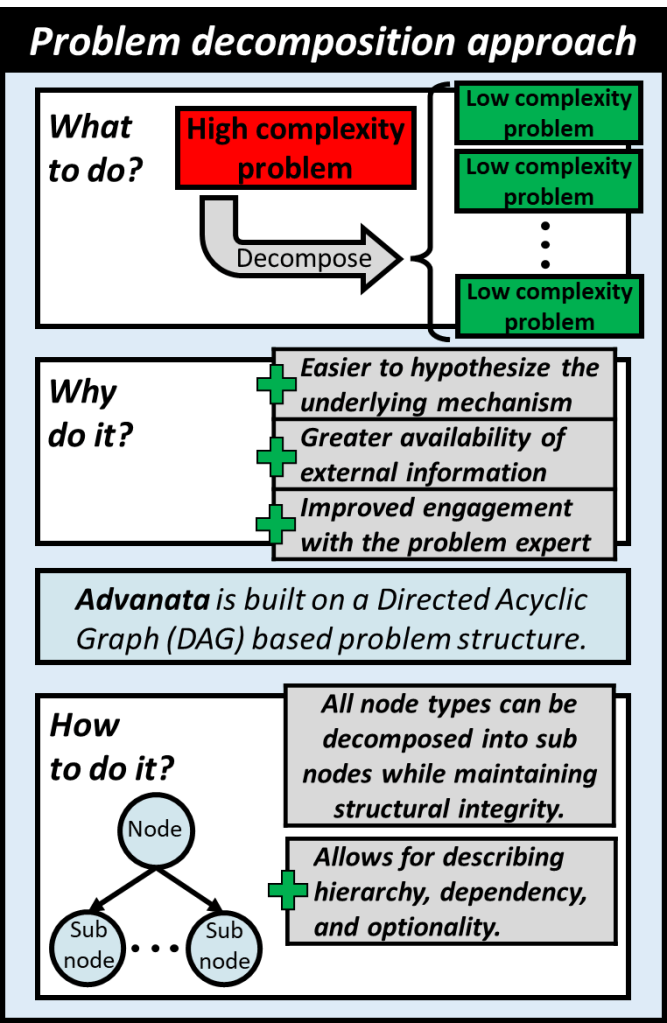
Decomposing a Complex Problem
The following example shows how breaking a problem into simpler parts allows for improved pattern verification.
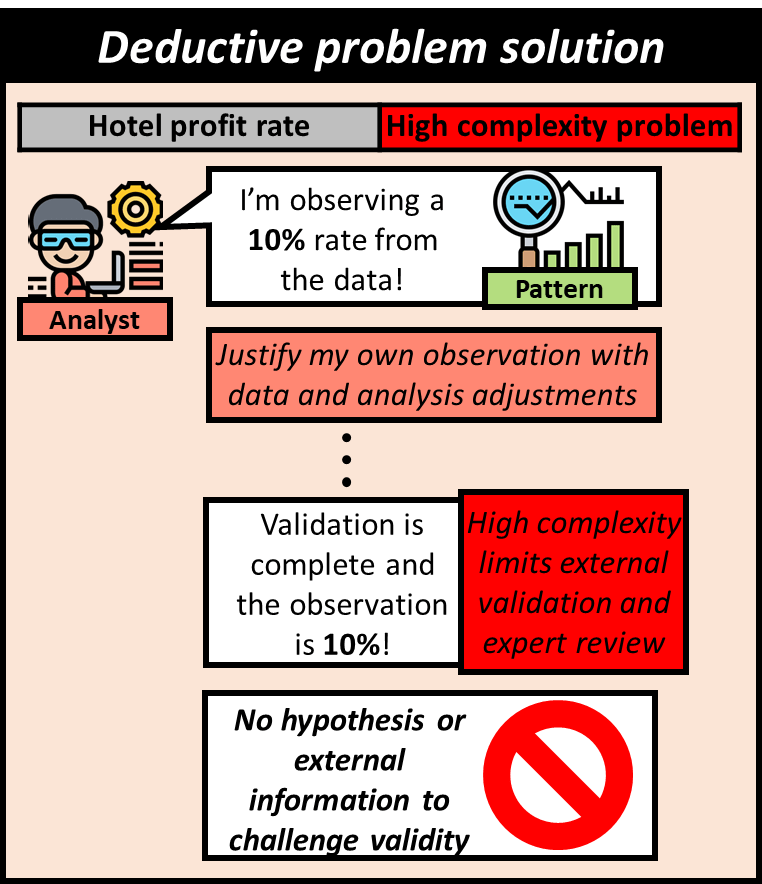
Applying a deductive approach to the problem offers no reliable way to separate real patterns from random noise.
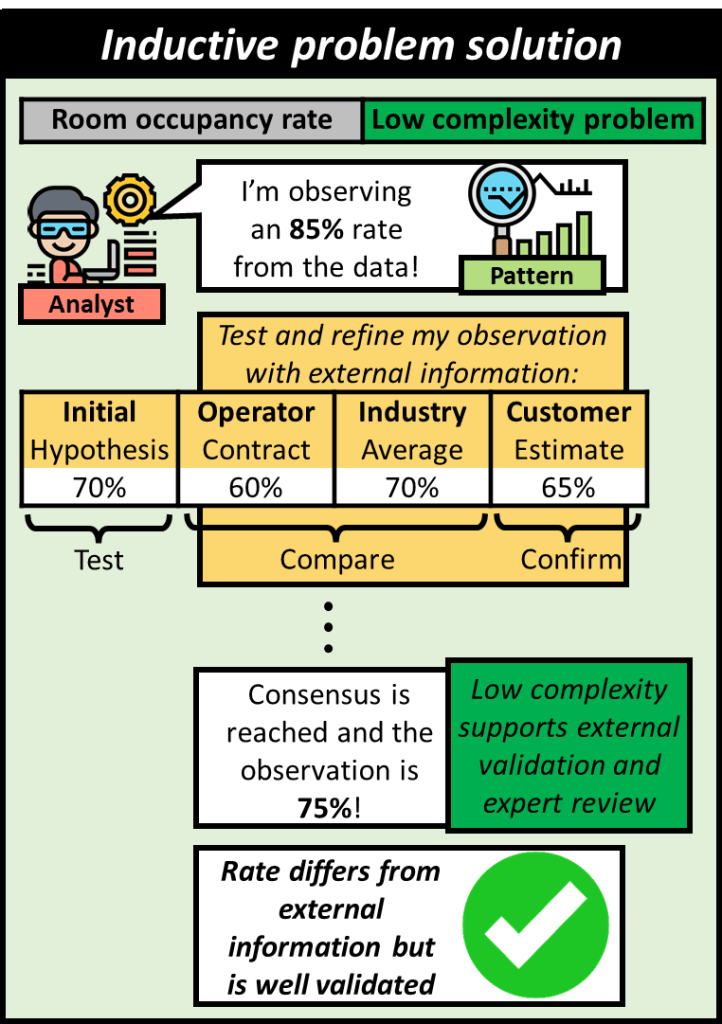
Using an inductive approach on one of the simpler problems enables reliable pattern verification and produces a better result.
Don’t Trust the Pattern
Distinguishing real patterns from random noise is essential to performing true analytics rather than pseudo-quantitative storytelling. Proper safeguards must be in place to ensure that verification is thorough and reliable.
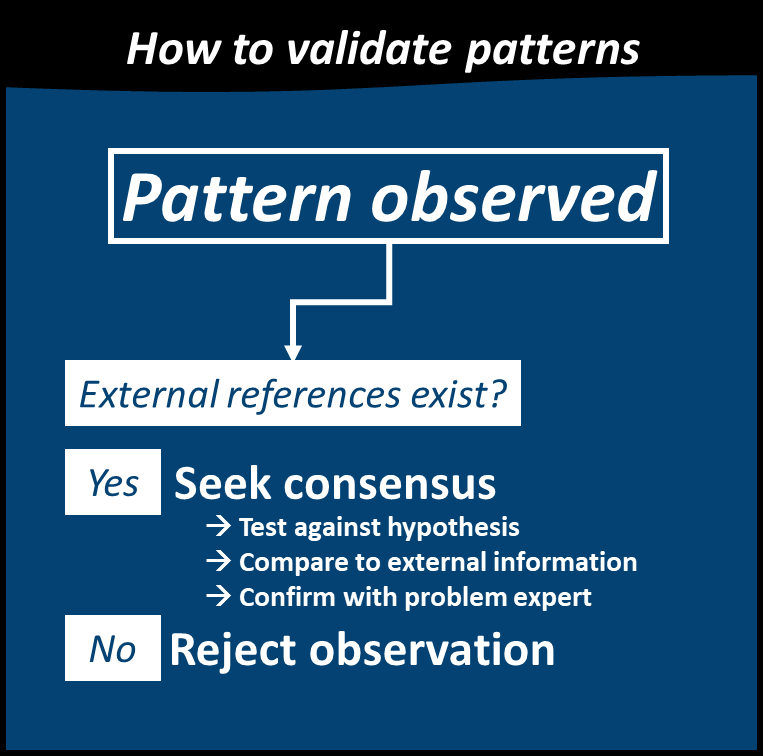
The pattern in the first image comes from a random number generator, showing how easily false patterns emerge. A proper methodology for pattern verification is critical, and Advanata‘s underlying structural design simplifies problem decomposition to support accurate verification.
Sign up for early access to articles, delivered every two weeks. Please check your spam folder for the confirmation email.
Ready to see Advanata in action? Explore more resources, read related articles, and access the full application at advanata.com.
Want a personalized walkthrough? Contact info@advanata.com to get application access and schedule a demo.
 Advanata
Leave a comment