

A major issue in analytics is the ongoing feud between customers and analysts. Customers often struggle to define their needs or interpret the results, while analysts may miss key details of the problem or fail to present findings in a clear, accessible way. This back-and-forth can lead to rising costs, mounting frustration, and missed opportunities to gain real value from analytics.
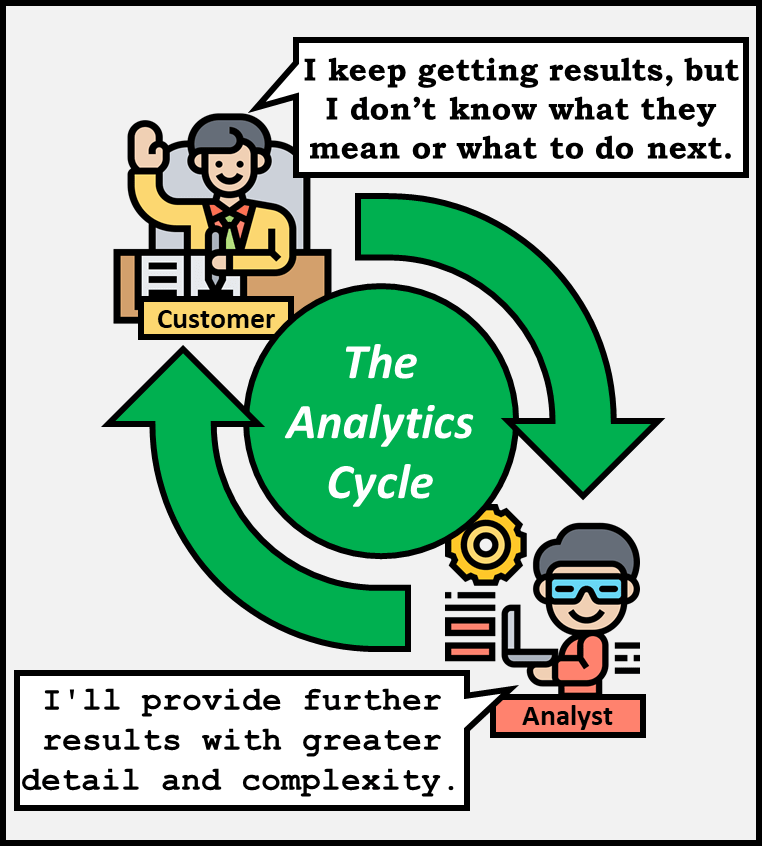
Challenge with Analytics
The gap between customers and analysts comes from the distinct roles they play in problem solution. While analysts aim to deliver depth and detail, customers desire clear, actionable results.
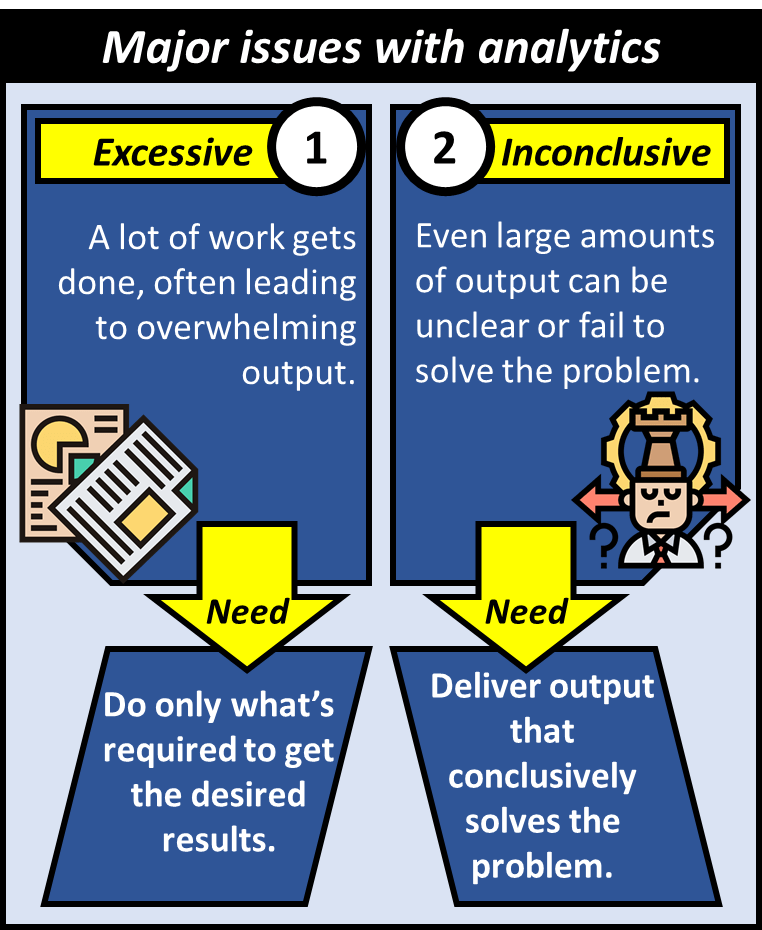
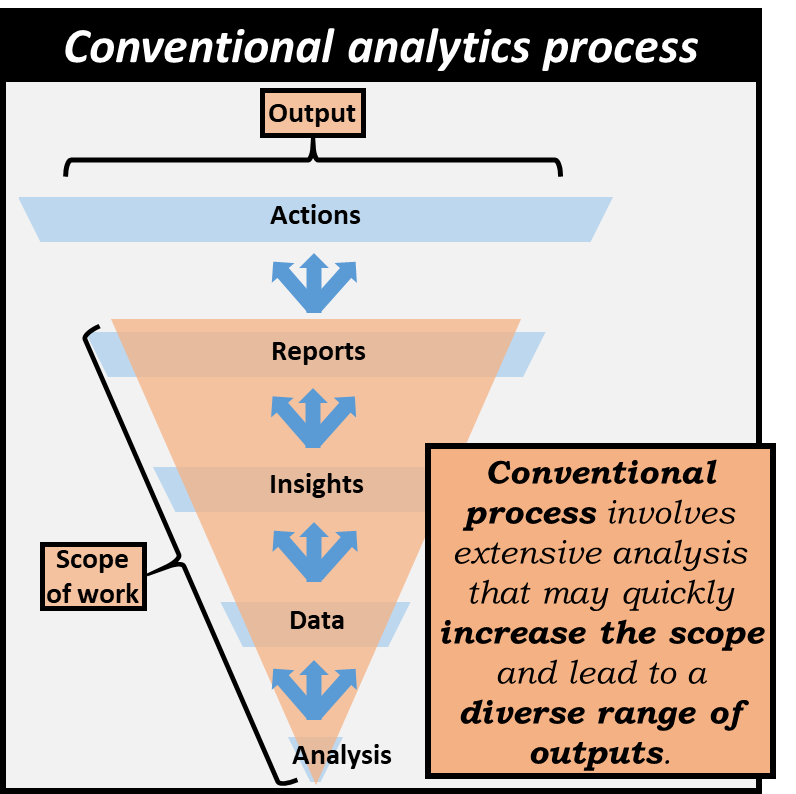
Conventional Analytics Process
The conventional analytics process uses a bottom-up approach, which ensures thorough and objective results. However, this can quickly expand the scope of work and lead to many possible interpretations by the customer. While skilled analysts can narrow the focus, the process remains more of an art than a clearly defined method.
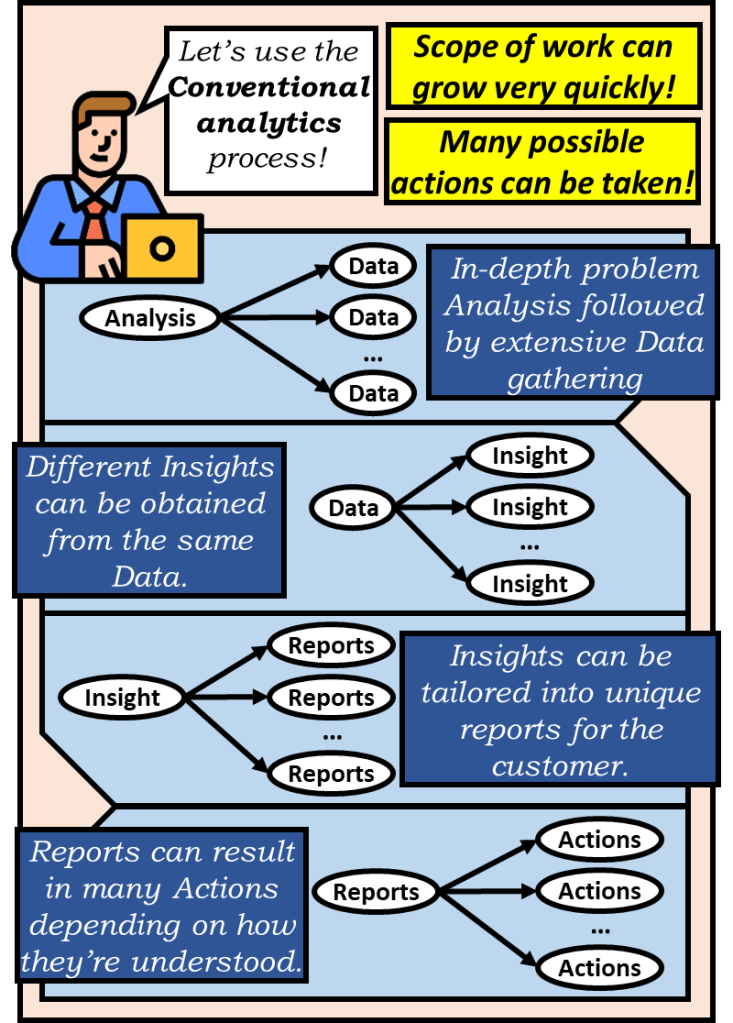
The scope of work can quickly grow due to the complexity of each stage in the process. Since actions typically fall outside the analyst’s responsibilities, customer interpretation can risk undermining the entire analysis.
Advanata Process
Advanata uses a top-down approach designed to effectively solve most real-world analytics problems. This method replaces the typical one-to-many complexity with a streamlined one-to-one process, offering a clear, objective framework for building practical and effective analytics solutions.
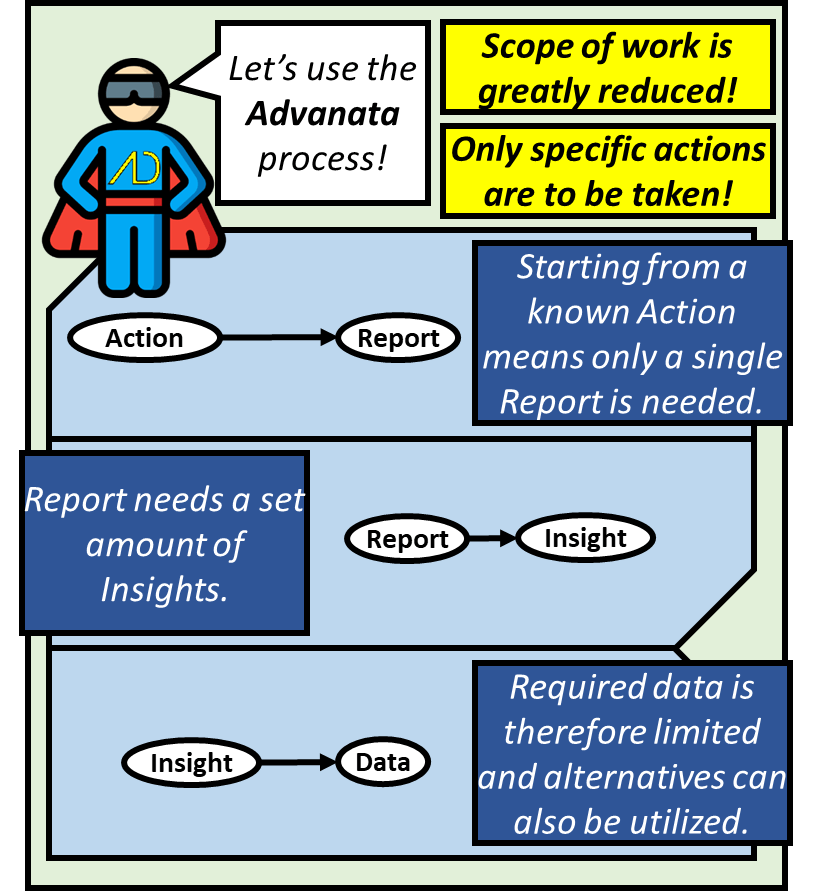
This approach keeps the scope of work controlled and also eliminates the need for extensive upfront problem analysis. It also accounts for the customer’s actions, making the analysis results easy to use and ensuring accurate implementation.

Maximizing Results Without the Waste
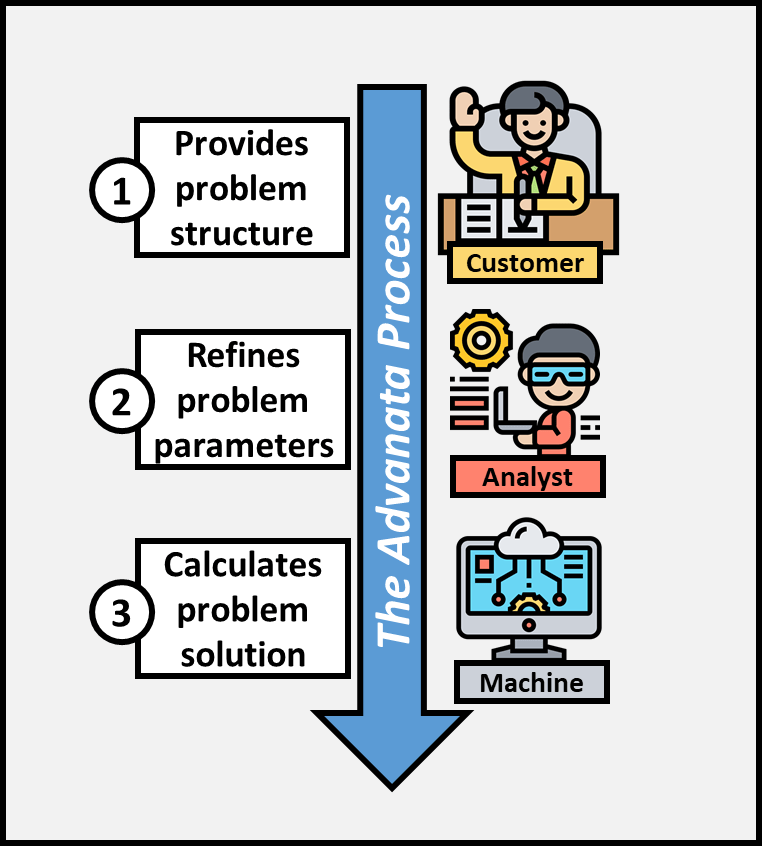
Clearly defining the roles of customers, analysts, and even machines is essential for effectively solving analytics problems. Advanata’s robust, user-friendly process accelerates result generation, enhances usability, and helps unlock the full value of analytics.
Tell us in the comments what other issues make analytics harder to use?
Sign up to get the latest articles and product updates.
Ready to see Advanata in action? Explore more resources, read related articles, and access the full application at advanata.com.
Want a personalized walkthrough? Contact info@advanata.com to get application access and schedule a demo.


Leave a Reply