

Beautifully designed gauges and flashy interactive charts are no substitute for real problem solving. Running business operations through dashboards turns firefighting into standard practice. Dashboards have their place, but too often they’re misused when actual analytics are what’s really needed.
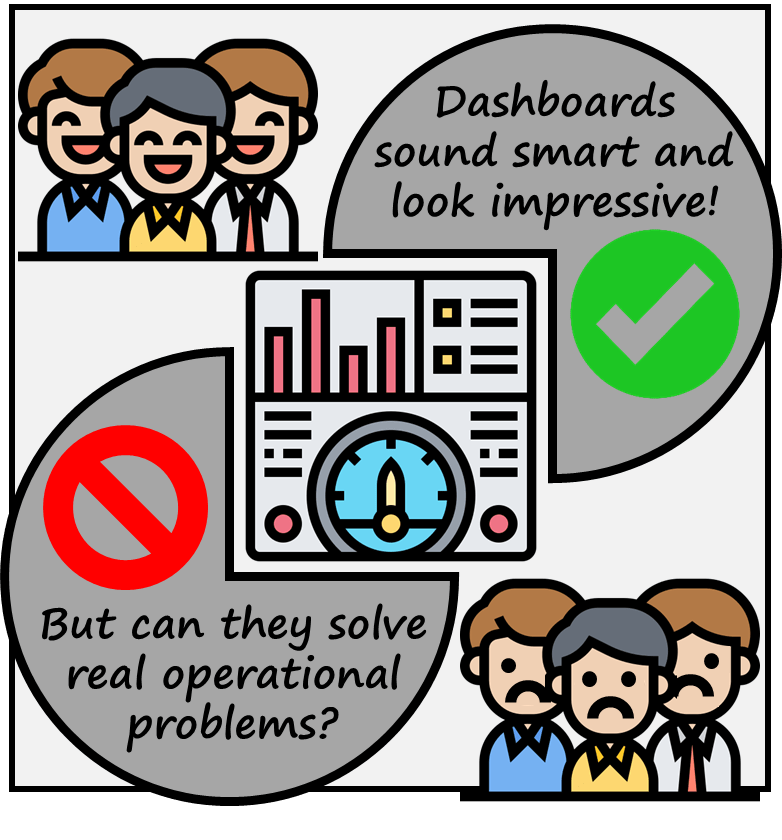
The Dashboard Promise
Controlling business operations with the precision and agility of a fighter jet sounds ideal, but it’s far from reality. A pilot’s actions directly control the jet, with no organizational layers or shifting business conditions to navigate. Modern aircraft operations simplify instrument panels through automation, allowing pilots to focus on what matters most. In contrast, business dashboards keep expanding in size and complexity, often distracting more than helping.
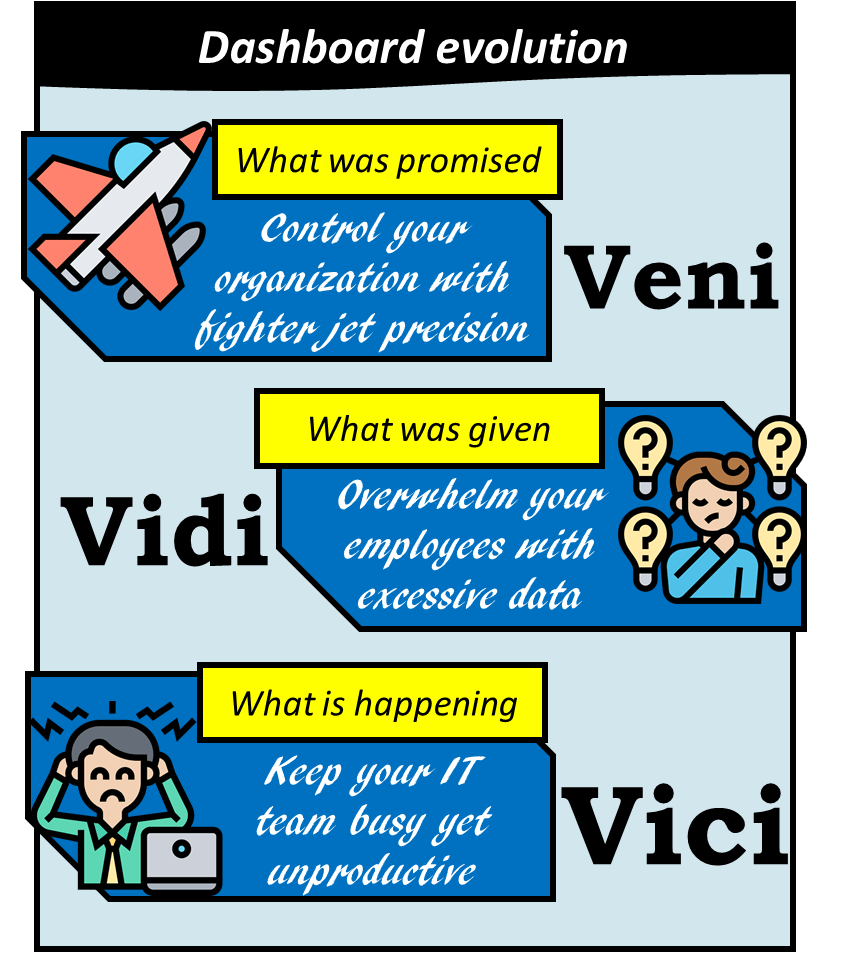
Problems with Dashboards
Dashboards are essentially reporting tools, yet in many real-world deployments, they fail even at that basic role. The core issue is that they are built on the assumption that more data means more value, which often leads to additional confusion for the intended user rather than helping to solve real problems.
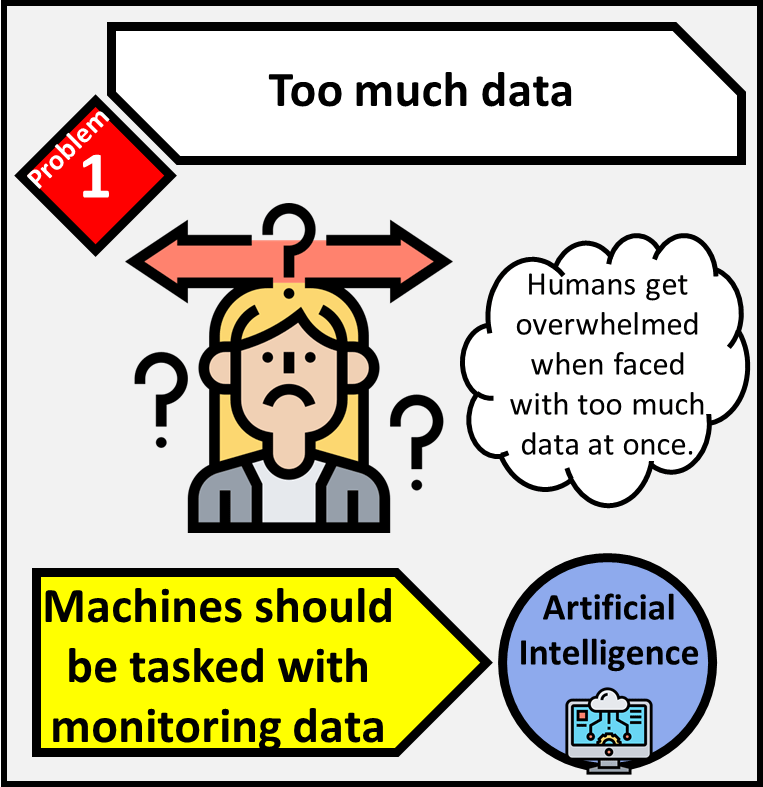
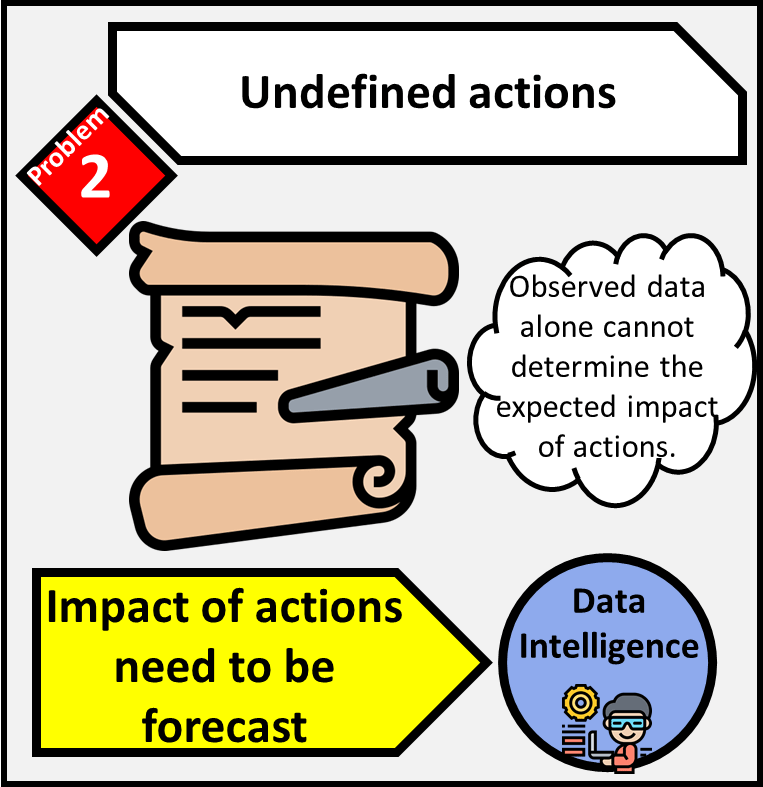
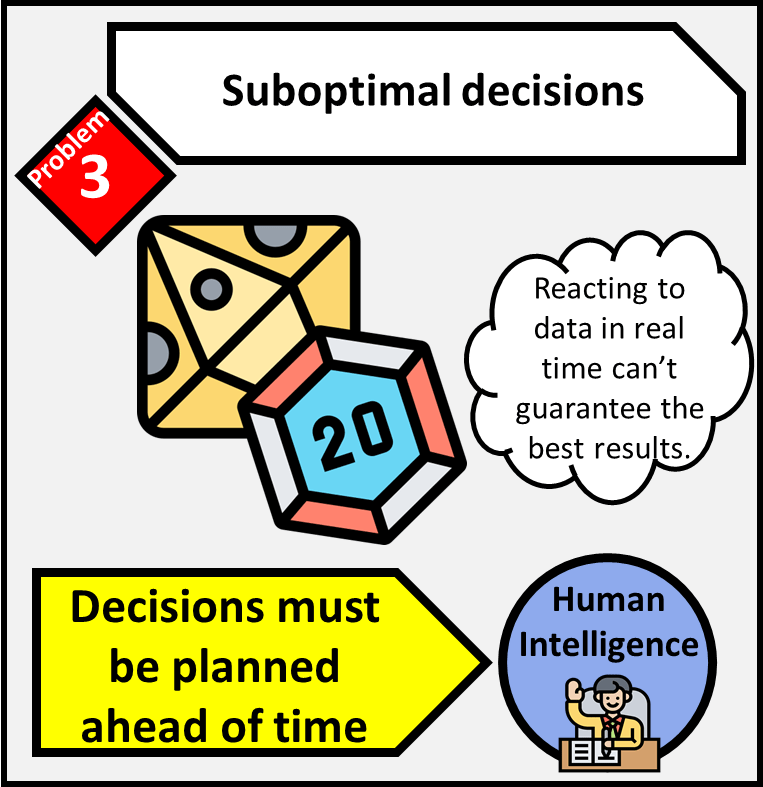
Actual Analytics Provide Solutions
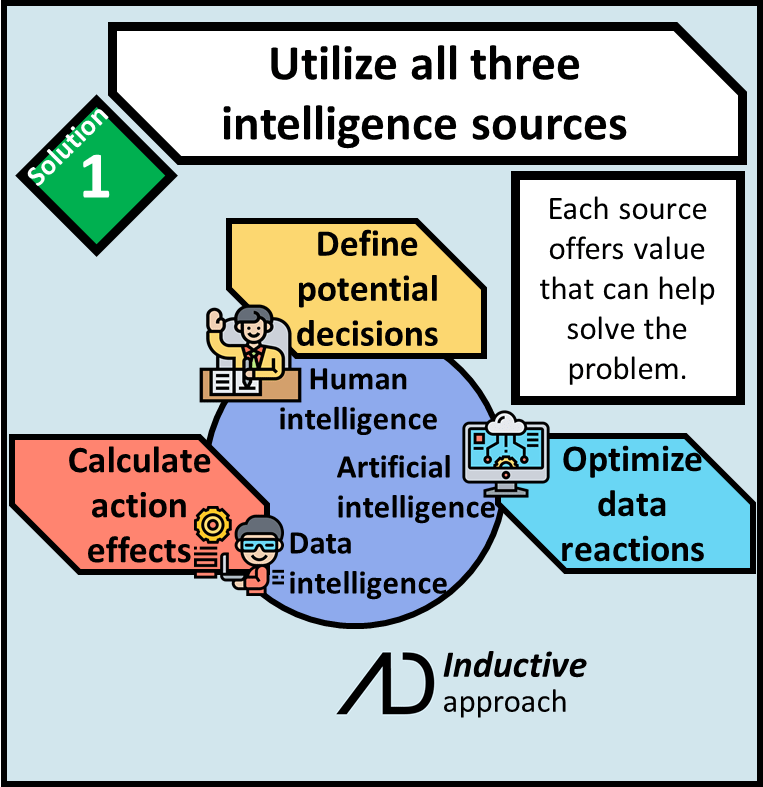
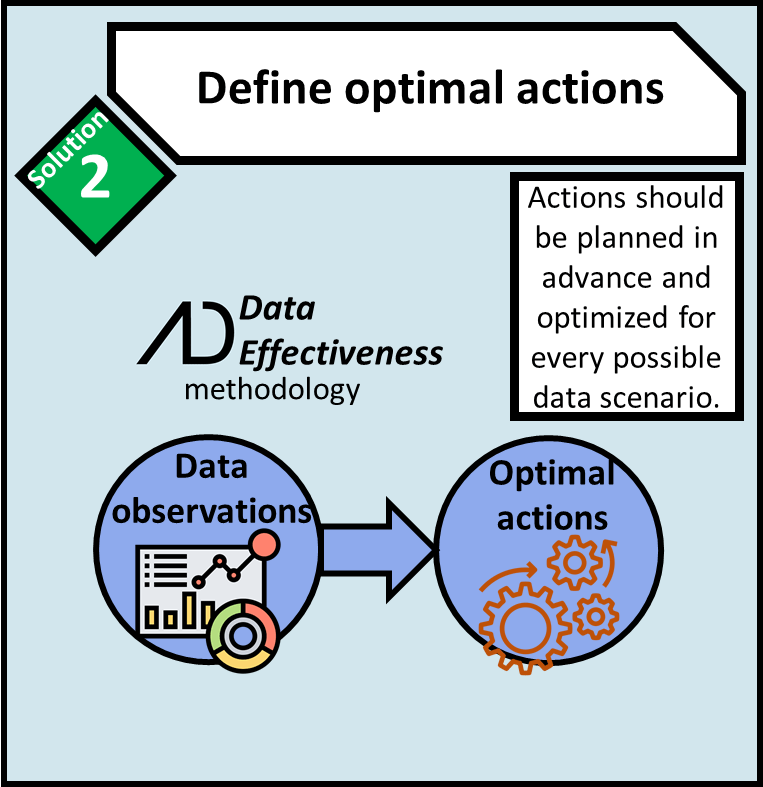
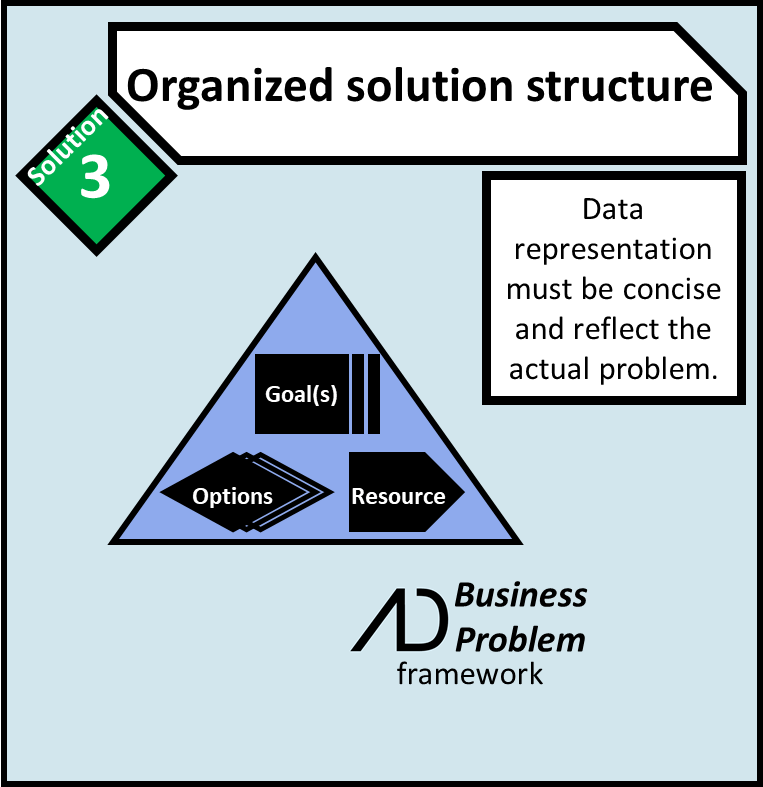
Analytics solve business problems through a process far more involved than simply displaying data. Advanata plays a key role in simplifying this process and ensuring useful results. (Click images for technical details)
What to do with Dashboards
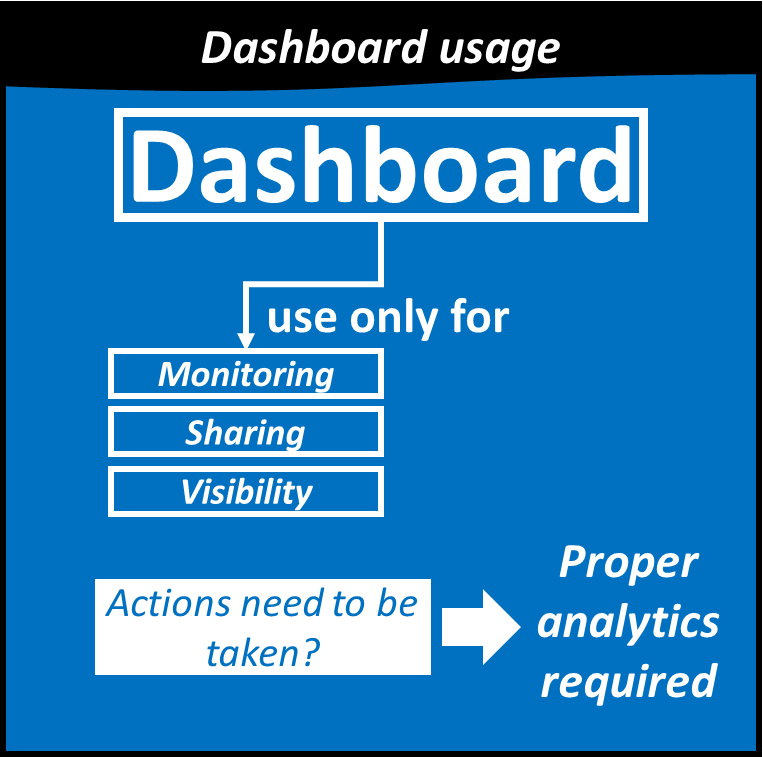
Dashboards are useful in certain cases, such as providing transparency to external parties, reporting to management, or (perhaps) sharing research data internally. Beyond that, their role is limited. They are essentially well-formatted data reports and should not be expected to deliver much more.
The importance of analytics to any business cannot be overstated. Analytics aren’t a luxury but a necessity for survival in a continuously evolving business world and providing overly complex tools or handing users endless data won’t achieve this goal. Advanata, with its underlying technologies, is built to help businesses not just adopt analytics but use them effectively and thrive.
Sign up to get the latest articles and product updates.
Ready to see Advanata in action? Explore more resources, read related articles, and access the full application at advanata.com.
Want a personalized walkthrough? Contact info@advanata.com to get application access and schedule a demo.
 Advanata
Leave a comment