

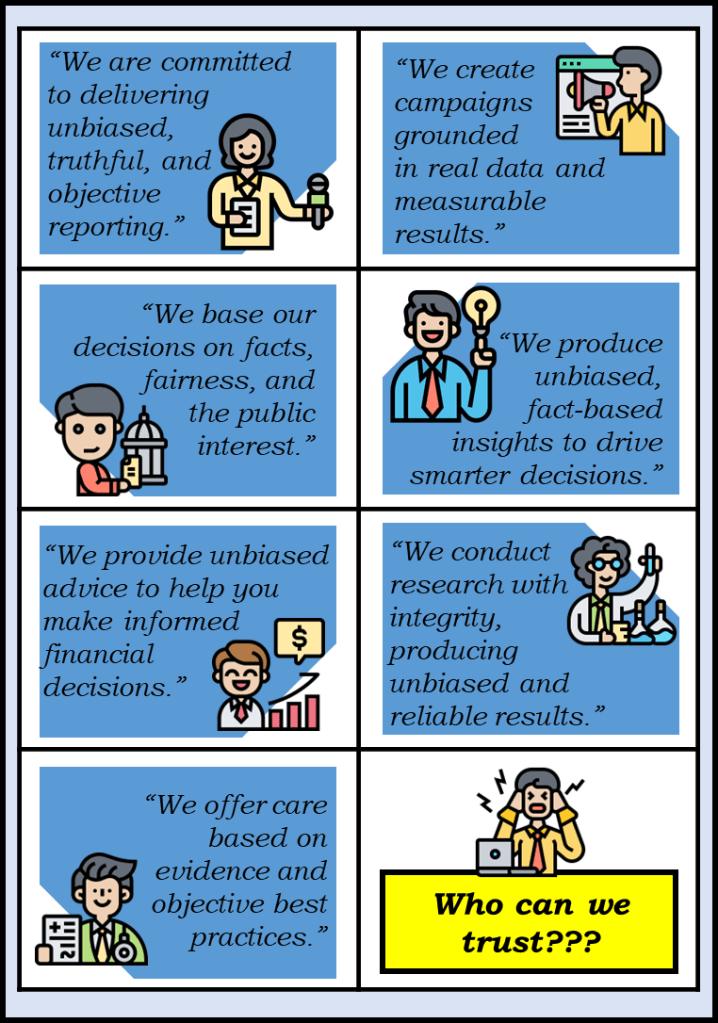
It’s often said that data-driven results are factual, accurate, and unbiased. But is that really true? Let’s explore whether data itself can ever be truly objective and, by extension, whether anything derived from it can be.
Can Content Ever Be Objective?
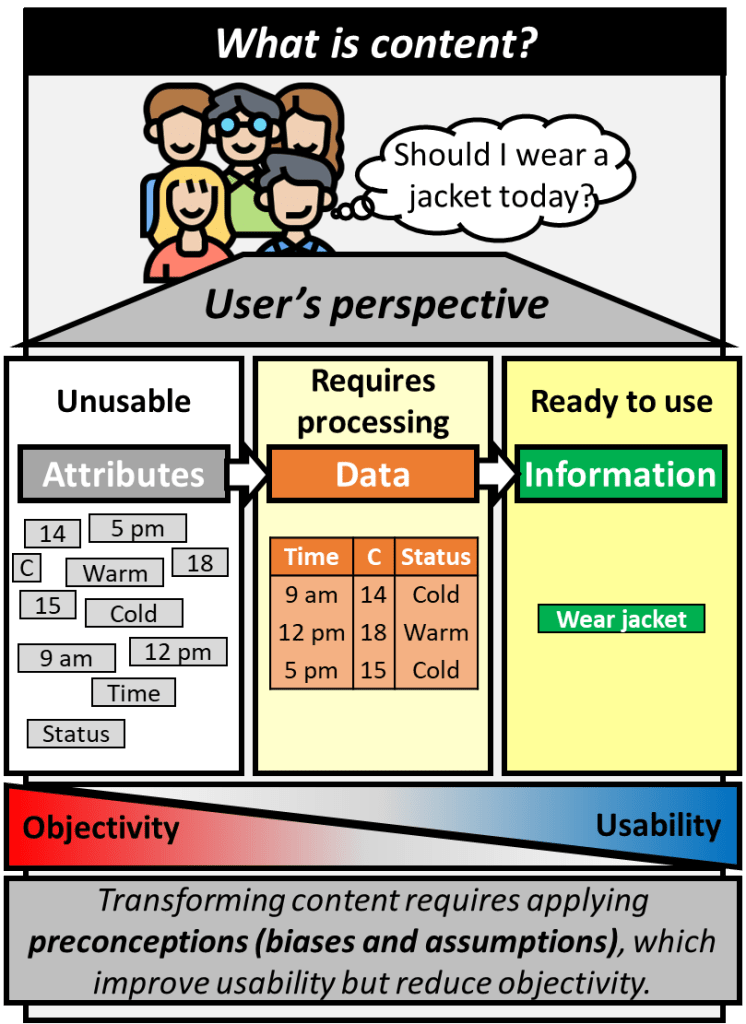
Defining content ultimately depends on the user’s perspective. Transforming content into alternative forms requires applying preconceptions to interpret it and expertise to reshape it into something more useful.
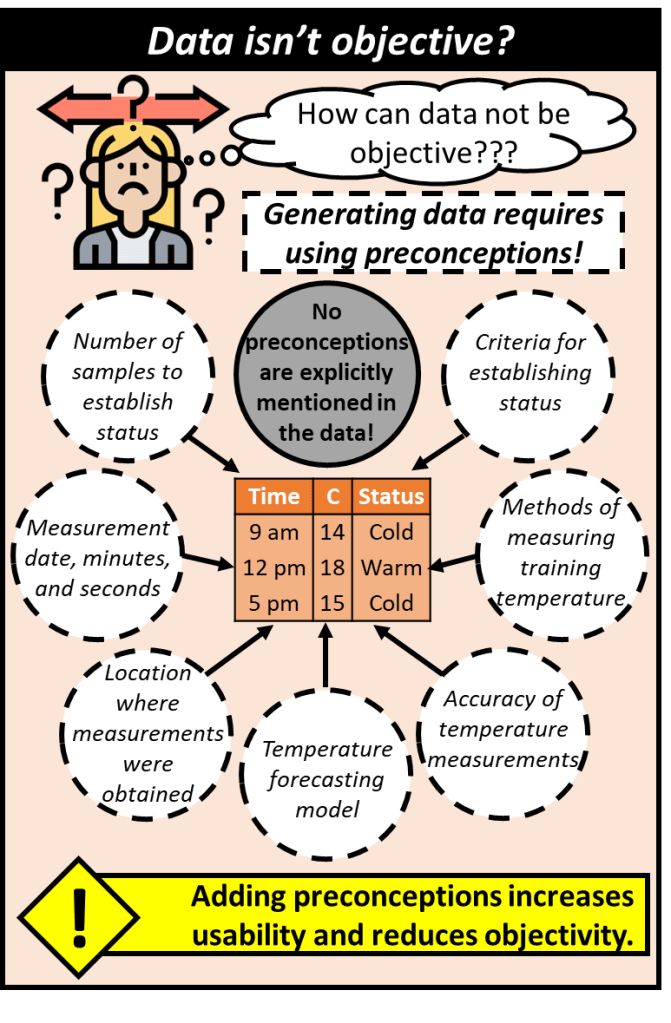
This brings us to the first hard truth: data can never be truly objective unless it lists every possible preconception and each one, rather paradoxically, aligns with our subjective idea of objectivity. This is impossible, as even the simplest dataset could hold infinite potential preconceptions.
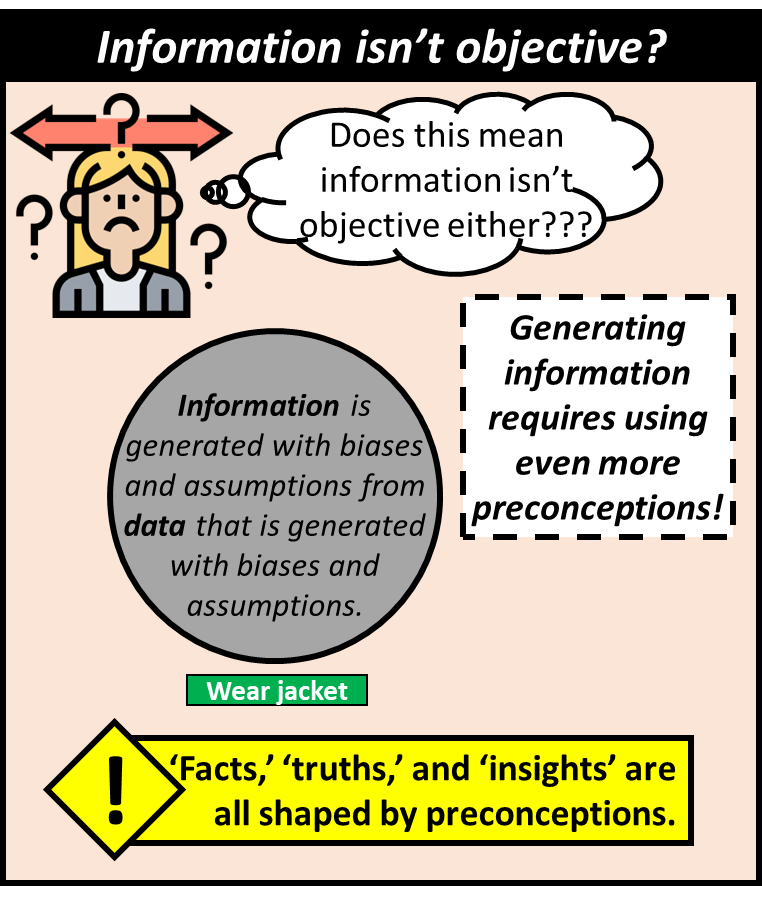
This leads to an even harder truth: any information derived from data rests on even more unlisted preconceptions introduced during the transformation process.
How Content Moves and Changes Form
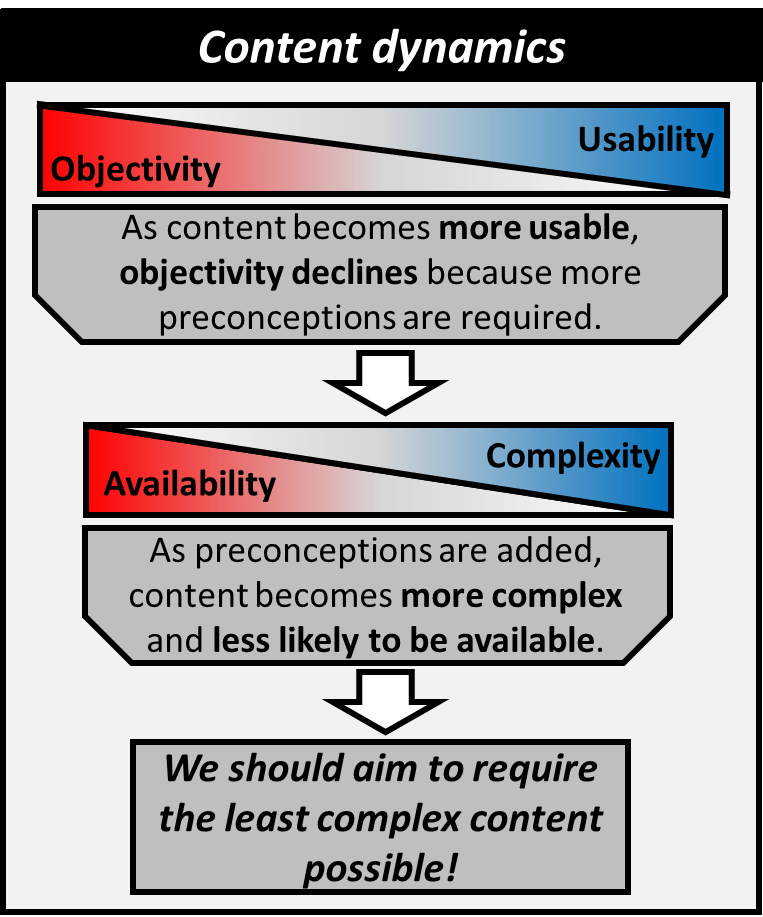
In practical terms, as content becomes more usable, its objectivity decreases since transformation requires additional preconceptions. These added layers make it structurally more complex, even if it seems simpler to the user, and therefore less readily available.
Harnessing Content Dynamics
Advanata leverages these dynamics to increase the availability of suitable content. The key insight is that simpler problems rely on simpler content, which is easier to obtain and also happens to be more objective.
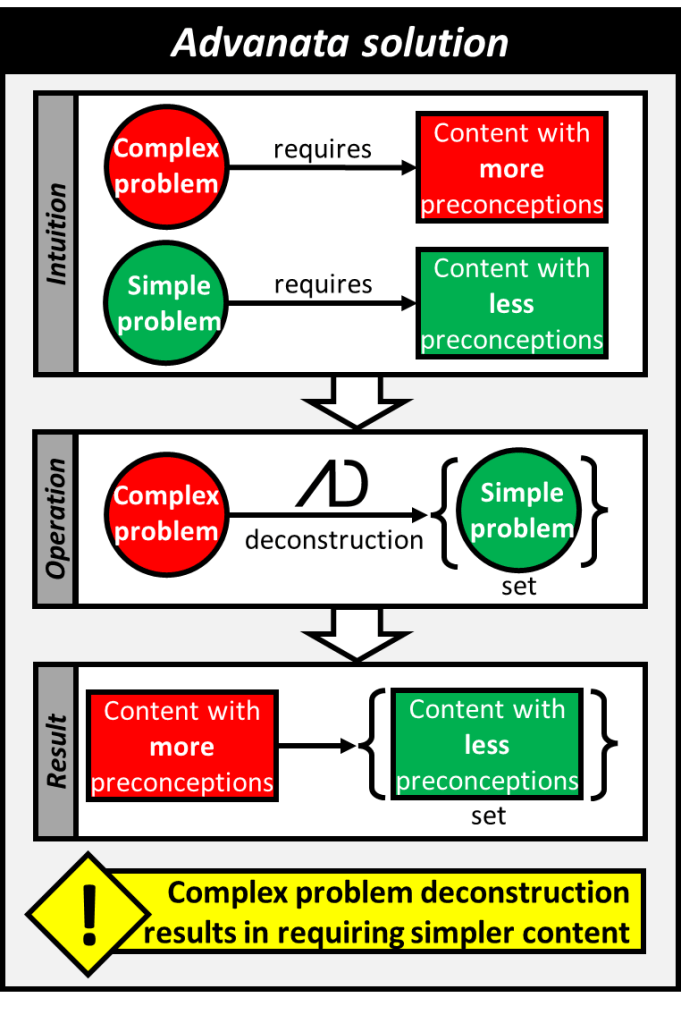
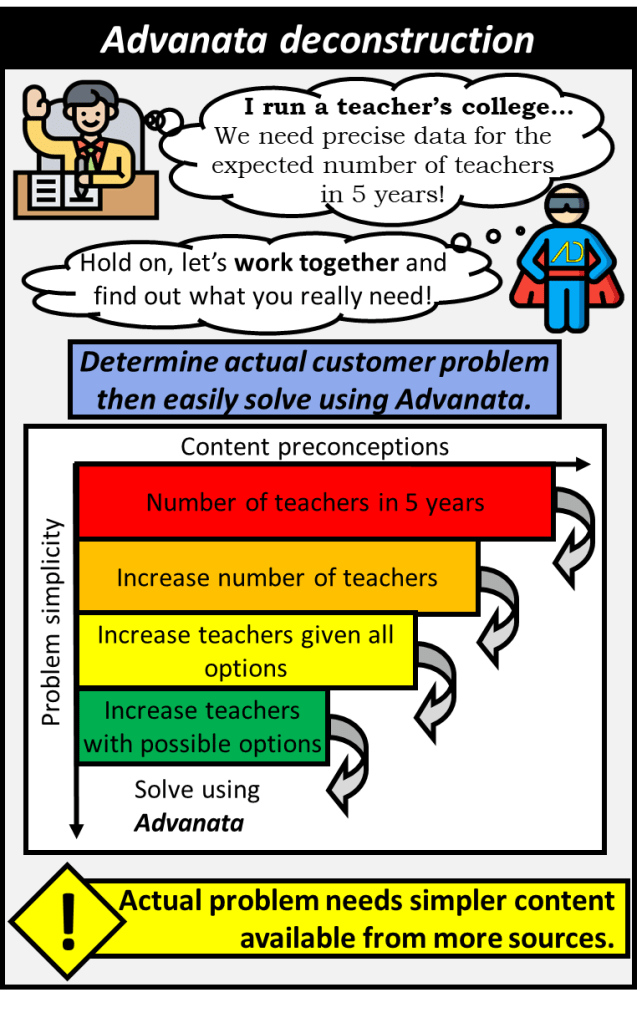
The following example shows how a typical data-focused analytics problem can be greatly simplified by first defining the problem’s scope and what needs to be solved, rather than rushing into data gathering for an open-ended problem.
Don’t Trust Claims of Objectivity
Data is never truly objective, nor is the information derived from it; that is simply the nature of content dynamics. The key is to simplify problems to reduce preconceptions, thus increasing potential content availability, and to involve problem experts in a structured way throughout the process in order to help navigate biases and assumptions and reach the best possible solutions.
Sign up to get the latest articles and product updates.
Ready to see Advanata in action? Explore more resources, read related articles, and access the full application at advanata.com.
Want a personalized walkthrough? Contact info@advanata.com to get application access and schedule a demo.


Leave a Reply