

How to Get Better Results with the Scientific Method

2 minutes

There are many approaches to solving business problems. This discussion will highlight which approach delivers superior results and how Advanata makes applying it simple and practical.
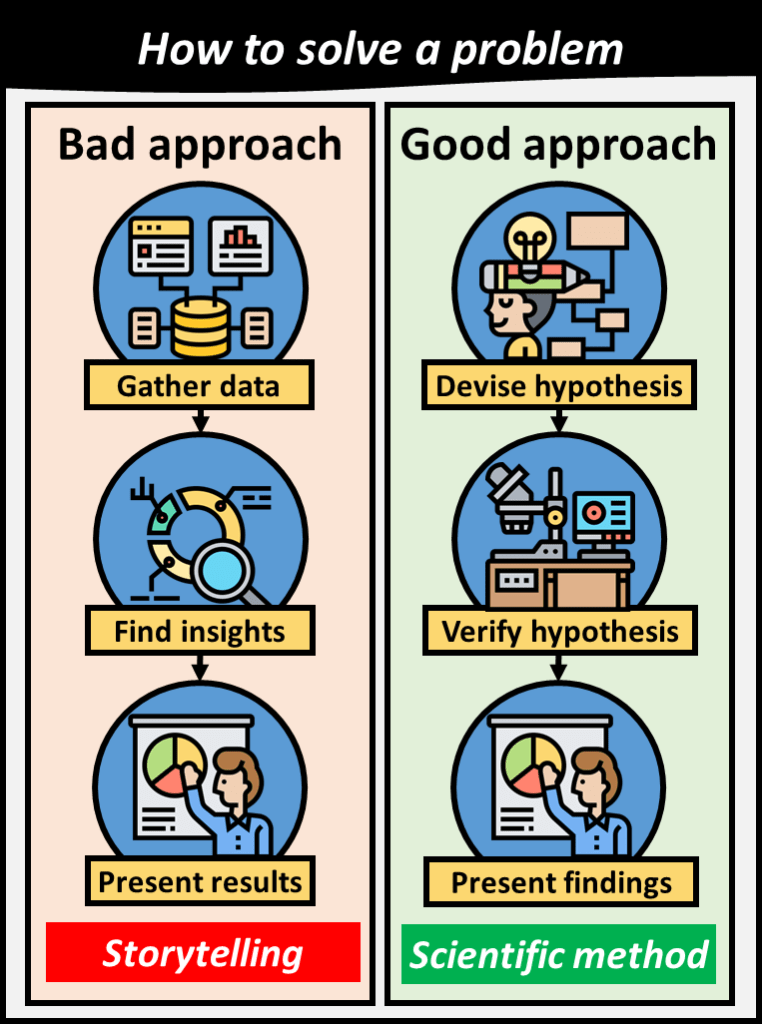
Bad approach to solving a problem starts with gathering data, then finding insights, and finally presenting results. this is storytelling. A good approach starts with a hypothesis that is then verified with the findings finally presented. This is the scientific approach.

A Hypothesis is Essential

A strong solution begins with a clear hypothesis. Without one, there is no real methodology, and the result becomes scattered observations loosely backed by analytics.
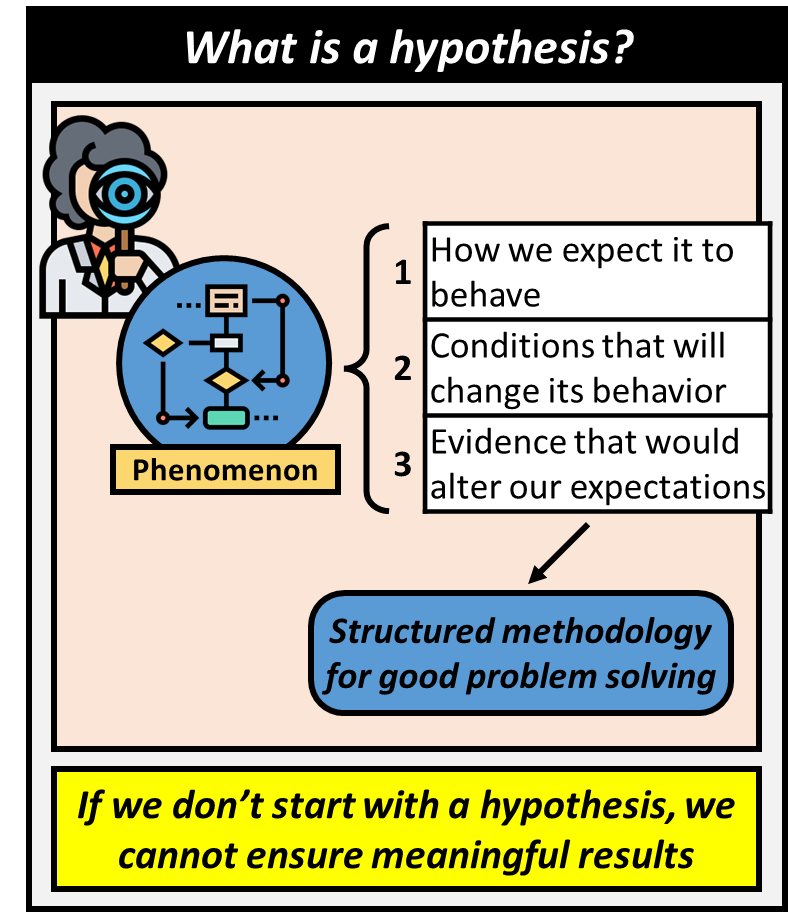
A hypothesis describes a phenomenon in terms of how we expect it to behave, conditions that will change its behavior, and evidence that would alter our expectations. This creates a structured methodology that is good for problem solving. If we don't start with a hypothesis, we cannot ensure meaningful results.

Problem Solving Approaches

A common claim is that recommendations should follow full analysis to preserve objectivity. This is misleading. All quantification requires judgment, and informed expertise is essential. Avoiding initial recommendations often reflects risk aversion rather than neutrality and may signal limited expertise.
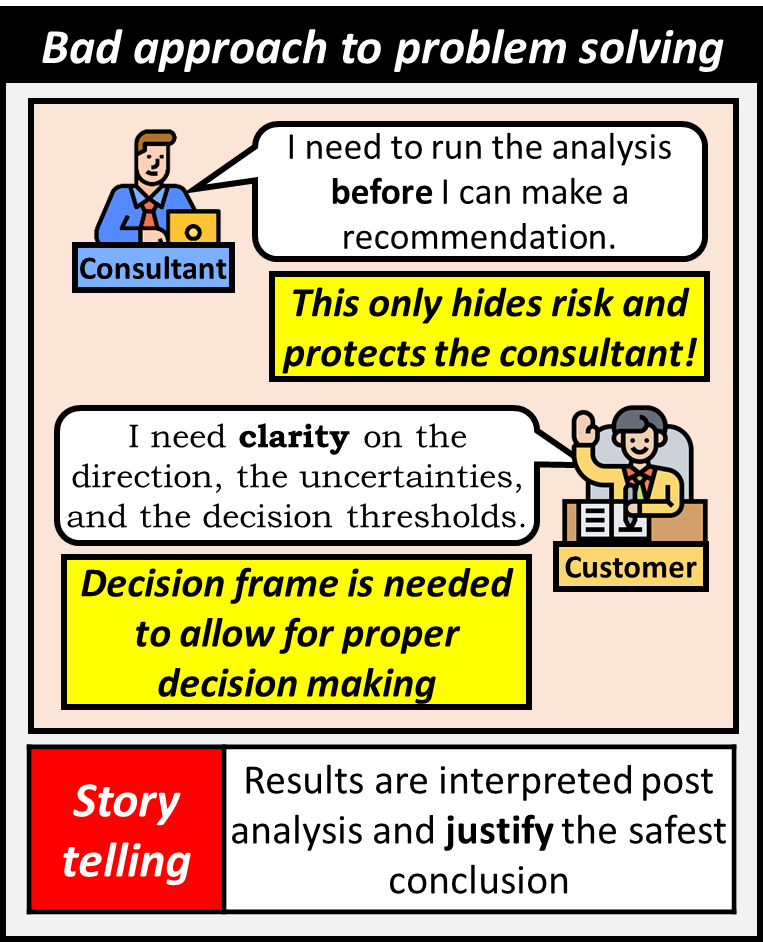
Bad approach to problem solving is a consultant claiming that they need to run analysis before they can make a recommendation. This hides risk and protects the consultant. A customer needs clarity on the direction, the uncertainties, and the decision frame to allow for proper decision making. Story telling is when results are interpreted post analysis and justify the safest conclusion.

A consultant with strong subject expertise can form sound recommendations (hypotheses) before detailed analysis. This sharpens the problem, supports a scientific approach, and sets clear expectations.
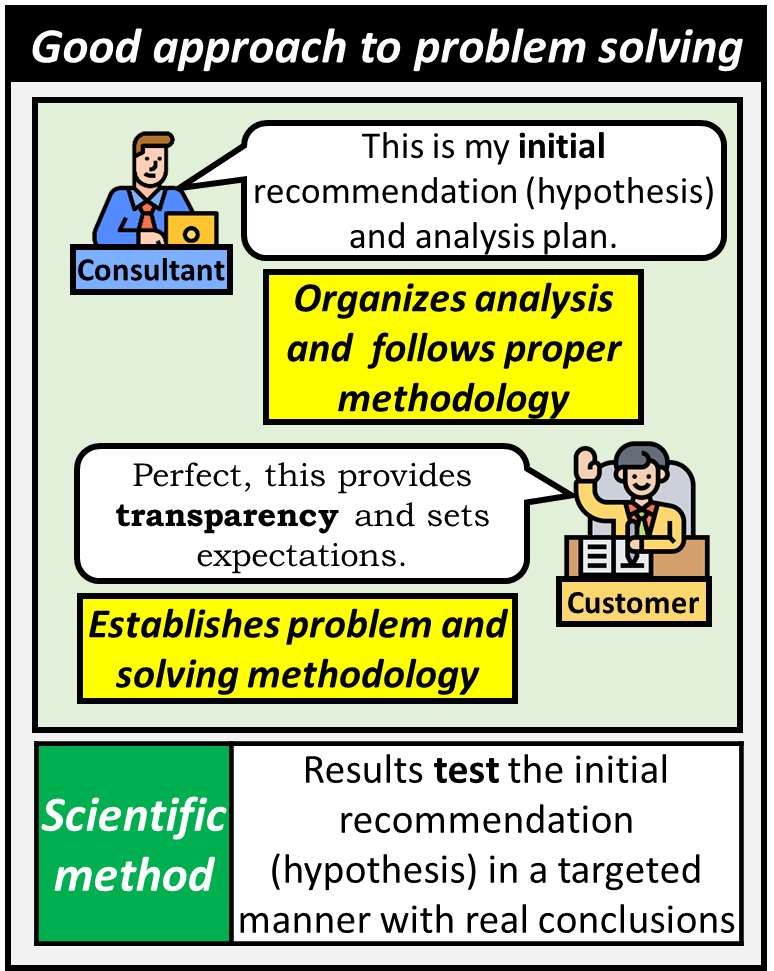
A good approach to problem solving starts with the consultant giving an initial recommendation (hypothesis) and analysis plan. This organizes the analysis and follows proper methodology. The customer gets transparency and expectations. This established the problem and the solving methodology. This is the scientific method, and results test the initial recommendation (hypothesis) in a targeted manner with real conclusions.

Advanata and the Scientific Method

Applying the scientific method can feel daunting, especially when it is easier to examine data and report observations. Advanata makes the process simple and practical.

The customer can structure the problem independently, with additional consultant support to expand potential options. The customer tests these options for causality and fit, while Advanata validates the optimal structure.
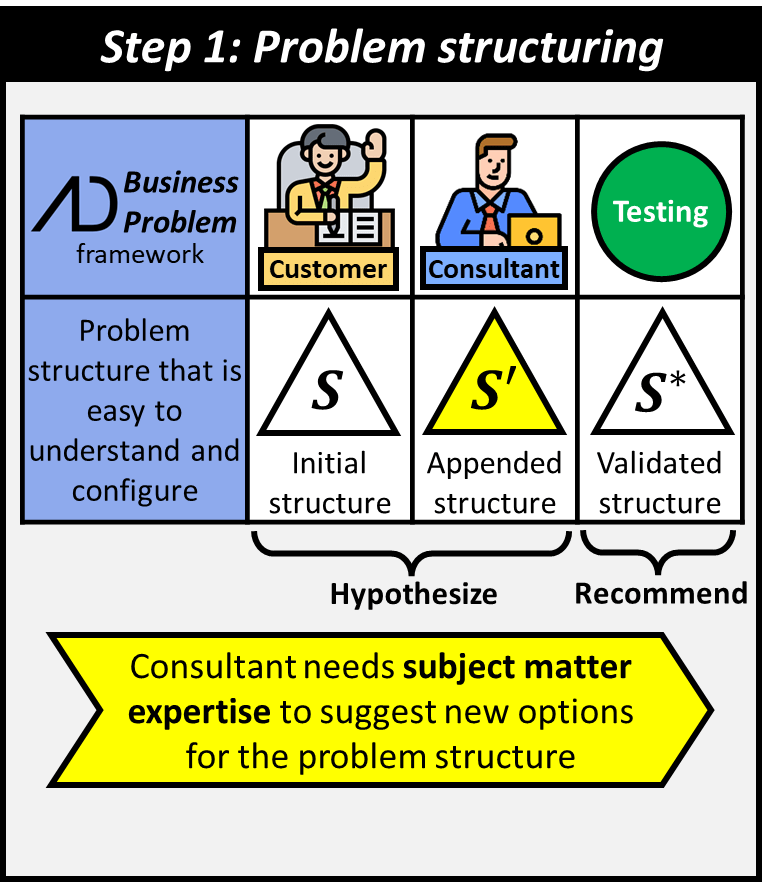
First step if problem structuring using the business problem framework that is easy to understand and configure. The customer provides the initial structure, followed optionally by the consultant who appends the structure. This structure is the hypothesis and after testing it becomes the recommended validated structure. Consultant needs subject matter expertise to suggest new options for the problem structure.

The customer estimates and approves the parameters, with analyst support for refinement. Advanata then uses the validated inputs to produce the optimal solution.
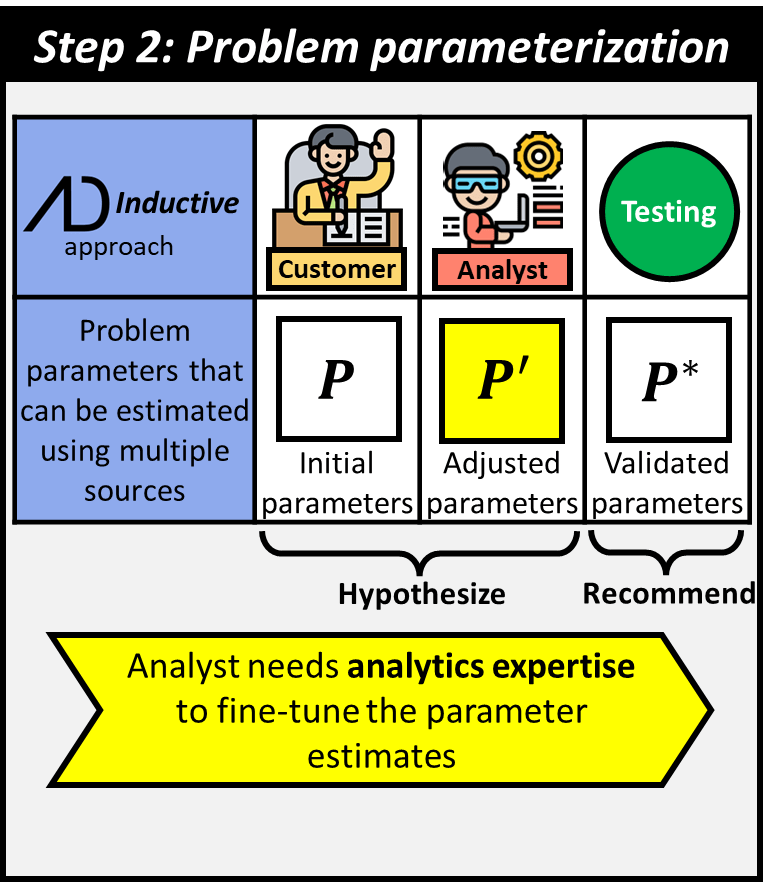
Second step is problem parametrization using the inductive approach with parameters that can be estimated from multiple sources. The customer gives the initial parameters that can be fine-tuned by an analyst to give the hypothesis. These parameters can then be tested to result in the validated recommendations. Analysts needs analytics expertise to be able to fine-tune the parameters.

Finally, the problem is optimized within the customer’s constraints, generating a recommended set of actions. Testing here means identifying the solution that best meets those requirements.
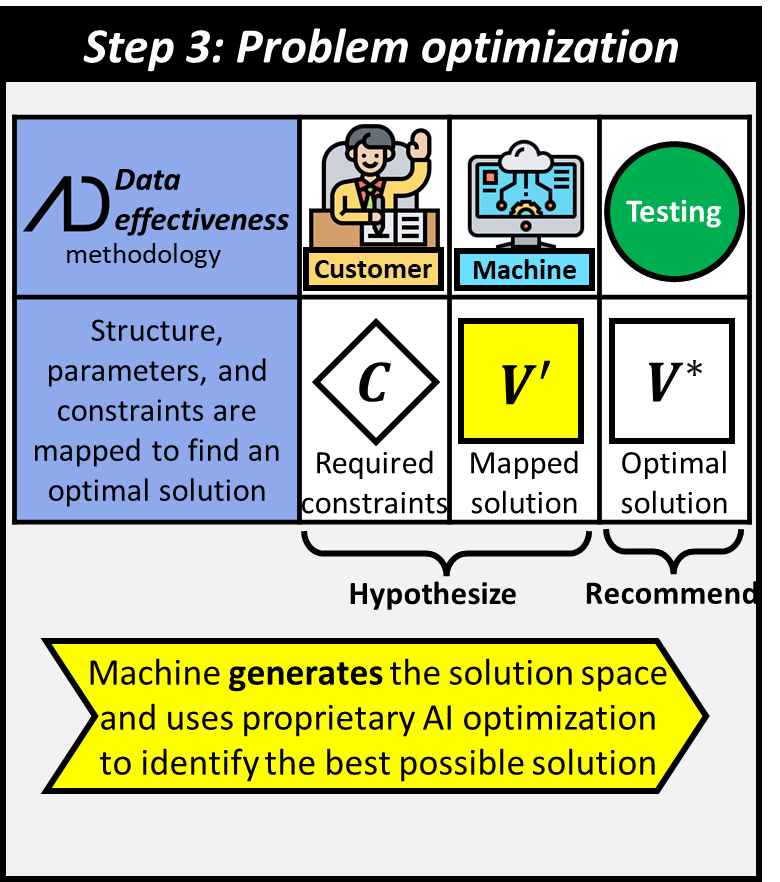
Last step is problem optimization which is done using the data effectiveness methodology where the structure, parameters, and constraints are mapped to find an optimal solution. The customer provides the constraints, the machine maps the solution, and this hypothesis is then tested to din the optimal recommended solution. Machine generates a solution space that allows proprietary AI optimization to identify the best possible solution.

Why Methodology is Important

The abundance of data and analytical tools makes it tempting to jump straight into analysis. That is why a disciplined methodology is essential to ensure solutions are robust and not simply the product of ad hoc analytics.
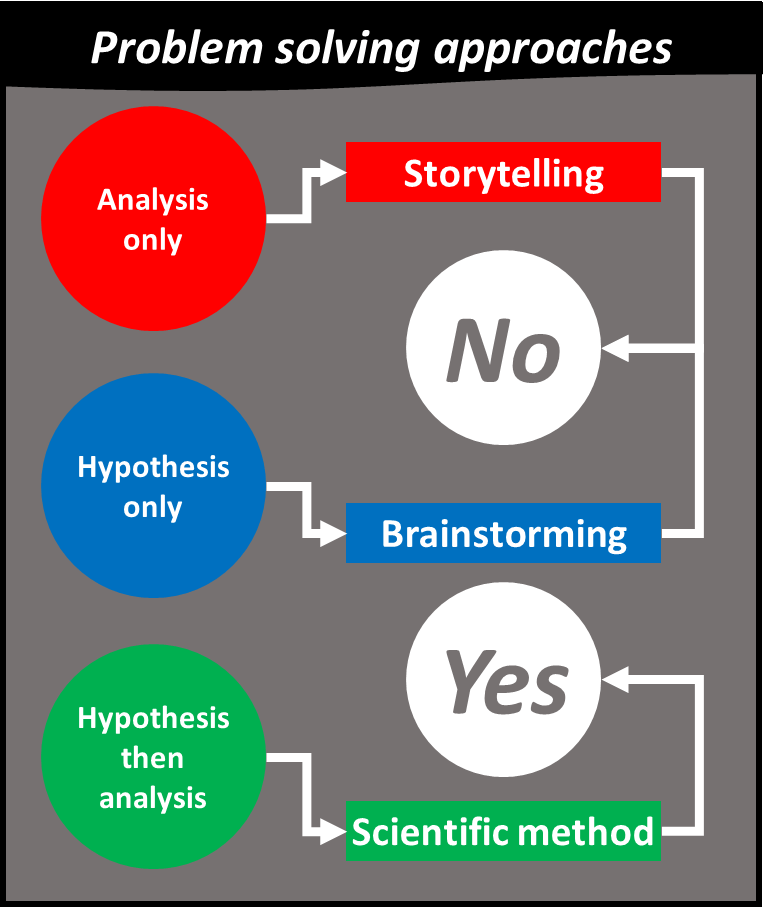
Analysis only is storytelling, hypothesis only is brainstorming, we need to have a hypothesis followed by analysis to follow the scientific method to give us the best possible results.

Methodology matters. The legacy data processing mindset still assumes that solutions will emerge if we analyze enough data. That is not the case. What we are really trying to uncover are underlying mechanisms to shape a desired future. Advanata is built to make this disciplined approach simple, accessible, and helps generate real solutions to real problems.

One quick question (3 seconds):
I’d really value your input.

Sign up for early access to articles, delivered every two weeks. Please check your spam folder for the confirmation email.

Ready to see Advanata in action? Explore more resources, read related articles, and access the full application at advanata.com.

Want a personalized walkthrough? Contact info@advanata.com to get application access and schedule a demo.

Leave a comment