
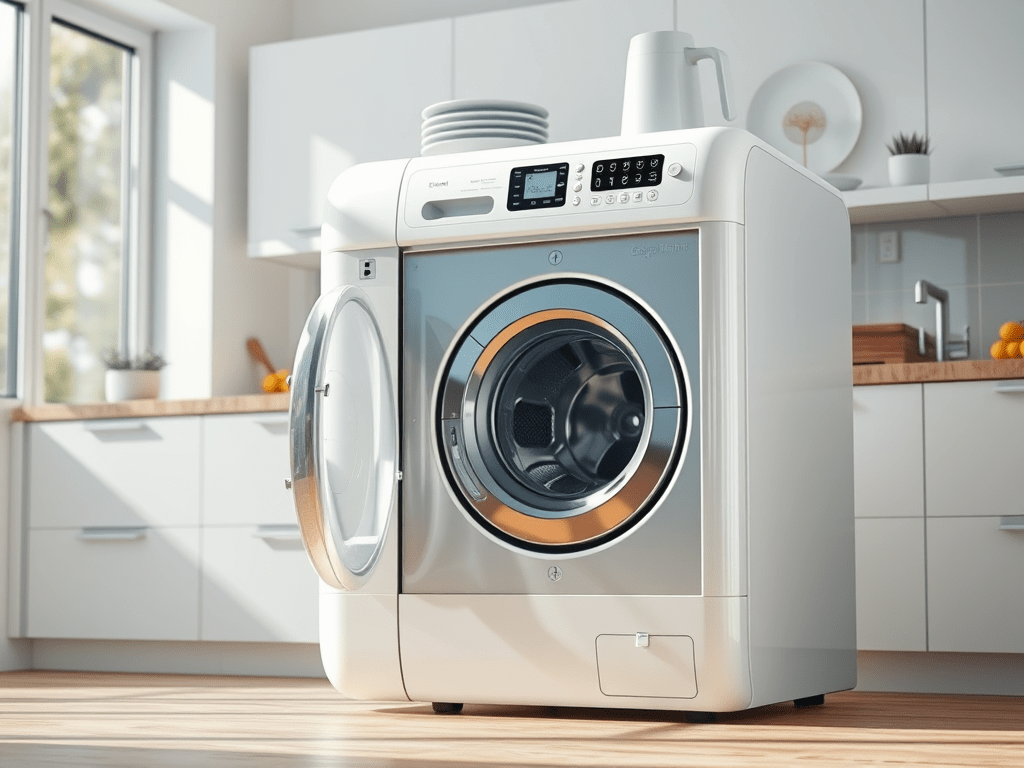
Advanata is a remarkably versatile tool. In this example, we’ll explore how it can be used to analytically design a new product. Though considered an intermediate level application, it’s approachable and opens the door to some very interesting use cases.
Product Design Problem
An appliance manufacturer wants to design a new product aimed at specific customer segments while leveraging features from their existing lineup, without developing entirely new features.

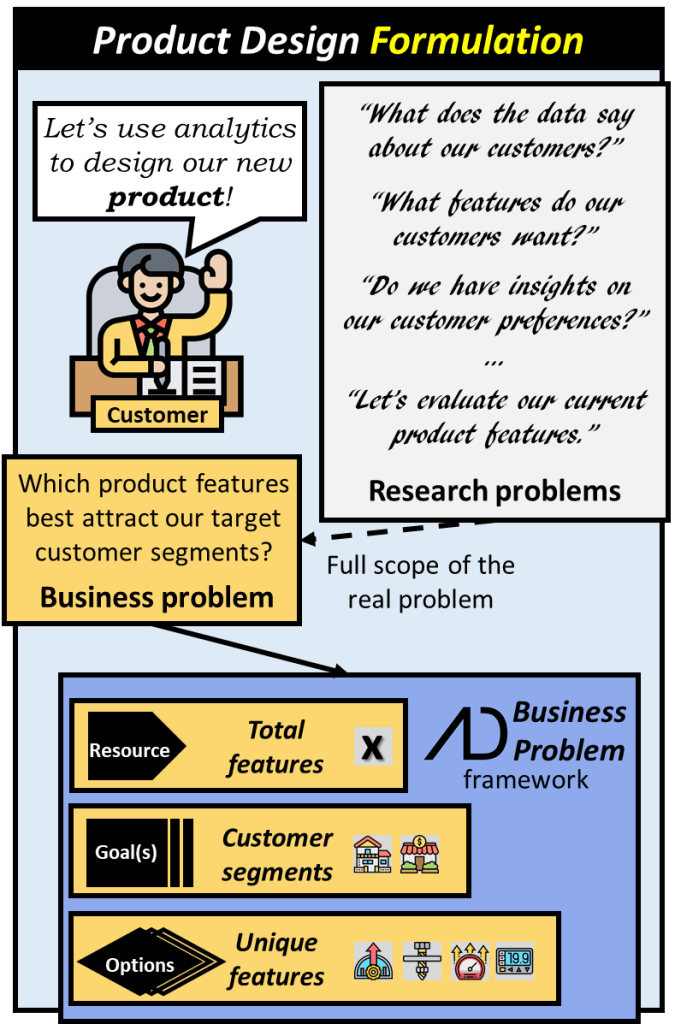
Product Design Formulation
A smart choice is made to use analytics to design the new product. Often, the questions focus on underlying analytics sub-problems rather than the main business problem. Once this is corrected, the true problem becomes clear, its components are easily identified, and each can be mapped to the appropriate part of the business problem framework.
Product Design Process
Solving the problem is straightforward. The customer leads by entering the business problem components and defining goal targets in Advanata. The analyst estimates rates using sales data, and the customer can review and adjust them based on their business insight. The main advantage is that outputs are expressed as actual product features that are immediately actionable for design.
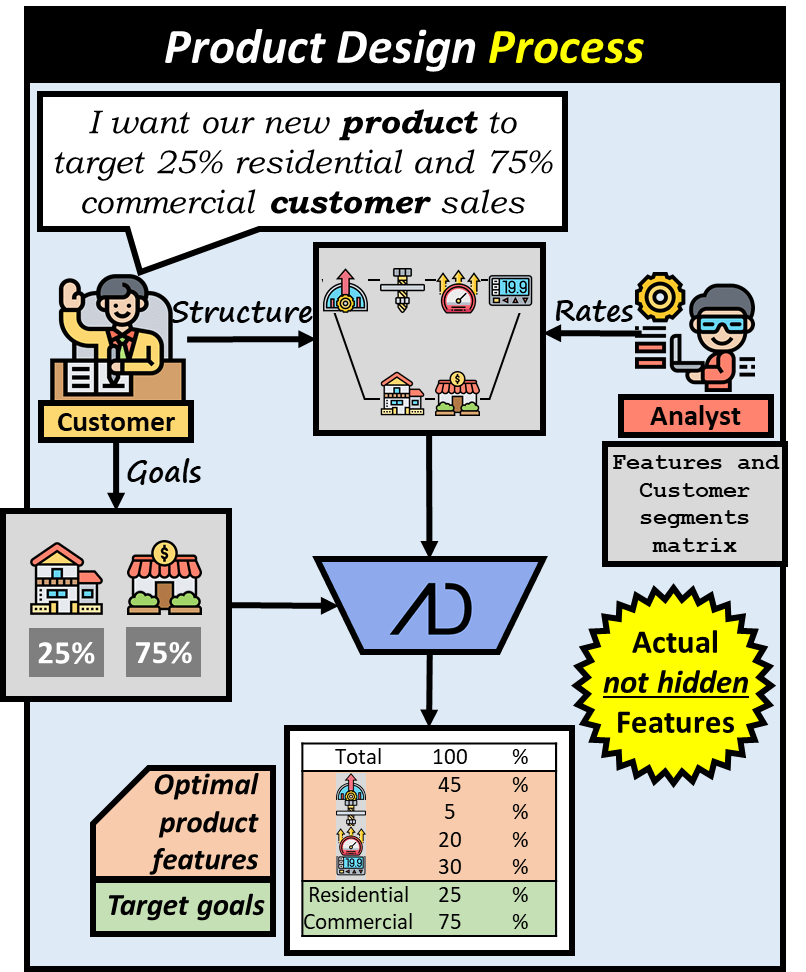
This simple example is only a starting point. Advanata makes it easy to expand with feature families, interdependencies, supply chains, and goals like product cost and manufacturing time.
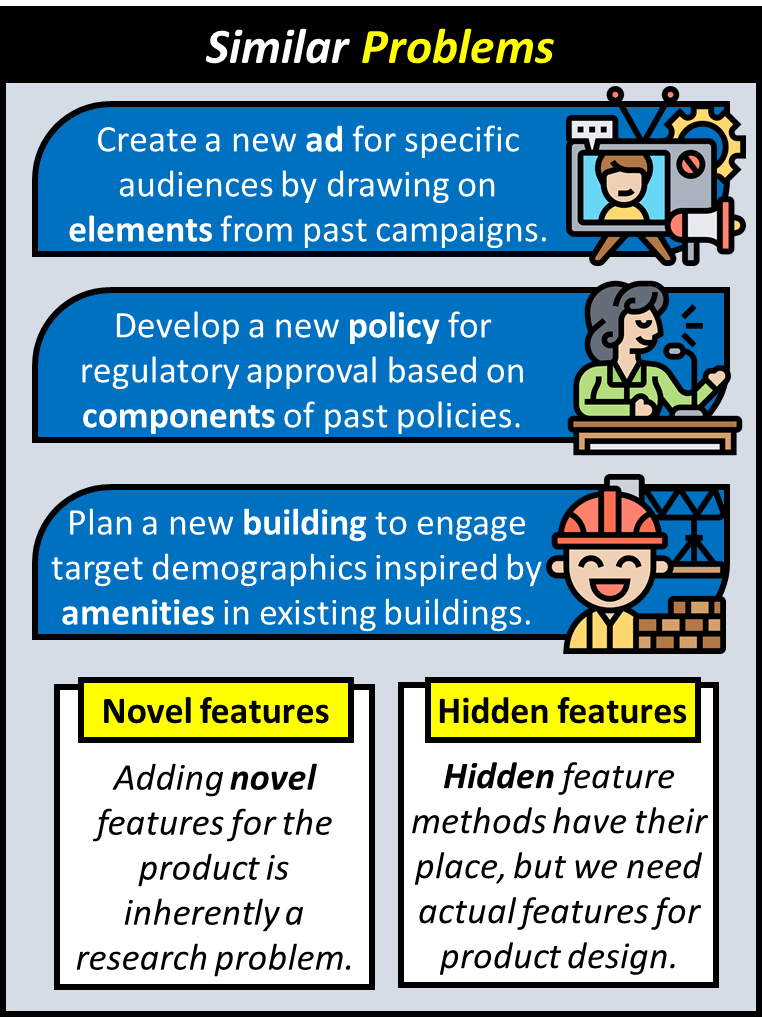
Similar Problems
This product design process works for a wide variety of products and services. As long as the customer can identify the unique features of their offerings, they can create new ones tailored to achieve their evolving goals.
Solving Unique Problems
Advanata’s standout design feature is its focus on practicality. Even non-analytics specialists can easily structure problems and get outputs ready for immediate use. This is just one example of the many applications possible, and as customers grow comfortable with Advanata, even more innovative uses are sure to emerge.
Sign up to get the latest articles and product updates.
Ready to see Advanata in action? Explore more resources, read related articles, and access the full application at advanata.com.
Want a personalized walkthrough? Contact info@advanata.com to get application access and schedule a demo.


Leave a Reply