

Analysts are often asked to solve problems they don’t fully understand. Data is collected, reports are produced, and everyone hopes for the best. The results are often disappointing, wasting a valuable opportunity to put analytics to good use.
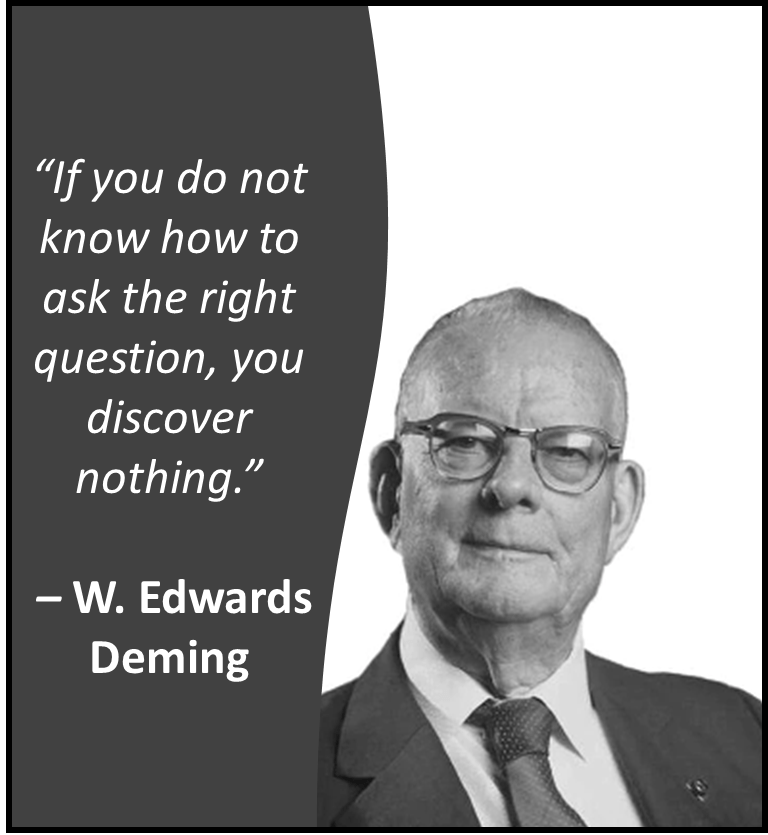
Good Results Can’t Come from Poor Questions
A poorly framed question rarely leads to a useful answer. Analysts excel at analytics but not at inferring all the implicit details customers expect. Likewise, customers are experts in their field but struggle to articulate their needs clearly enough to get the most from analytics. The challenge is the communication gap between analysts and customers who think differently yet must collaborate to reach a solution.

Transform a Question from Poor to Good
Let’s turn a vague analytics question into a clear, well-defined one. Customers should phrase questions as if analysts are lawyers, following every detail and resisting implied assumptions. Analysts should, of course, never be tasked with framing the question themselves. This ensures the question is robust, keeps both sides objective, and yields a useful answer.
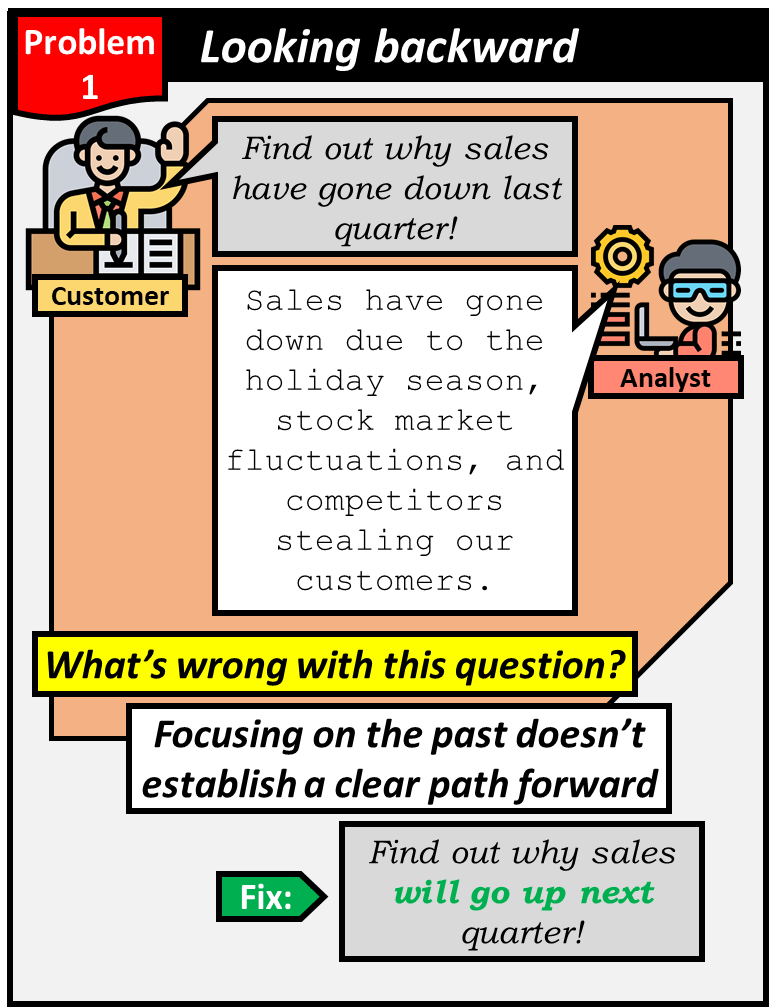
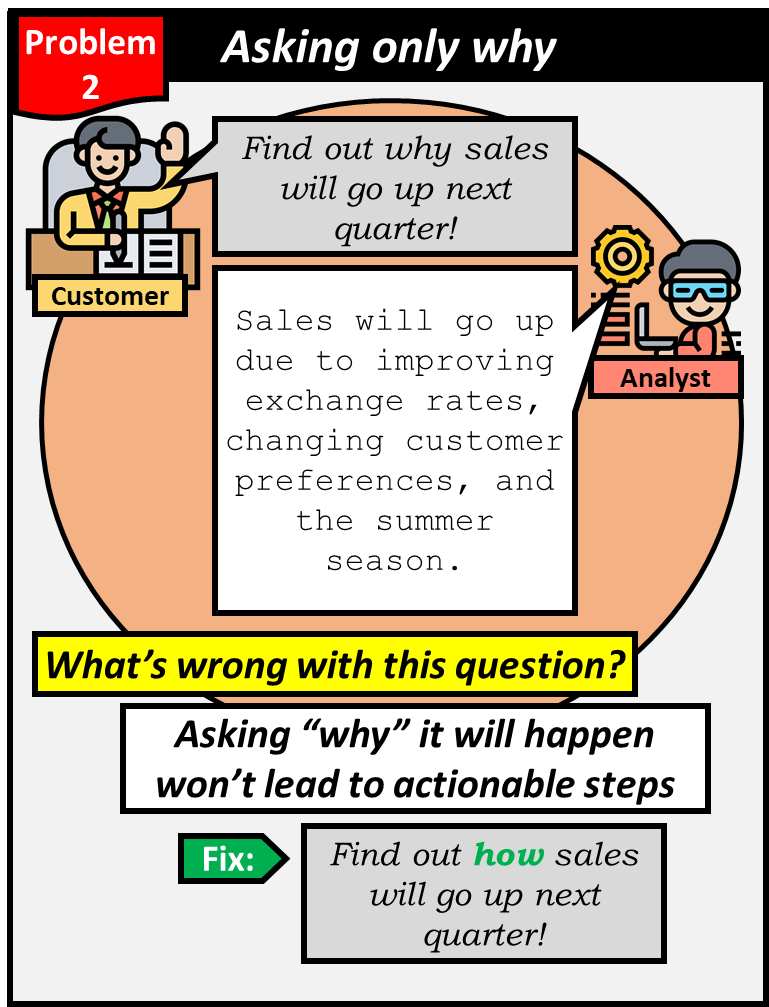


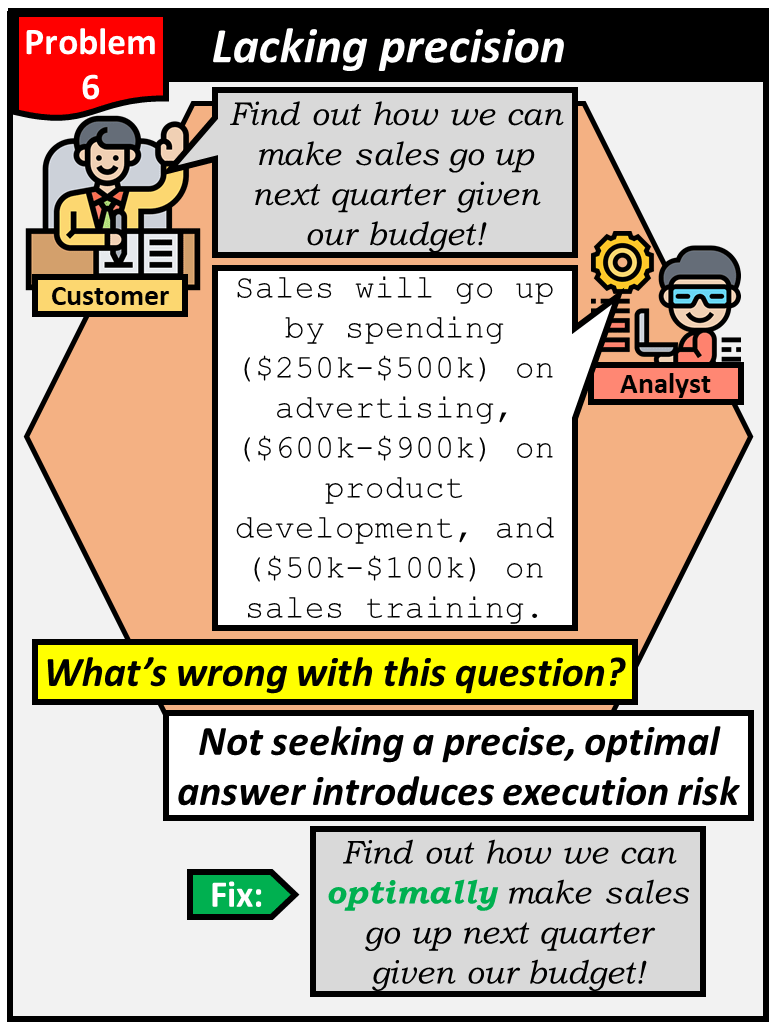
Now that the issues with the original question are fixed, it is precise and refined. The analyst understands what the customer needs and can begin developing a solution. This question format also aligns with Advanata’s business problem framework, enabling its technologies to accelerate accurate, efficient problem-solving.

Good Results Come from Good Questions
If our analytics question avoids these six pitfalls, it’s well-formed and provides a strong foundation for finding a solution. From there, Advanata can take the question and easily generate an optimal, actionable answer.
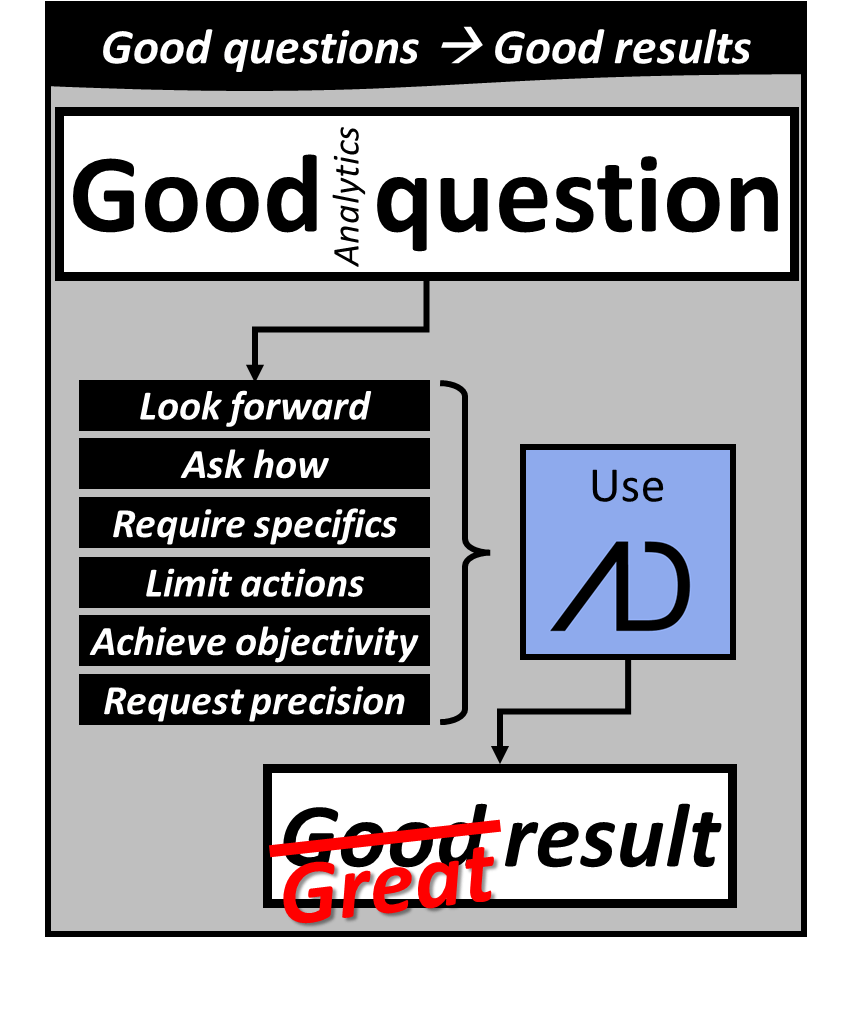
It’s unfortunate how often analytics efforts are handicapped from the start by poorly framed questions. This usually happens not from ill intent or negligence but from the communication gap between parties. Advanata’s core technologies are designed to close this gap, align understanding, and create effective solutions that draw on the strengths of everyone involved.
Sign up to get the latest articles and product updates.
Ready to see Advanata in action? Explore more resources, read related articles, and access the full application at advanata.com.
Want a personalized walkthrough? Contact info@advanata.com to get application access and schedule a demo.


Leave a Reply