

A curious phenomenon on LinkedIn is the constant influx of unsolicited offers for analytics services. Most feel copy-paste with little differentiation or real experience. How did the analyst role reach this point, and can it be saved?
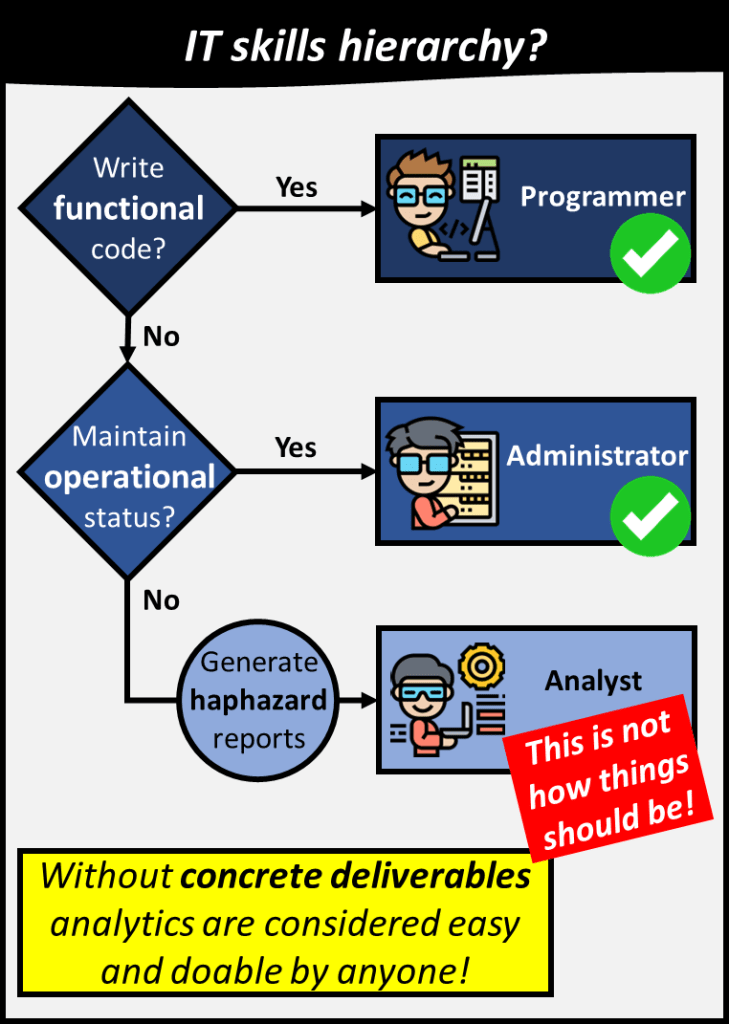
IT Pecking Order
It seems the de facto IT hierarchy puts analysts at the bottom. With outputs limited to reports and metrics, they are seen as optional and easily cut compared to other roles. This should not be the case. In fact, analytics should not sit within IT at all, and it only has because the deliverables amount to little more than processed data with no meaningful impact.
Make Analytics Great Again
Customers do not need more data that requires further analysis and may never be useful. They need clear, tangible, immediate answers to their problems. If analysts cannot deliver that, they will remain expendable within the IT hierarchy.
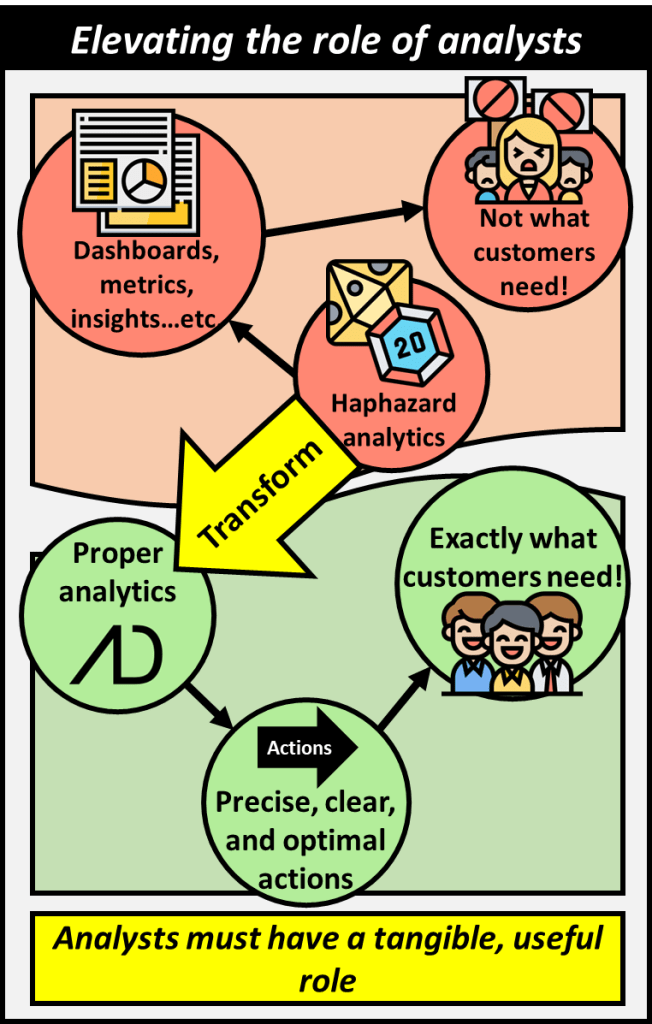
Making analytics an essential business function is challenging. It is only one part of the solution and requires support from a broader team. The overall approach must be effective while remaining accessible for non-technical stakeholders.
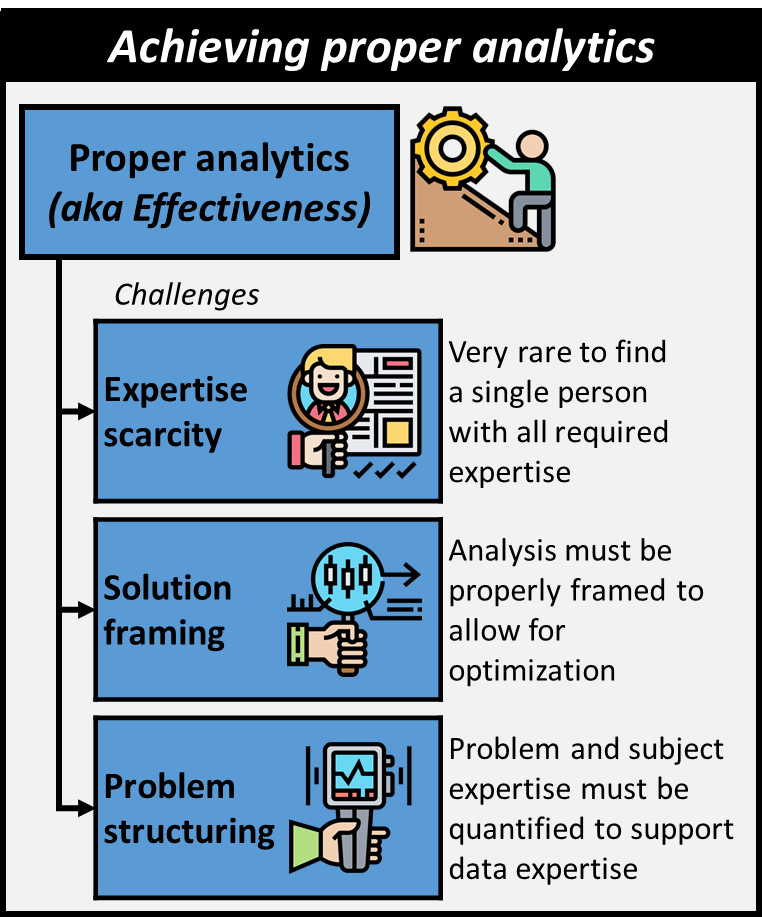
Transforming Analytics
Addressing expertise issues requires a structure that aligns team members so they can excel in their strengths while covering gaps in their skills.
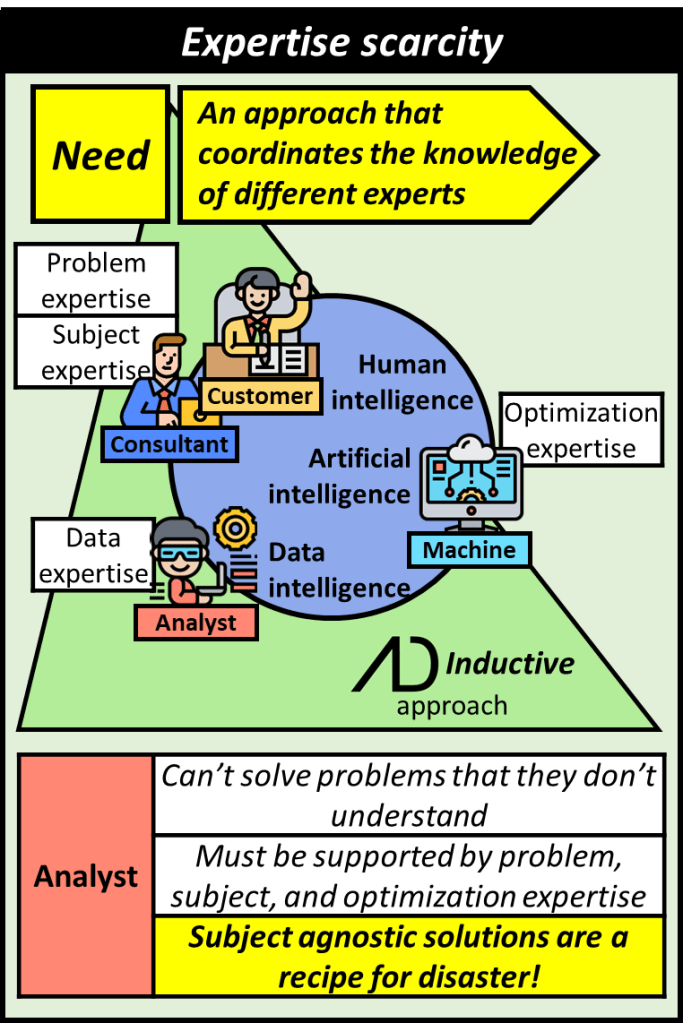
The data effectiveness methodology enables machine optimization and frames problems for analysts that are solvable and aligned with their core skills.
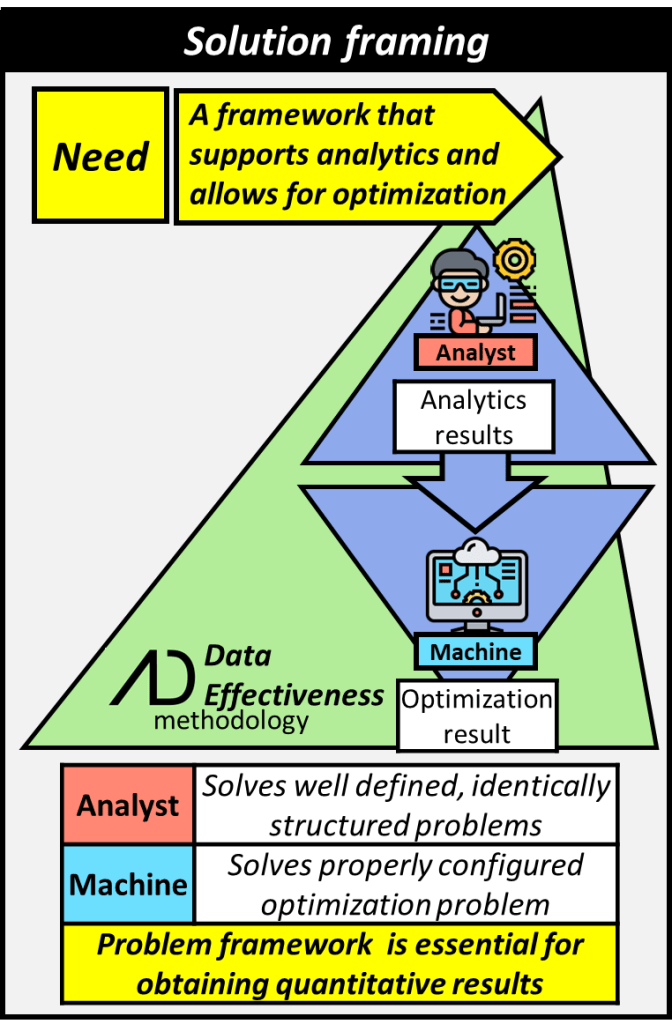
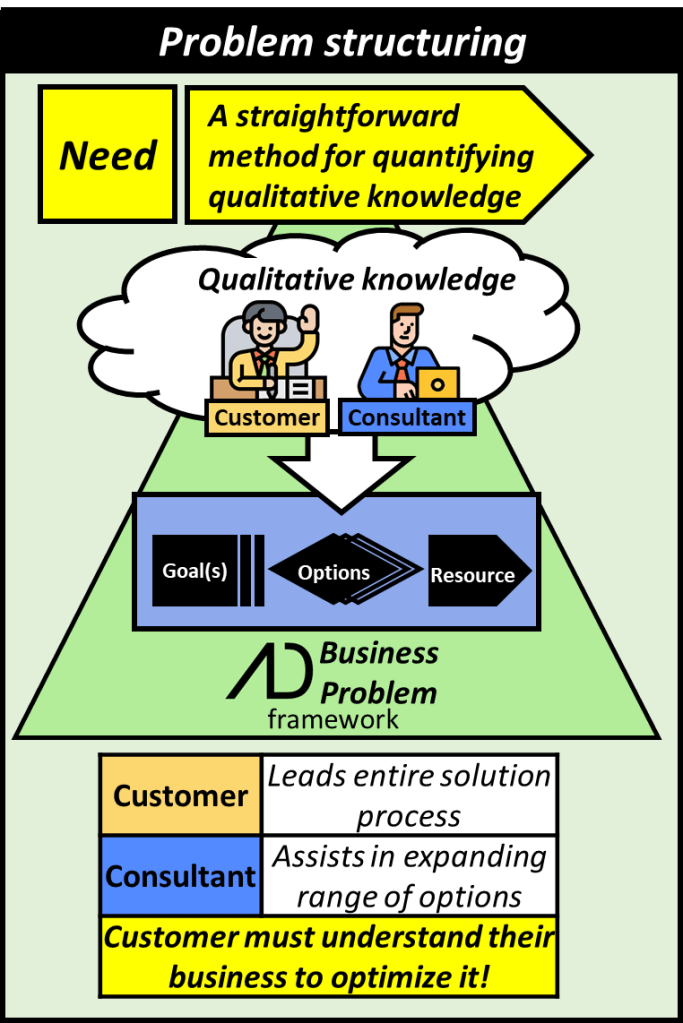
Another key challenge is adapting qualitative knowledge into the problem structure. This is what makes human intelligence essential for obtaining real analytics results rather than random data summaries.
The Future of Analytics
Reducing analytics to data summaries will be the profession’s downfall, as even current generative AI can easily replicate those outputs. Analysts, as part of the solution team, need to focus on what they are uniquely able to do, which is modeling the underlying behavior of mechanisms. This work is difficult but essential for solving real-world problems and delivering complete solutions to customers.
One quick poll question (3 seconds):
I’d really value your input.
Sign up for early access to articles, delivered every two weeks. Please check your spam folder for the confirmation email.
Ready to see Advanata in action? Explore more resources, read related articles, and access the full application at advanata.com.
Want a personalized walkthrough? Contact info@advanata.com to get application access and schedule a demo.


Leave a Reply