

Knowledge can come from multiple sources. Previous articles explored why we desire information and how to obtain it. This article examines the primary sources of knowledge, how they can be used, and how they complement each other.
Knowledge Types
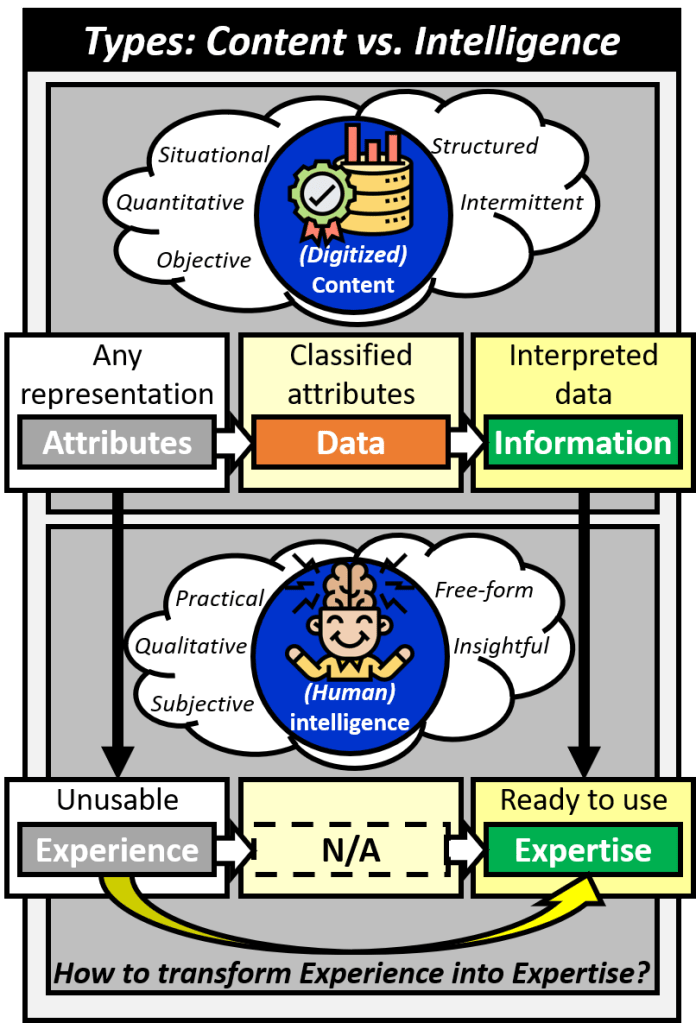
Content is the easiest knowledge source to identify and classify. It begins as observable attributes, which are collected into data and transformed into usable information. Human intelligence is more difficult to utilize. Experience is valuable but transforming it into applicable expertise without an identifiable intermediate stage can be challenging.
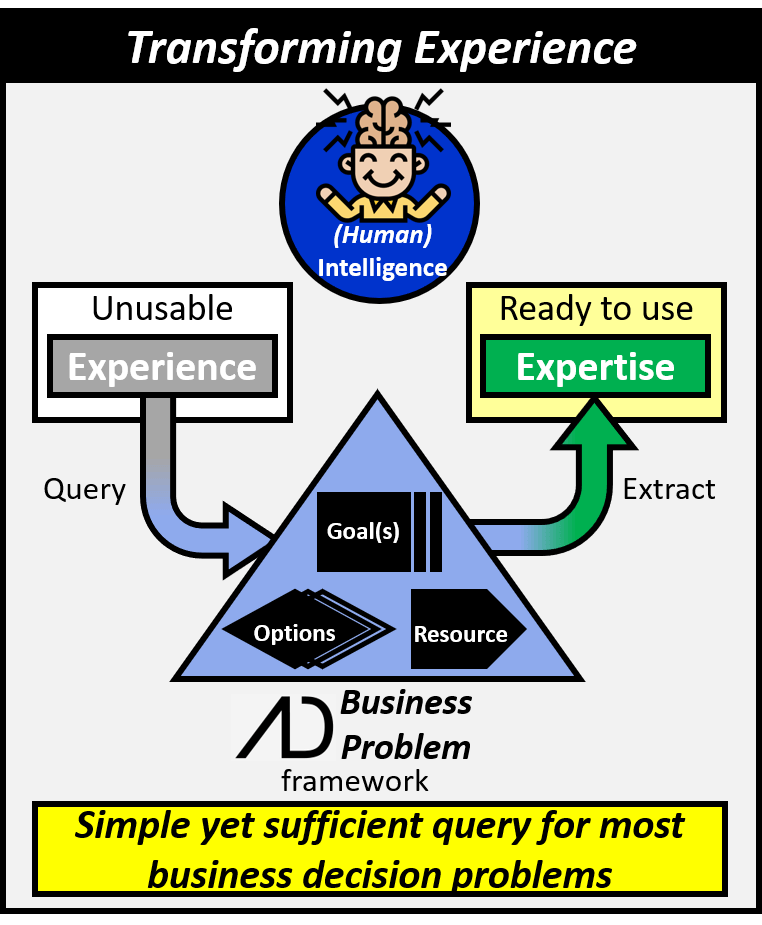
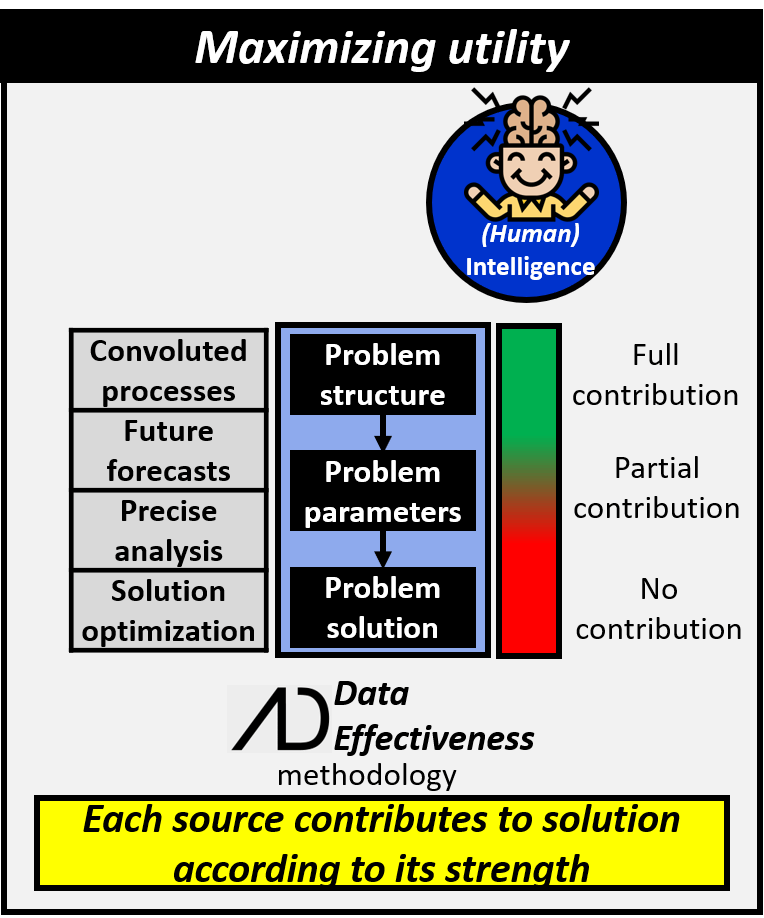
The business problem framework transforms experience into expertise using a structured approach specifically tailored to solving business decision problems.
Knowledge Coverage
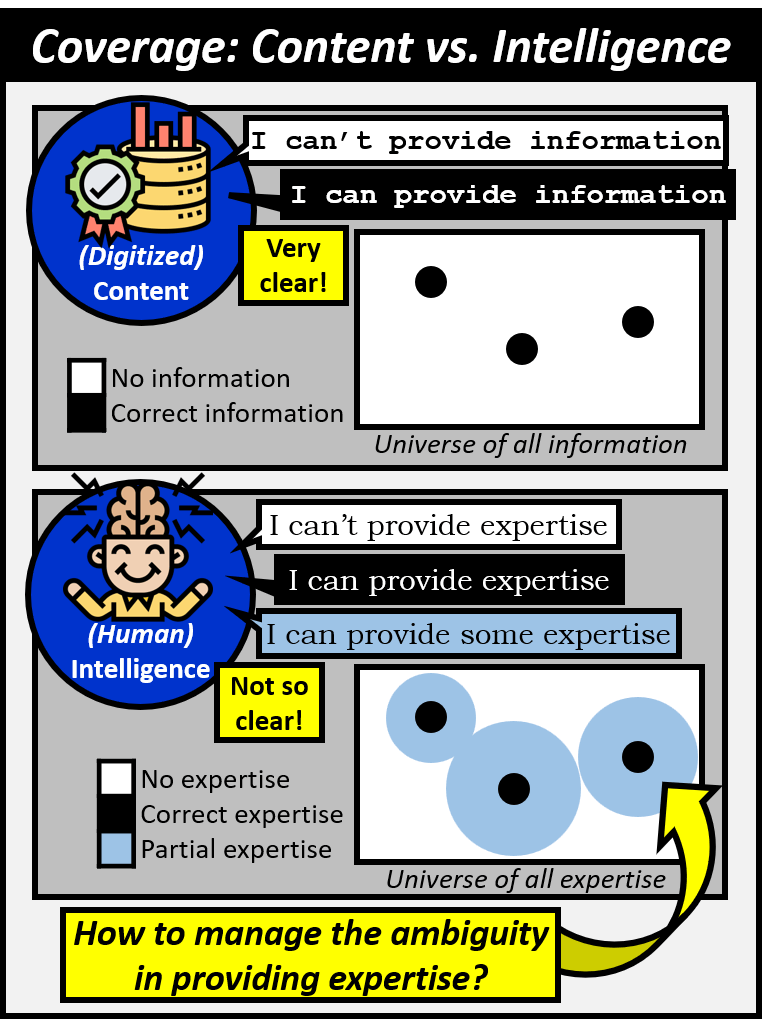
While determining whether content can provide the information we need can be difficult, its capabilities and limitations are clear once identified. Human intelligence, on the other hand, is less defined. Partial expertise exists across a broad spectrum, making this important but difficult-to-identify knowledge source harder to utilize effectively within a quantitative context.
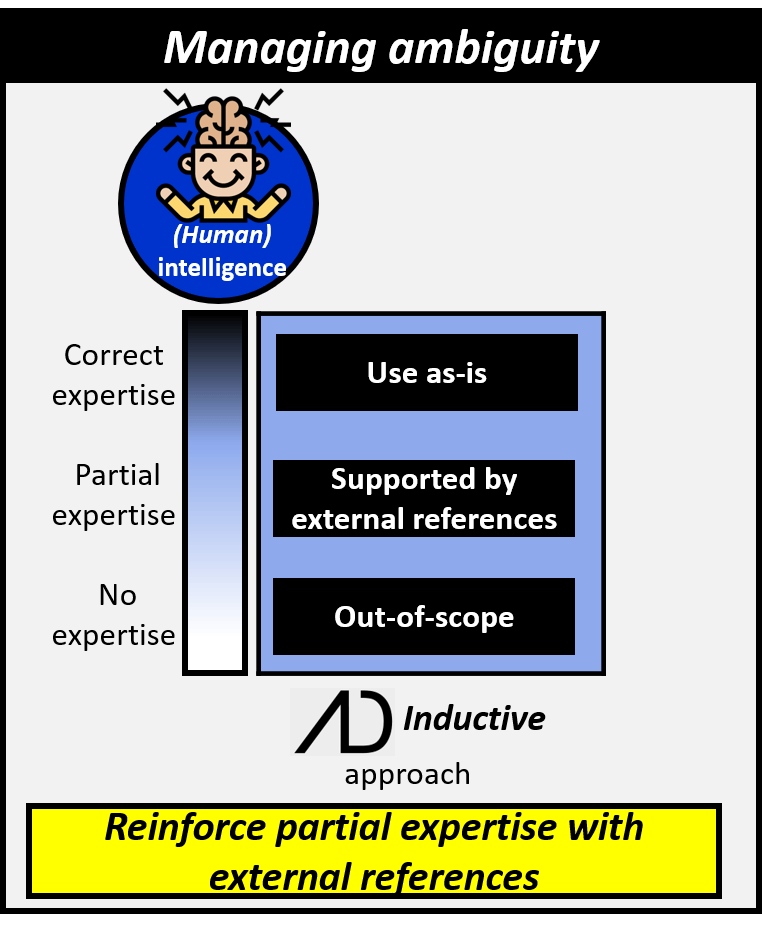
The key to effectively using intelligence is recognizing areas where partial expertise exists and combining them with other sources of expertise to create a more complete and useful approximation of actual expertise.
Knowledge Utility
This is where the distinction between knowledge sources becomes clear and where their complementarity nature for solving problems is most apparent. Content provides structured objective information, while intelligence provides complex subjective expertise.
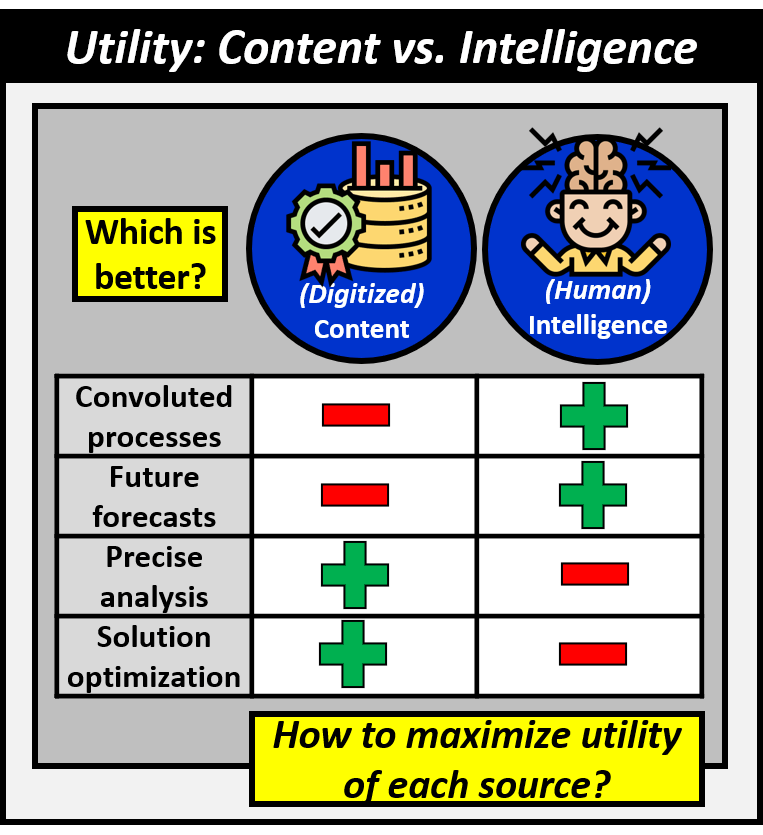
The complexity of business decision problems requires human intelligence to lead the process, supported by other experts, data, and machines.
Utilizing GAI
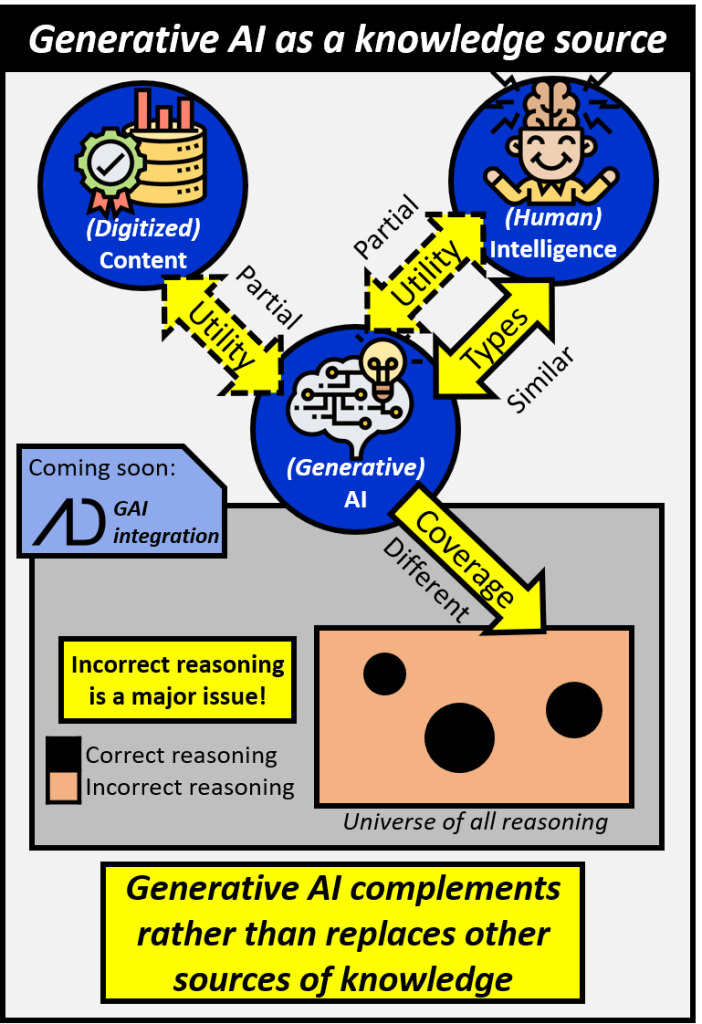
The emergence of capable GAI models adds a powerful new knowledge source. Their ability to perform broad reasoning creates new opportunities, but effective use depends on combining this capability with human intelligence that can recognize and correct flawed reasoning.
Putting Everything Together
Solving complex business decision problems requires more than a single source of knowledge. Advanata was designed to maximize the contribution of each source, coordinate their efforts through a structured framework, and transform diverse inputs into practical solutions rather than additional analysis or intermediate outputs.
One quick poll question (3 seconds):
I’d really value your input.
Sign up for early access to articles, delivered every two weeks. Please check your spam folder for the confirmation email.
Ready to see Advanata in action? Explore more resources, read related articles, and access the full application at advanata.com.
Looking for a personalized walkthrough or decision intelligence consulting? Contact info@advanata.com to get application access, schedule a demo, or discuss your decision optimization challenges.


Leave a Reply