

Analytics reports are supposed to follow a well-defined process, yet they often end up all over the place. Pages of analysis bury the real problem without delivering a clear solution. Why does a seemingly structured process fail, and how can it be fixed?
Analytics Between Idealism and Reality
Given sufficient time and resources, the ideal analytics process can produce excellent results. Like consulting reports, customers (decision owners) struggle to judge the quality and value of the work, while analysts (analysis experts) struggle to demonstrate them. As a result, the process is often incomplete with a detrimental effect on the results.
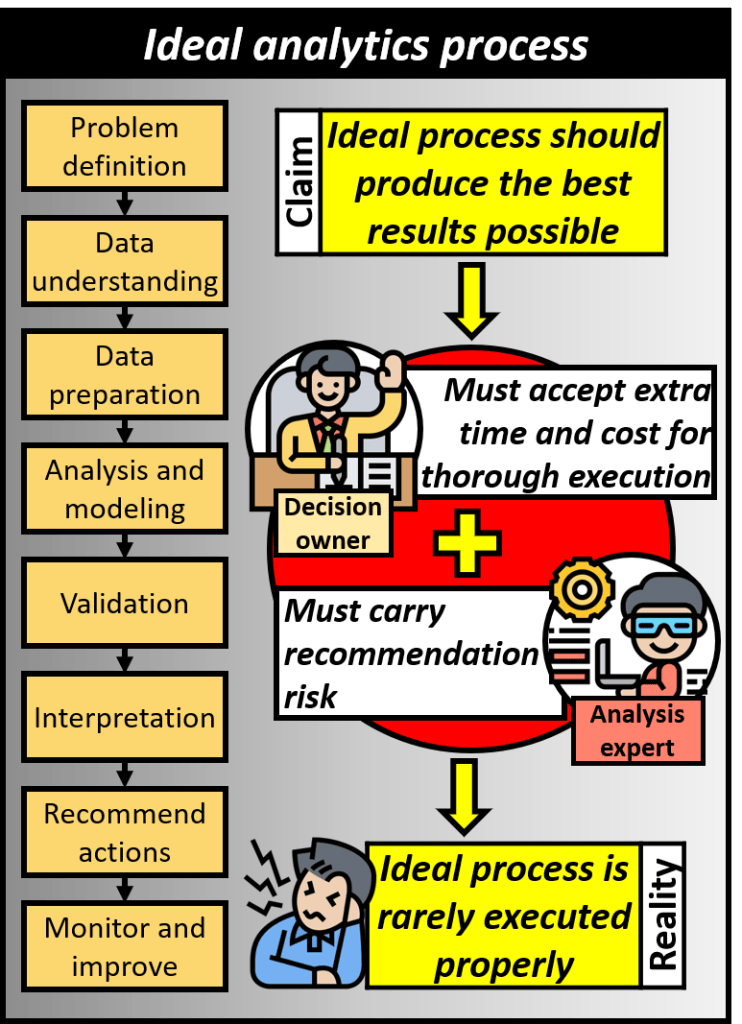
Worse still, some stages remain incomplete, while others are revisited repeatedly to fix problems and often creating new ones. The result is work that falls far short of what the customer needs and what the analyst is capable of delivering.
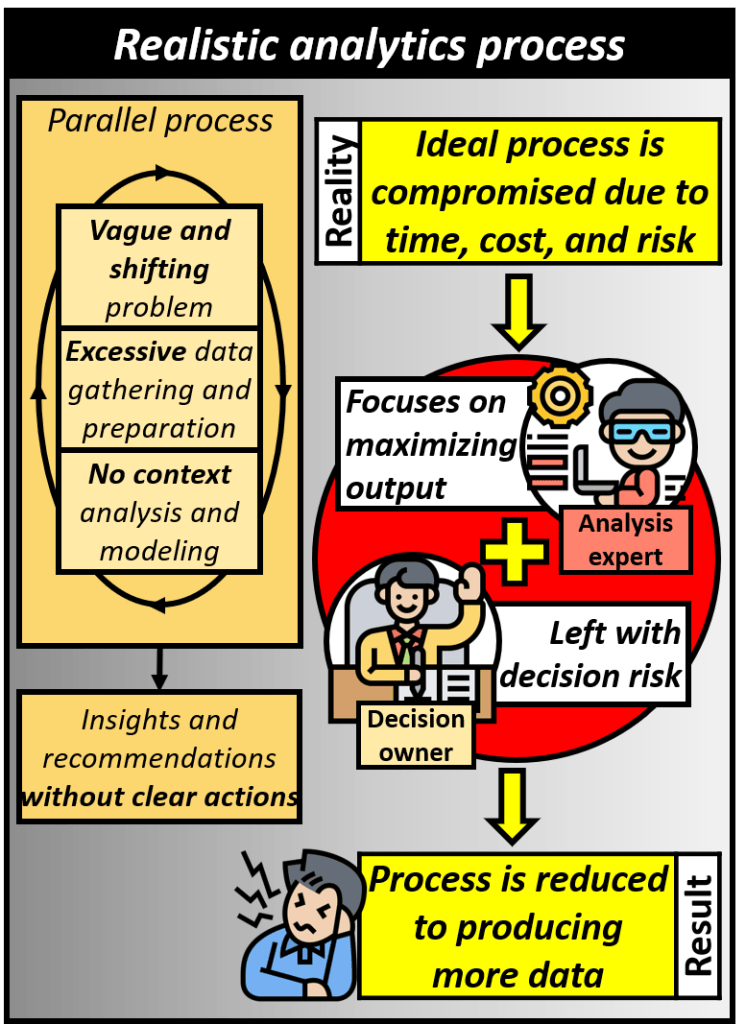
Rethinking the Analytics Process
The ideal process is therefore not enough. We need to redesign it around the real challenges facing both customers and analysts, so that the work can be completed effectively and produce real solutions.
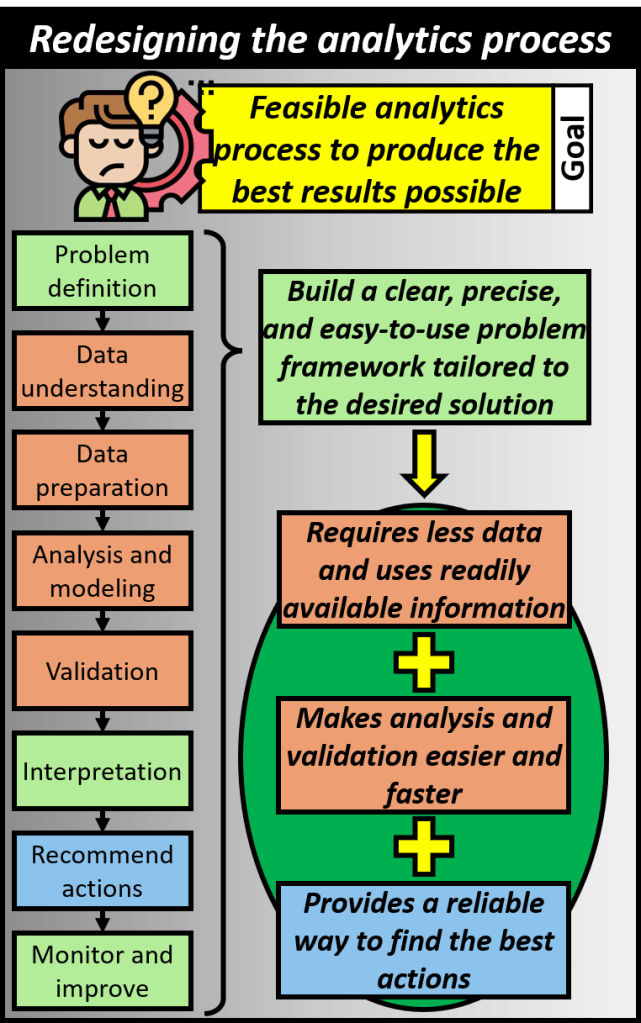
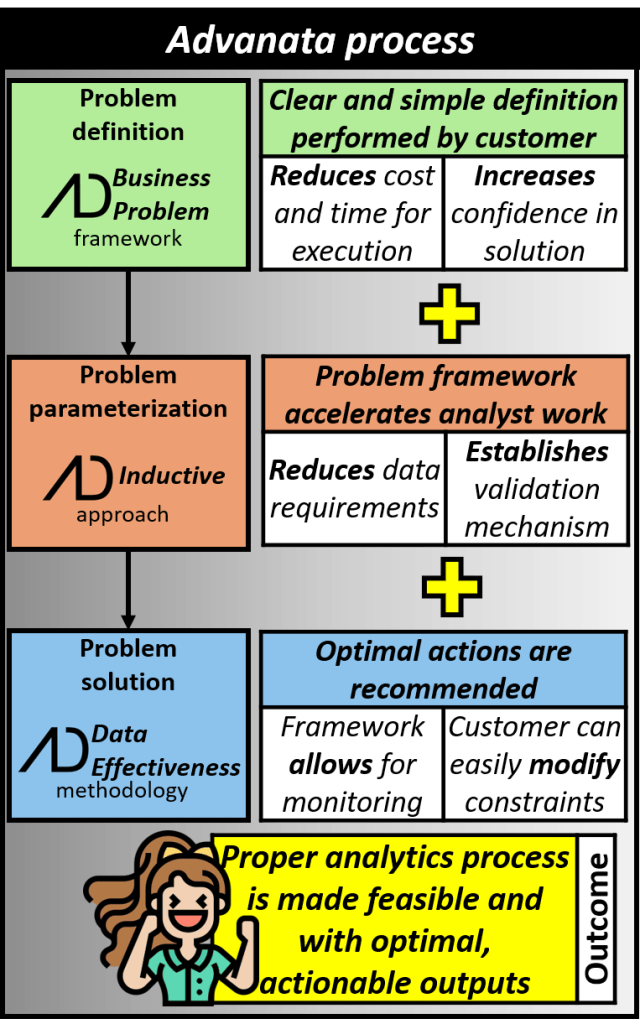
Advanata embodies this redesigned process. By letting the customer lead, it speeds up execution and keeps the work aligned with actual needs. By giving analysts clearly defined problems to solve, it enables them to do their best work, have greater confidence in their results, and take responsibility for their quality.
Unlocking the True Value of Analytics
Better analytics reports do not come from doing more analysis or following an ideal process that rarely works in practice. They come from structuring the work so that customers define the problems that matter and analysts can solve them effectively. Advanata makes this possible through its decision-owner-driven approach to business decision optimization, turning analysis into actionable results that maximize business effectiveness.
One quick poll question (3 seconds):
I’d really value your input.
Sign up for early access to articles, delivered every two weeks. Please check your spam folder for the confirmation email.
Ready to see Advanata in action? Explore more resources, read related articles, and access the full application at advanata.com.
Looking for a personalized walkthrough or decision intelligence consulting? Contact info@advanata.com to get application access, schedule a demo, or discuss your decision optimization challenges.


Leave a Reply