
How to Rethink Digital Transformation

2 minutes

Digital transformation remains one of the most popular flagship initiatives. Digital technologies have existed for nearly a century, so why are these projects still so common, and how do we achieve true transformation?
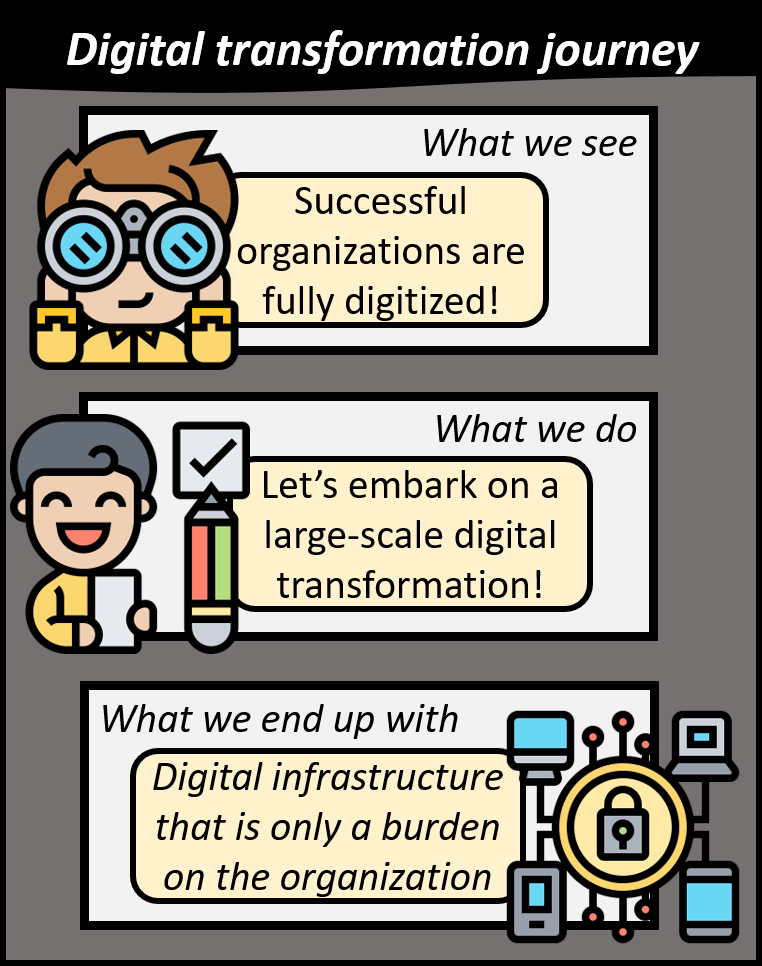
We see that successful organizations are fully digitized. We embark on large scale digital transformation projects. What we end up with is digital infrastructure that is only a burden on the organization.

Taxicab Company

Let’s start with a familiar legacy process that is fundamentally a quantification system for matching passengers with for-hire vehicles.
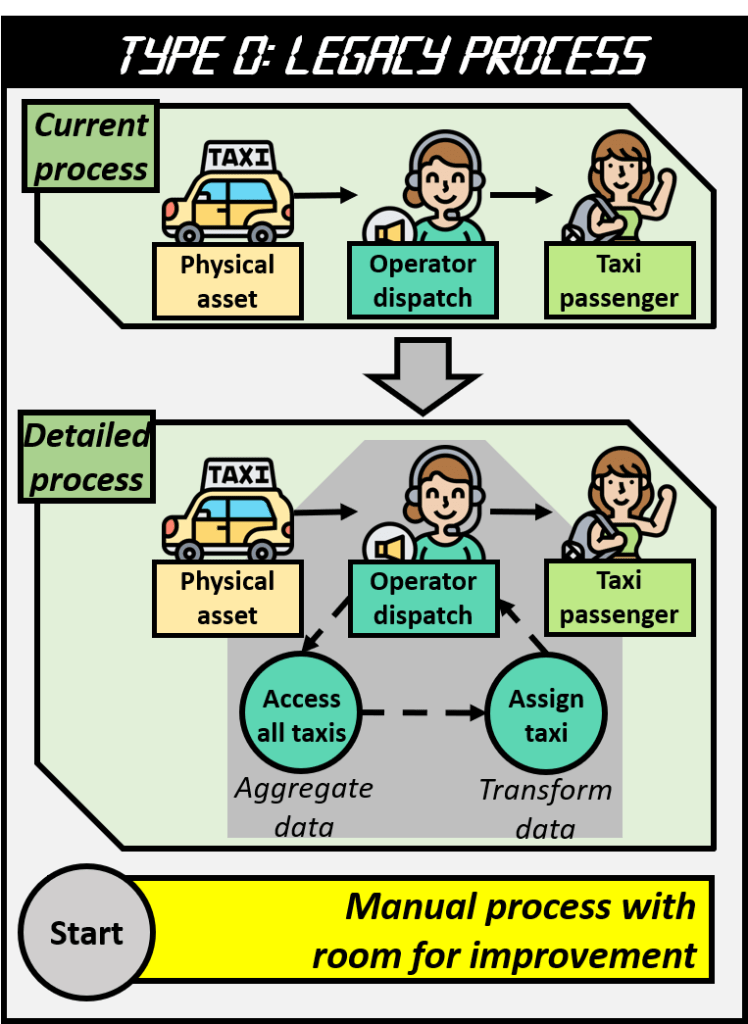
An example of a legacy process is a taxicab company where the operator dispatch accesses all taxis (physical assets) as a form of data aggregation and then assigns a taxi (data transformation) for a taxi passenger. This is the starting point and there's plenty of room for improvement.

The worst form of digitization is adding technology with no clear connection to the process. This creates a vanity transformation and, if not quickly abandoned, becomes an additional operational burden.
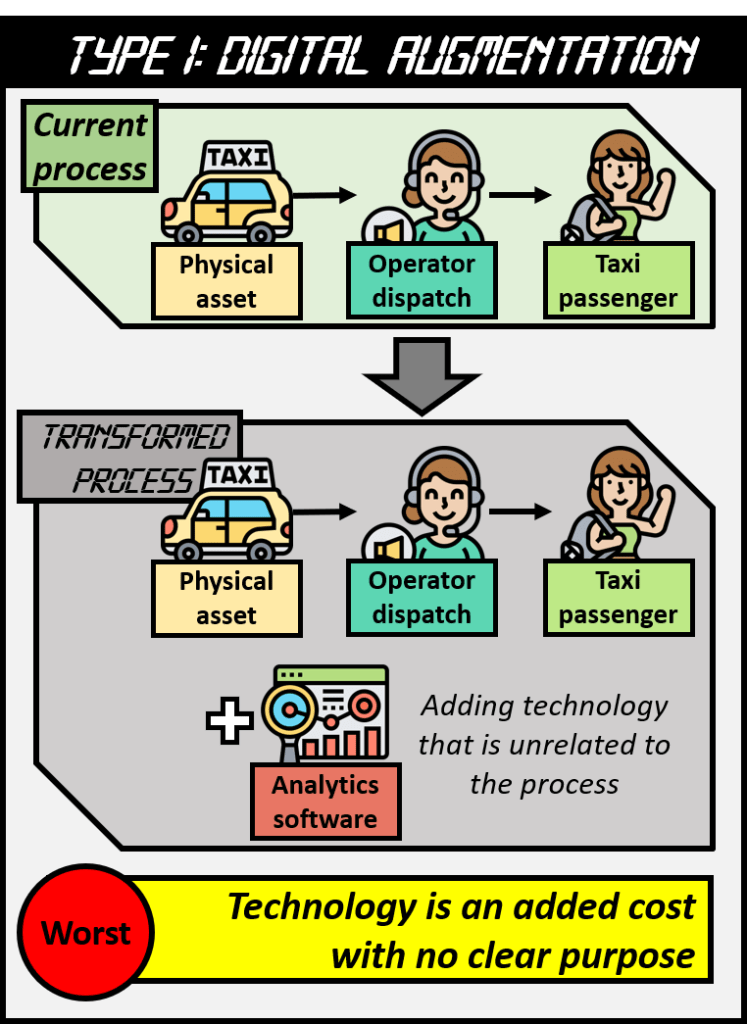
Digital augmentation is where technology is added to the process with no clear purpose and is the worst for of digitization. For example, analytics software can be purchased and added to the taxicab process.

Digital technologies offer powerful computational capabilities, making them attractive replacements for manual processes since they both essentially perform quantification. While this can produce meaningful improvements, can we do better?
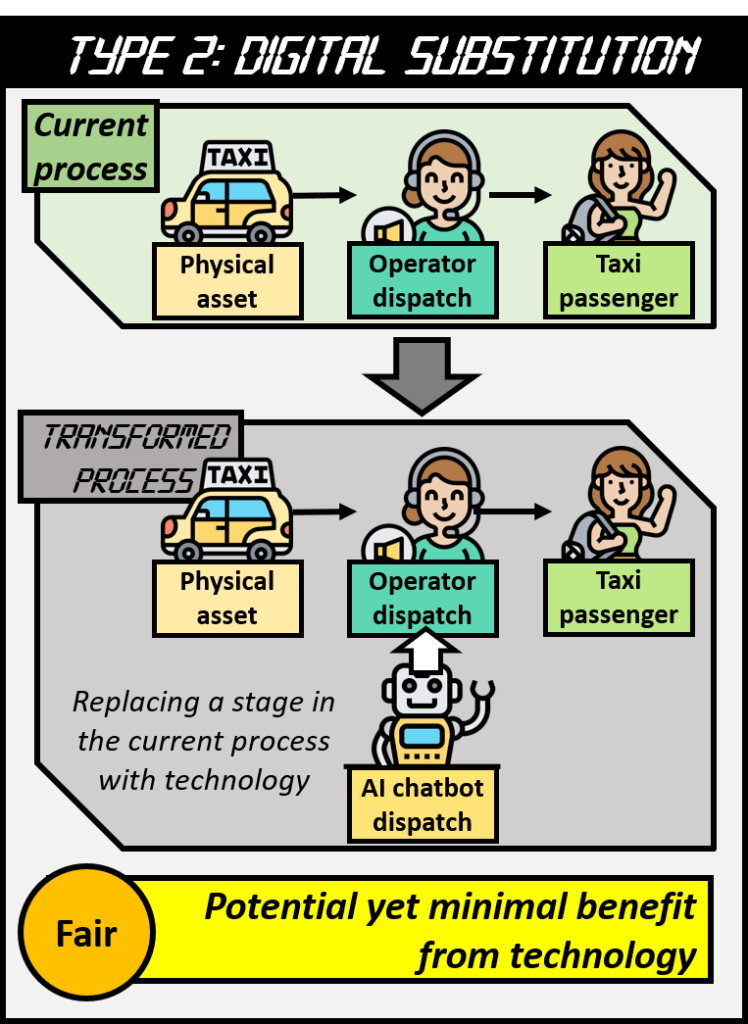
Digital substitution is where things get better and a current stage in the process is replaced with technology such as replacing the operator dispatch with an AI chatbot. This is fair in that it provides potential yet minimal benefit from technology.

Textbook digital transformation emphasizes reengineering the process before applying technology. This often delivers strong results, but is it really the best way to fully harness technology?
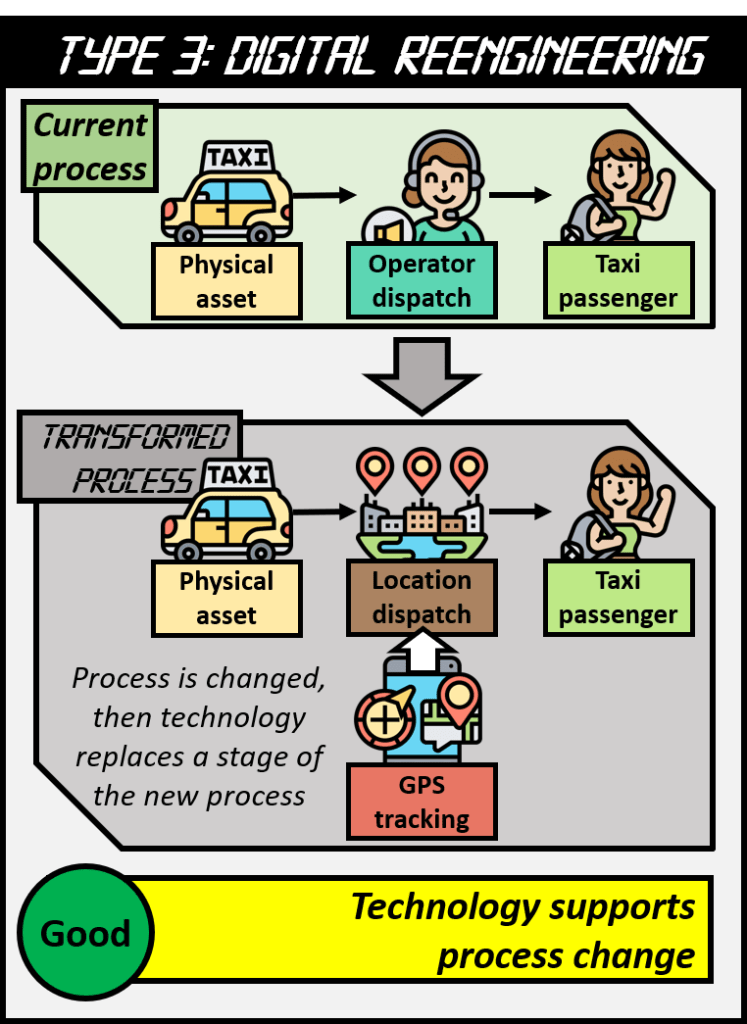
Digital reengineering is often recommended whereby the process is changed then technology replaces a stage of the new process. For example, we can have taxis dispatched to locations beforehand instead of waiting for passenger requests thus replacing the operator and we can further support this change by using GPS tracking. This is good digitization where technology supports change.

Digital Technologies Connect

While digital technologies are widely recognized for computation, their ability to connect is often underappreciated. Once assets are digitized into content, they become instantly accessible to anyone in the process, breaking the idea of strictly sequential workflows and enabling a new approach to how work is structured and quantification is performed.
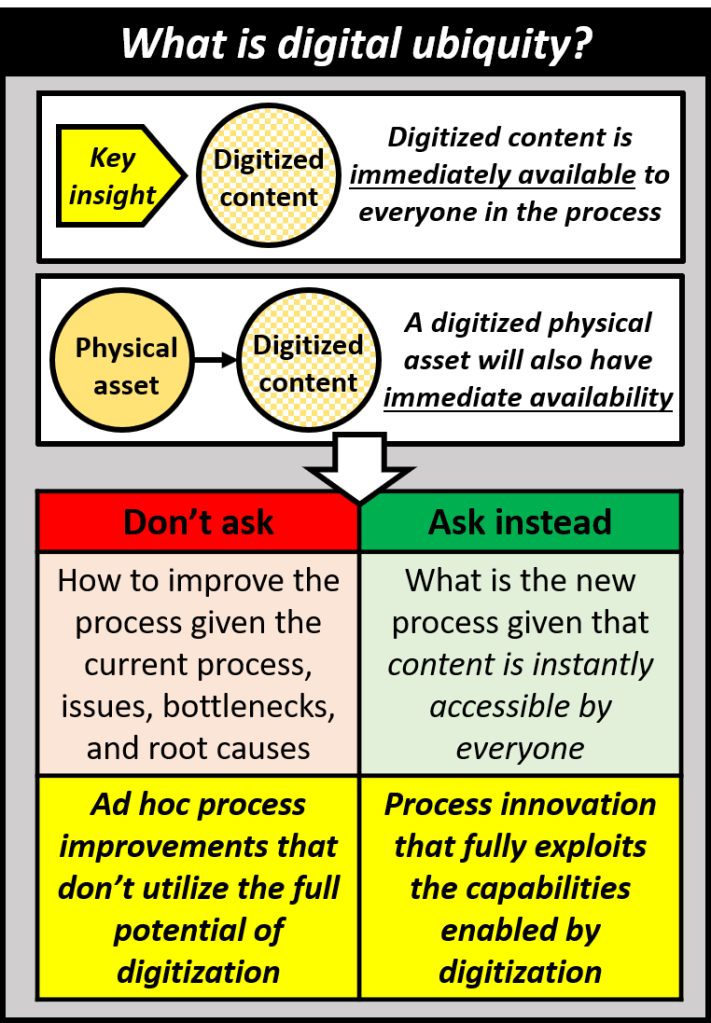
Digital ubiquity is the insight that digital content is immediately available to everyone in the process. When a physical asset is transformed to digitized content it will also have this immediate availability. Instead of asking how to improve the current process given its current status, issues, bottlenecks, and root causes we should instead ask what the new process is given that content is instantly accessible be everyone. This allows for process innovation that fully exploits the capabilities enabled by digitation rather than an ad hoc process improvement that doesn't fully utilize the full potential of digitization.

An operator is no longer needed as an intermediary between the digitized content and potential passengers, which flattens the workflow. Computation can then further accelerate quantification, creating a fundamentally new way of performing the process.
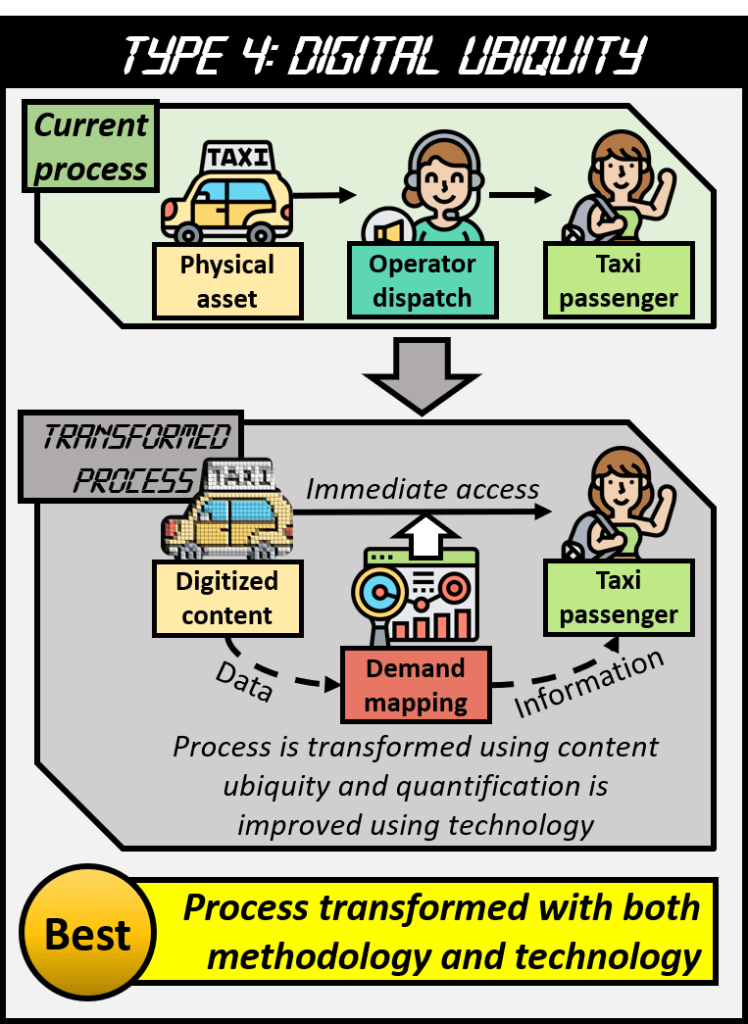
When applying digital ubiquity to our taxicab process, we can see that taxi passengers all have immediate access to taxis once they have been transformed into digitized assets. An operator is no longer needed and we can further enhance the quantification from data to information by using technology such as demand mapping. This is the best form of digitization where the process has been transformed with both methodology and technology.

Using Advanata in this transformation shows that, with problem mapping, the process can be optimized around business goals.
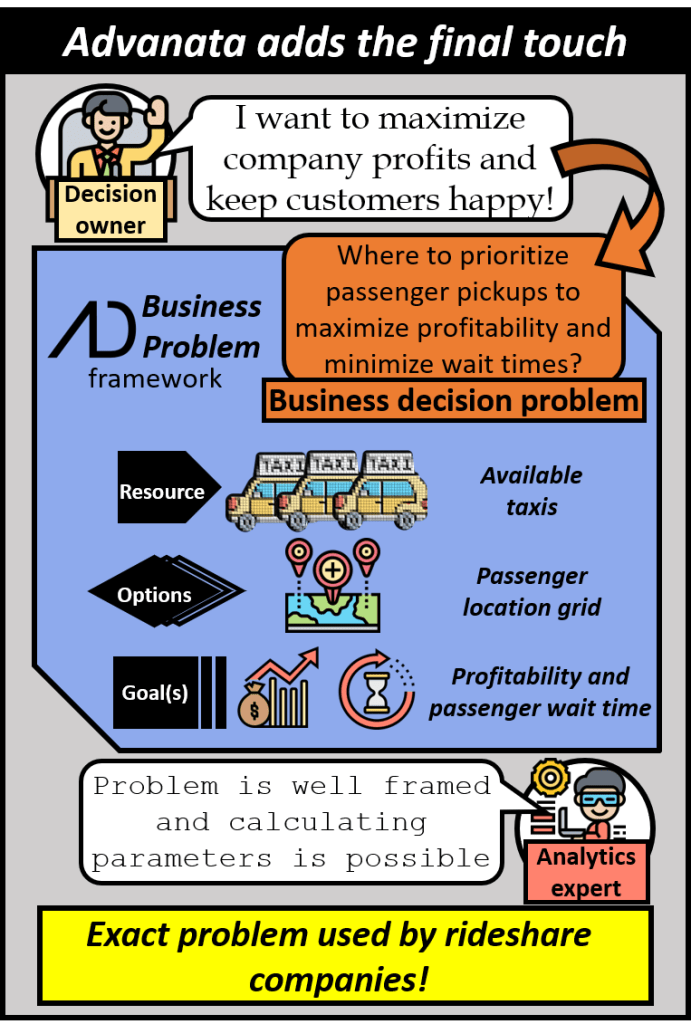
Advanata can add considerable value to the digitization process. The decision owner wants to maximize company profits and keep their customers happy can be transformed into a business decision problem where the taxicab company wants to find out where to prioritize passenger pickups to maximize profitability and minimize wait times. The resource is available taxis that have been transformed to digitized assets. Options are passenger locations. Goals are profitability and passenger wait time. This problem is well framed, and an analytics expert can calculate the required parameters. This is in fact the exact problem used by rideshare companies.

Future of Digital Transformation

Computation and connection are two core digital technology methodologies. Fully exploiting disruptive technologies requires a methodology-first approach (in contrast to technology-first and process-first approaches), where we understand what the technologies enable and then design processes to use those capabilities. As shown, Advanata can enhance digital transformation by structuring the components of the business decision problem and turning them into optimal operational actions.

One quick poll question (3 seconds):
I’d really value your input.

Sign up for early access to articles, delivered every two weeks. Please check your spam folder for the confirmation email.

Ready to see Advanata in action? Explore more resources, read related articles, and access the full application at advanata.com.

Looking for a personalized walkthrough or decision intelligence consulting? Contact info@advanata.com to get application access, schedule a demo, or discuss your decision optimization challenges.

Leave a comment