

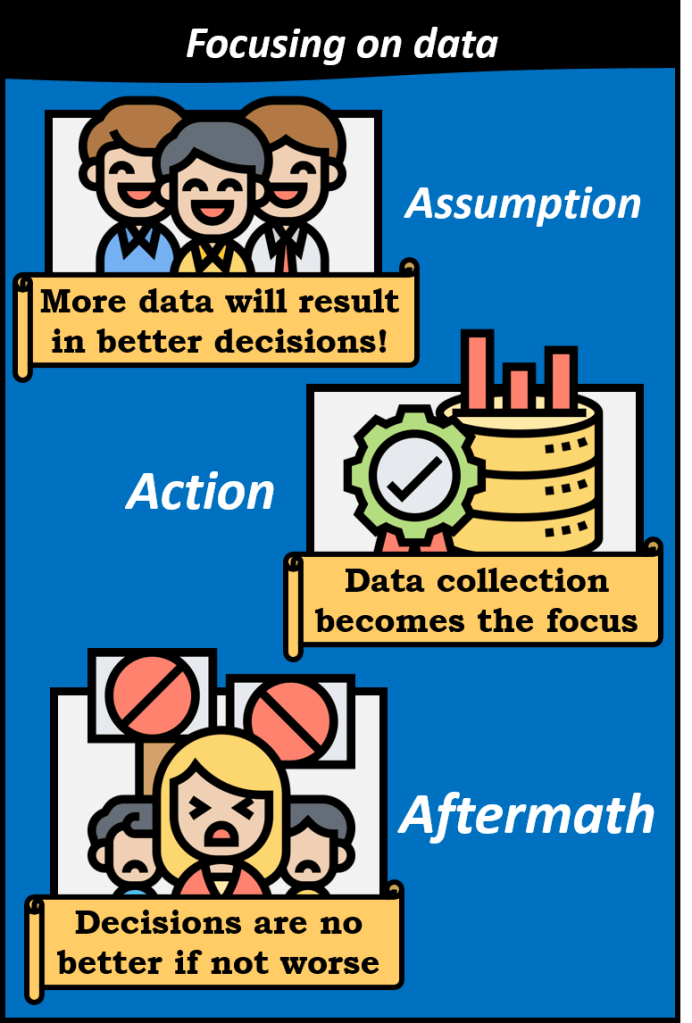
More data does not necessarily mean better decisions. In fact, for many business decision problems, more data can make solving the problem harder, not easier. The belief that more data inevitably produces better results only holds for a small class of well-behaved problems. So, what should we be trying to acquire instead?
More Data, Better Decisions?
Everyone has become convinced that more data is better. But is it? Have business decisions gotten better, or worse? More importantly, can we accurately measure how increasing data has affected decision quality?
Data Has Limits
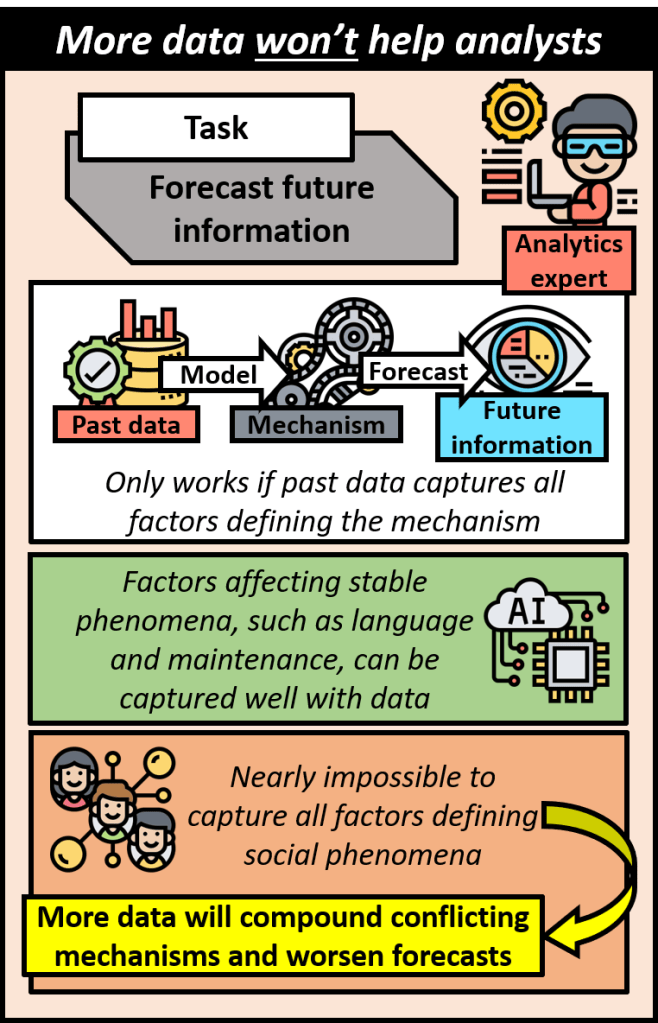
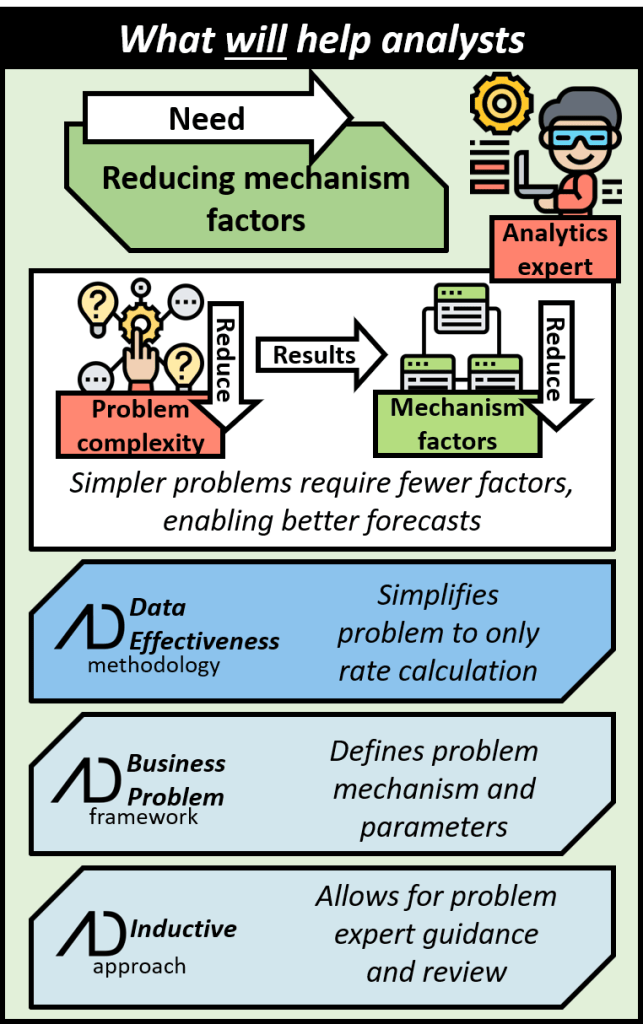
Analysts (Analytics experts) love data. It is their bread and butter. But data can only go so far in explaining phenomena with complex underlying mechanisms. Simplifying those mechanisms is therefore essential to extracting useful information from available data.
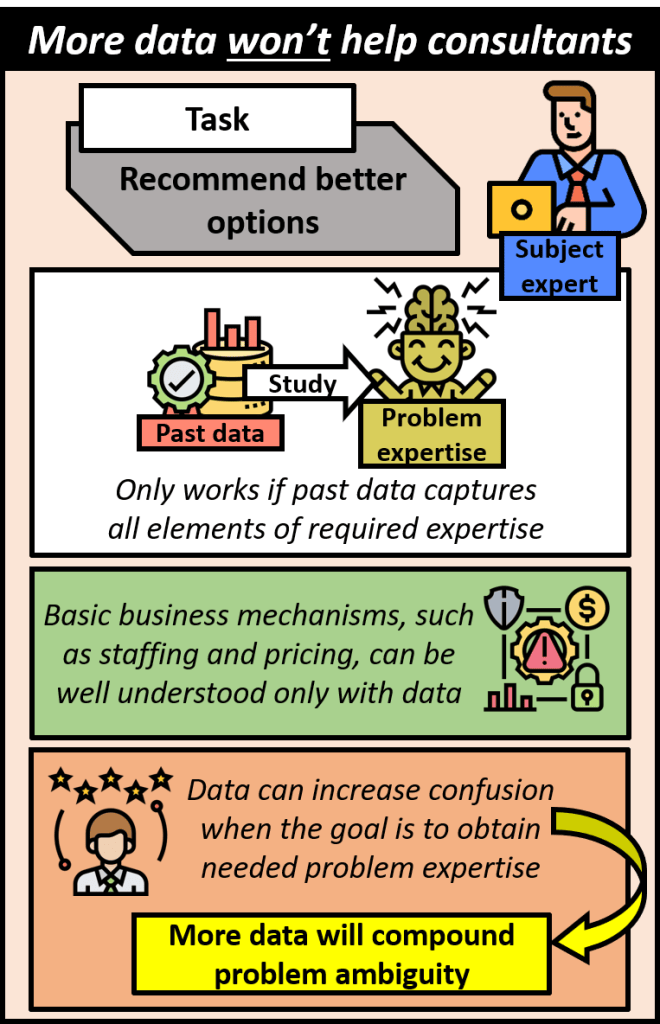
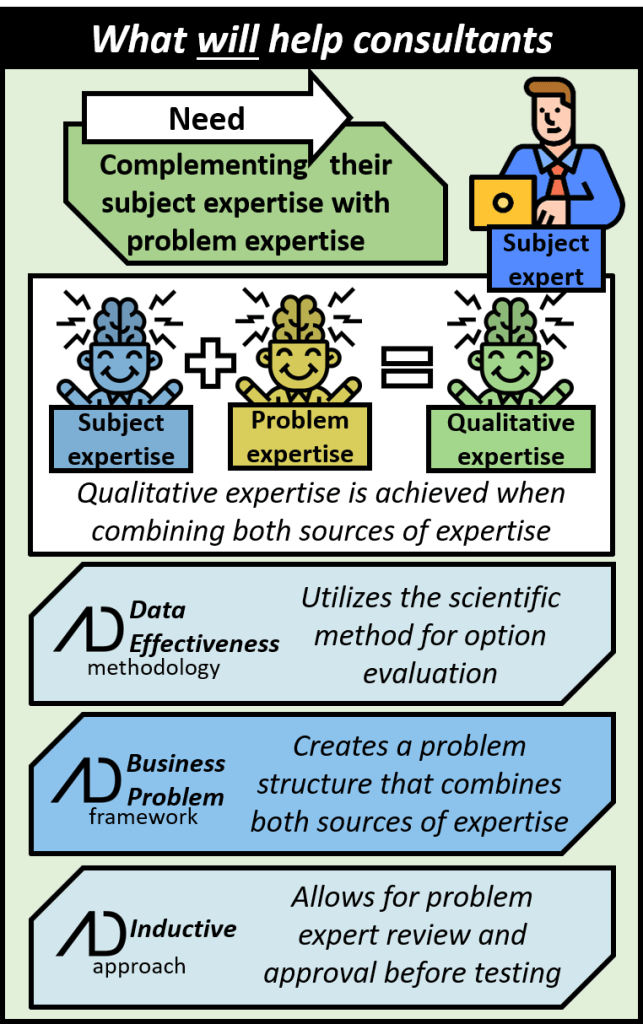
Consultants (Subject experts) also love data, and the expectation is that it will enable better recommendations. But as more data is collected, the problem can appear more confusing, conflicting, and incomplete. The solution isn’t more data, but suitable problem expertise to complement their subject expertise in order to recommend options.
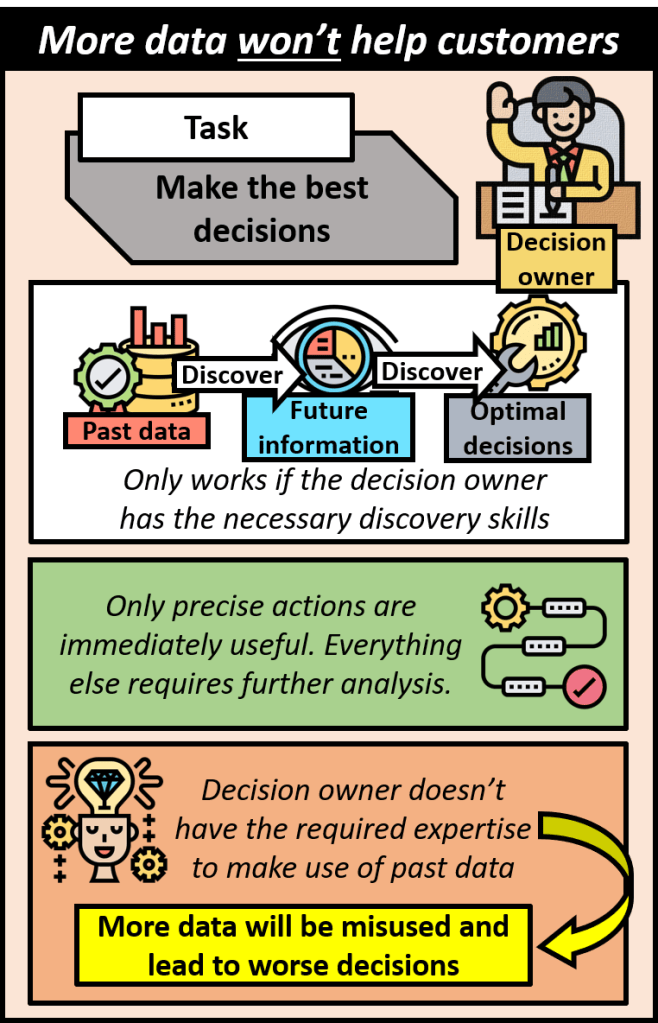
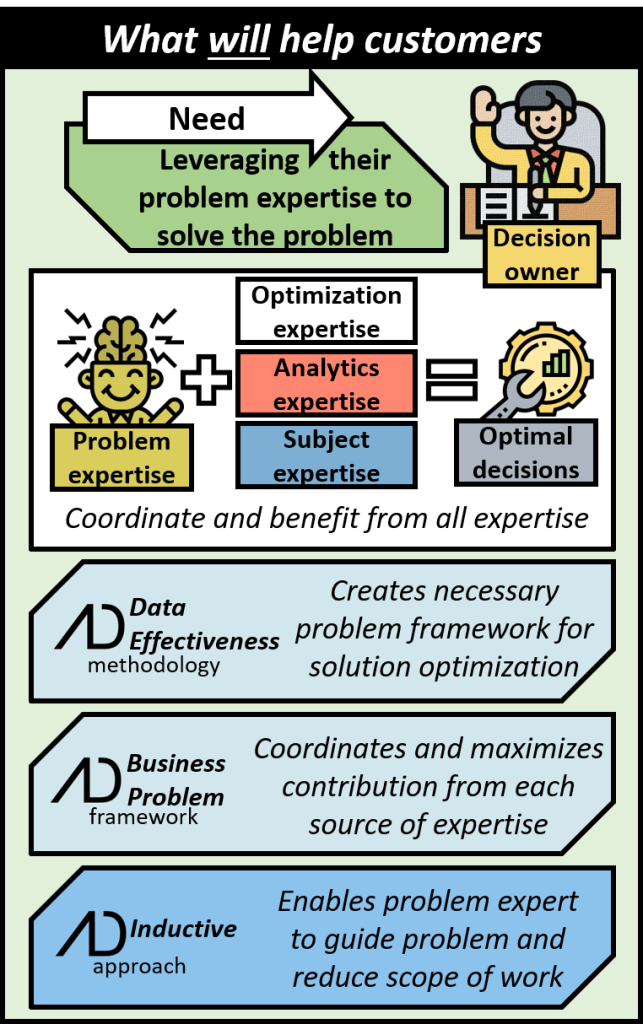
Customers (Decision owners) share the love of data, assuming its mere presence will help them make better decisions. But without the analytics expertise and time to analyze it, data becomes a burden that can lead to worse decisions often shielded from scrutiny simply because they are based on “facts and figures”. What customers really need are the optimal actions and not the data itself.
Data vs. Information
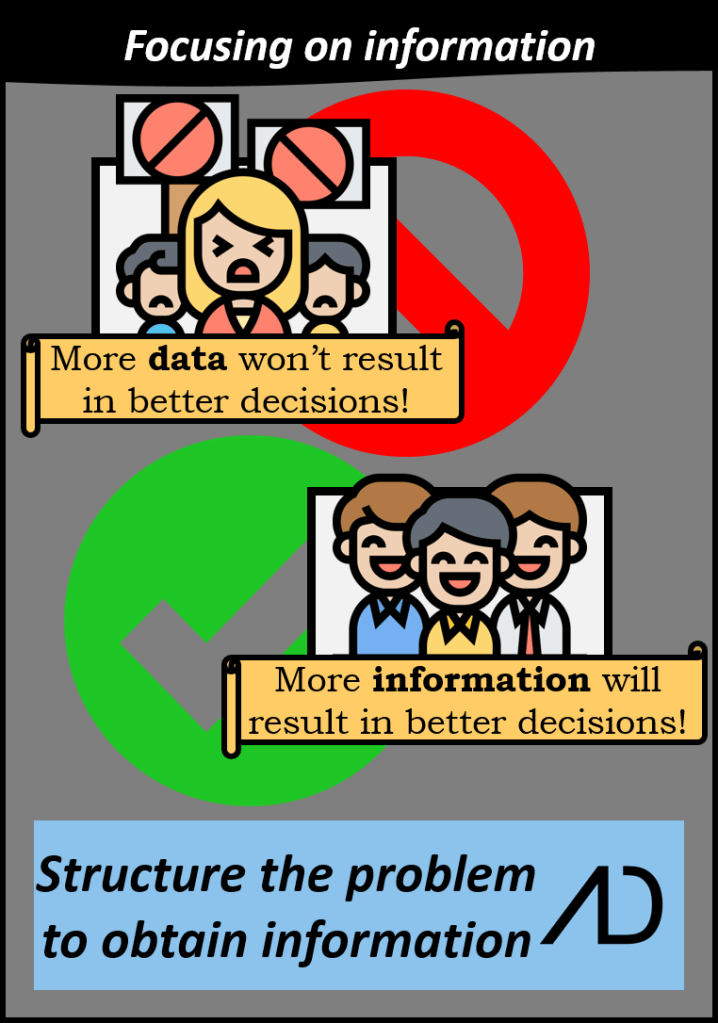
There is a fundamental difference between data and information. We need information to make better decisions, while data is only one potential source. The challenge is to structure problems so available data produces useful information and gaps can be filled by other sources.
Structure for Information
The frantic rush to collect data should be considered in the context of the problems being solved. Some problems can benefit greatly from more data, while others, including many business decision problems, can actually suffer from it. Therefore, the goal should not be to gather more data, but to structure problems to maximize the information we can obtain from data so that we can obtain precise solutions to our problems.
One quick poll question (3 seconds):
I’d really value your input.
Sign up for early access to articles, delivered every two weeks. Please check your spam folder for the confirmation email.
Ready to see Advanata in action? Explore more resources, read related articles, and access the full application at advanata.com.
Looking for a personalized walkthrough or decision intelligence consulting? Contact info@advanata.com to get application access, schedule a demo, or discuss your decision optimization challenges.


Leave a comment